
Written By: Flipbz.org
Few household purchases in Nigeria involve as much blind trust as buying a mattress. Unlike a phone or a bag of rice, a buyer cannot see, taste or immediately test what is actually inside the product they are paying for, the quality of foam, its density, its durability, all sit sealed behind a fabric cover until years of use reveal the truth. That single fact shapes almost everything about how Nigerians shop in this category, a lasting preference for a small number of decades old manufacturers whose names have become synonymous with trust, a genuine and growing counterfeit problem hidden inside convincing packaging, and a market now showing real financial strength even as household budgets remain tight. This report examines the brands Nigerians actually buy, the pricing forces reshaping the category, and the quiet trust economy sitting underneath every mattress sold.
The Flipbz Mattress Brands in Nigeria (2026) Market Report draws on publicly available information from industry research platforms, company financial statements and market intelligence sources, combined with Flipbz's own market analysis. The report does not rank or promote individual brands but examines the pricing, safety and consumer behaviour forces shaping Nigeria's mattress market.
A Market Bigger and Steadier Than It Looks
Nigeria's mattress and bedding category has grown into a genuinely substantial slice of the country's consumer economy, anchored by a replacement cycle that keeps demand flowing year after year. Current sizing puts real numbers behind that scale, since the Nigeria Mattress and Bedding Solutions Market worth USD 428 million in 2026 is growing at a CAGR of 7.20% to reach USD 650 million by 2031. That demand is spread across a genuinely enormous customer base, since the market serves an estimated 46.9 million households in 2025, based on national population and average household size indicators, with demand generated through first time household formation, product replacement, orthopedic needs and institutional fit outs.
What keeps this category so reliably active, even in tough economic years, is the natural lifespan of the product itself, since a replacement cycle of seven to ten years makes recurring household purchases the core volume driver, while pillows, protectors and toppers increase revenue per transaction. Geography plays a real role in demand patterns too, since Abuja sees significant demand from government, diplomatic, and expatriate communities, while Port Harcourt benefits from the oil and gas industry, driving higher spending on premium bedding products, with Lagos and the broader South West forming the principal commercial and distribution hub, supported by dense retail networks, ports, large urban populations and major manufacturing facilities.
The Two Names Every Nigerian Household Knows
Nigeria's mattress market has, for more than six decades, been defined by a rivalry between two manufacturers so deeply embedded in household memory that choosing between them feels almost generational. Vitafoam's roots run deep, since the history of Vitafoam in Nigeria dates back to the year 1962 when a partnership was established between British Vita and Unilever, and the company produces strong but incredibly flexible mattresses that provide many Nigerians with the comfort they need for restful sleep. Its scale advantage remains genuine, since without a doubt, the top producer of rigid, reconstituted, and flexible foam products in the country is Vitafoam Nigeria Plc, whose extensive foam production and distribution network enables just in time delivery of completed goods across the West African Sub region, and the company was also the first to get accredited by the Standards Organization of Nigeria.
Mouka carries an equally long history and an equally strong claim on everyday household loyalty, since Mouka Foam Mattress is the most popular mattress brand in Nigeria and can be found in almost every household in the country, founded in 1959 and specialising in bed making and furniture production, offering comfort levels ranging from luxury to well being, economy and mainstream tiers. Corporate investment has followed that brand strength directly, since Mouka's acquisition was completed at USD 60 million in 2022, demonstrating investor interest in branded sleep platforms with manufacturing assets, dealer relationships and premiumisation potential.
A third established name rounds out the trusted tier, since Winco Foam is an exceptional brand that is difficult to overlook as one of the best in the entire nation, using environmentally friendly, high quality materials in production, alongside other recognised manufacturers such as Royal Foam Products Nigeria Limited and Group Enterprises Nigeria Limited.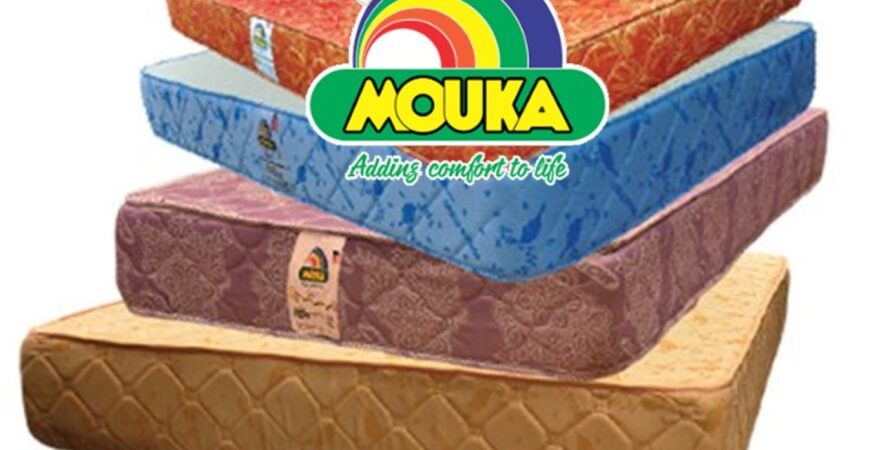
What a Mattress Actually Costs in 2026
Nigeria's mattress prices span an extraordinarily wide range, shaped heavily by size, foam density and construction type, making this one of the more genuinely confusing categories for first time buyers to price correctly. Entry level options remain accessible, since a 7 by 7 mattress usually costs ₦200,000 to ₦550,000, while smaller sizes start much lower, and one marketplace lists over 191 Mouka Foam Mattresses for sale in Nigeria from as low as ₦18,500. At the premium end, orthopedic and spring constructions carry a steep markup, since manufacturer pricing puts orthopedic lines well above classic ranges, with Vitafoam's orthopedic models starting around ₦206,000, and large size orthopedic mattresses in the open market commonly listed near ₦370,000, while spring mattresses pair a coil core with foam layers and sit at the premium end, with large sizes regularly listed above ₦500,000.
Size specific benchmarks give a clearer sense of what different budgets actually buy, since a 4.5 by 6 mattress is suitable for couples or spacious single beds and is priced between ₦75,739.54 and ₦562,976.38, while a 6 by 6 model such as the Mouka Orthopedic Mattress costs around ₦419,300, and larger 6 by 7 sizes from Vitafoam range from ₦380,568.52 to ₦470,867.41. Understanding what actually drives these differences matters just as much as the number itself, since thicker mattresses between 12 and 20 inches cost more due to added support, and higher density foams between 50 and 80 are pricier but more durable, meaning two mattresses of an identical size and brand can carry very different price tags depending purely on construction quality.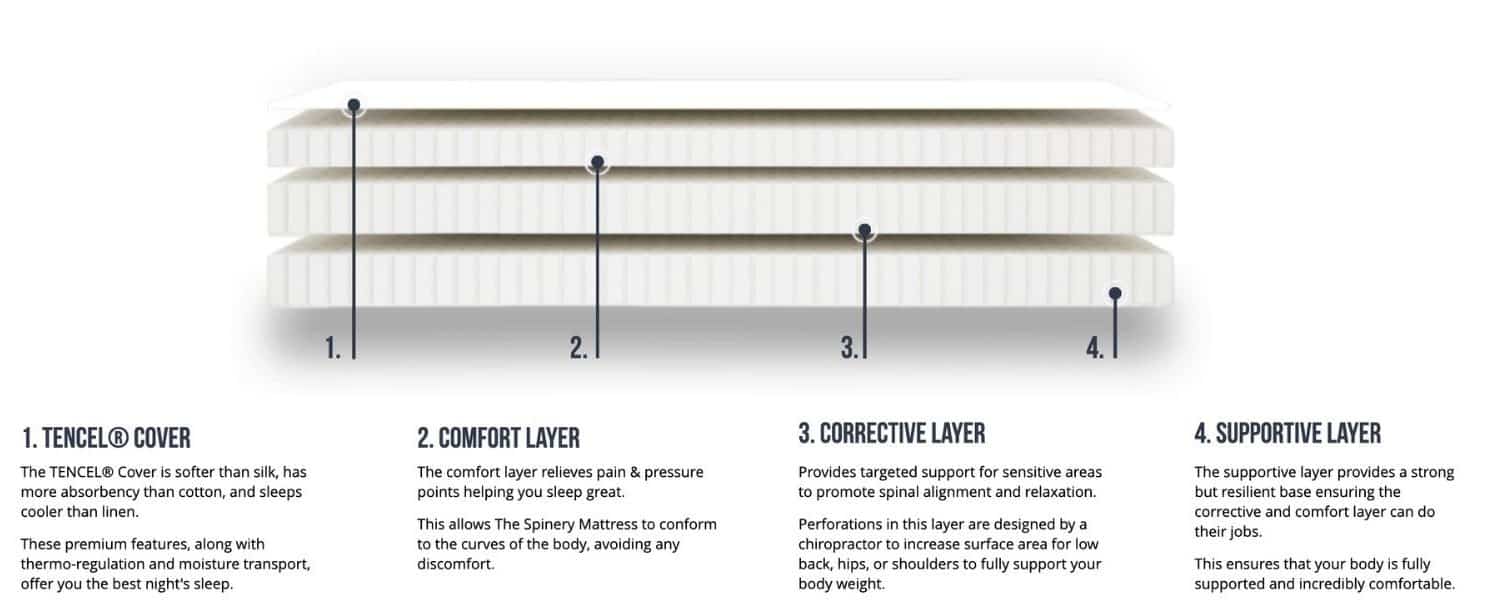
The Sealed Cover Problem: Counterfeits Hiding in Plain Sight
Nigeria's mattress market carries a distinctive vulnerability that few other consumer categories share quite so acutely, the fact that quality is genuinely invisible until the product has already been bought, unpacked and slept on for months. Industry observers make this point directly, since established brands like Mouka, Vitafoam and Winco Foam charge more, and part of that premium is a real warranty and a traceable dealer network, while market traders sell cheaper, but a mattress is exactly the product where counterfeits are common, because the difference is hidden inside a sealed cover.
This risk sits inside a much broader national counterfeit crisis that has dominated headlines through 2026. Regulatory pressure has intensified sharply, since the Standards Organisation of Nigeria seized and destroyed counterfeit and substandard goods worth over N20 billion in 2024 as part of its ongoing efforts to promote economic growth, industrialisation and trade facilitation, with enforcement covering everything from LPG cylinders to tires, cables and aluminum roofing sheets. Public concern has only grown since then, since there is growing concern among Nigerians over the proliferation of counterfeit and substandard products in markets across the country, with consumers raising questions about the effectiveness of regulatory agencies in curbing the trend, and stakeholders calling for greater collaboration among NAFDAC, SON, the Nigeria Customs Service and the police to disrupt the supply chains through which counterfeit products enter and circulate.
Consumer protection experts now recommend specific verification steps rather than trusting branding alone, since for locally manufactured items covered under SON's schemes, buyers should check for the MANCAP mark, which confirms the product met mandatory conformity requirements, but should not rely on the logo alone, because counterfeiters are increasingly good at replicating branding, meaning it is the registration details, the batch number and the manufacturer information that tend to expose a fake, not how the label looks at a glance.
A Category Proving Its Resilience Through the Numbers
Behind the everyday shopping experience, Nigeria's leading mattress manufacturer has posted some of the strongest financial results in its history, offering a genuine signal of underlying demand strength even amid economic pressure. Vitafoam's turnaround has been dramatic, since the Group's revenue grew by 35% to N111.37 billion for the year ended 30 September 2025, up from N82.64 billion in the corresponding period of 2024, while profit after tax attributable to equity holders skyrocketed to N13.35 billion, compared to N359.70 million in the previous year. Company analysis attributed this performance directly to core category demand, since Group revenue rose driven by pricing adjustments, recovery in consumer demand for foam and bedding products, and improved capacity utilisation.
That momentum has continued into the current financial year, since Vitafoam Nigeria Plc grew its profit after tax by 45 percent to N13.63 billion in the first nine months of its 2025/2026 financial year, with strong cash flow, aggressive debt reduction and significantly lower finance costs offsetting modest revenue growth. Analysts reviewing the results described it as a landmark moment for the company, noting that Vitafoam's FY 2025 results mark one of the strongest turnaround stories in Nigeria's consumer goods sector. Behind these figures sits a genuinely import exposed supply chain, since isocyanate imports totalled 29.5 million kilograms in 2024, making the industry dependent on suppliers in Korea, China, Saudi Arabia, Germany and Hungary for core foam chemistry, a dependency that keeps manufacturers' costs, and therefore consumer prices, closely tied to currency movements.
What Nigerian Consumers Actually Weigh Before Buying a Mattress
Brand Trust Over Price Alone
Given how invisible mattress quality is until years of use, most Nigerian buyers default to Vitafoam, Mouka or Winco Foam specifically because of their traceable dealer networks and warranty backing, even when cheaper unbranded alternatives are available at the same market.
Firmness Matched to Body Type and Health Needs
Buyers increasingly consider firmness deliberately rather than by default, since firm mattresses are ideal for people with back pain, posture issues or heavier body weight, medium firm mattresses are the most popular choice in Nigeria because they balance comfort and support, and soft mattresses suit side sleepers and lighter individuals who prefer a plush feel.
Density and Thickness Over Sticker Price
More informed buyers now compare foam density and thickness rather than price tags alone, since a high density Mouka will outlast a low density Vitafoam and the reverse is equally true, meaning comparing like for like on density, thickness and warranty matters more than brand name in isolation.
Verified Purchase Channels
Aware of the counterfeit risk hidden inside sealed covers, cautious buyers increasingly favour manufacturer showrooms and authorised distributors over open market stalls, treating channel choice as a genuine safeguard against substandard products.
The Rise of Informed Mattress Buyers
Nigerian consumers, increasingly aware of both counterfeit risks and long term value, are researching more carefully before choosing a mattress. Common searches include:
Mouka versus Vitafoam comparison 2026
Best orthopedic mattress prices in Nigeria
How to identify a fake mattress brand
Mattress size guide 6x6 versus 7x7 Nigeria
Foam density explained for mattress buyers
Mattress prices by size 2026
This growing research culture, amplified by furniture blogs and price comparison guides, continues to shape which brands earn first time buyer trust in a market where quality remains hard to verify at the point of sale.
Challenges Facing Nigeria's Mattress Industry
Counterfeit and substandard products remain the industry's most persistent trust challenge, since the sealed, invisible nature of mattress quality makes this category especially vulnerable to convincing fakes that only reveal their poor construction after months of use, a concern compounded by the wider national counterfeit crisis regulators are struggling to contain.
Import dependence for core raw materials continues to expose manufacturers to currency and supply shocks, since the industry's reliance on isocyanate and polyether imports from Asia, the Middle East and Europe means naira depreciation feeds directly into production costs and, eventually, retail prices.
Price transparency gaps make comparison genuinely difficult for ordinary buyers, since identical sizes can carry wildly different prices depending purely on density and construction, a distinction many first time buyers are not equipped to evaluate without guidance.
Affordability pressure continues to shape purchasing behaviour at the lower end of the market, since even as leading manufacturers report strong pricing power, many households continue to stretch replacement cycles well beyond the recommended seven to ten years simply to avoid a large one time expense.
Market Outlook for 2026 and Beyond
Nigeria's mattress category enters the second half of 2026 with genuine financial momentum behind its largest manufacturers, even as counterfeit risk and import dependence remain unresolved structural challenges. Growth projections point toward continued expansion, with the market on track to grow from USD 428 million in 2026 to USD 650 million by 2031 at a 7.20 percent compound annual growth rate, supported by more than 20 named mattress variants now registered for leading brands and steady replacement demand from a household base approaching 47 million.
Whether that growth continues to reward established manufacturers or opens space for new entrants will likely depend on how effectively regulators can address the counterfeit concerns increasingly voiced by Nigerian consumers across every product category, and how well local manufacturers can manage import cost exposure without pricing ordinary households out of a purchase most view as a genuine health necessity rather than a luxury.
Conclusion
Nigeria's mattress market in 2026 is defined less by aggressive brand rivalry and more by a quiet, decades old trust economy that a handful of manufacturers have spent generations building. Vitafoam and Mouka's enduring dominance, Winco Foam's steady presence alongside them, and a genuine financial resurgence at the top of the industry all point to a category in good health. Yet until counterfeit products stop hiding successfully inside convincing packaging, and until buyers can compare density and construction as easily as they compare price, the brands that keep winning Nigerian trust will be those that make what's inside the cover just as verifiable as what's printed on the outside.
About this Report
The Flipbz Mattress Brands in Nigeria (2026) Market Report is an independent editorial publication prepared using publicly available information from industry research platforms, company financial statements and market intelligence sources, together with independent market analysis by Flipbz. It is intended to provide market insight and does not constitute purchasing advice.
Please register to comment.
With these components in place, your business...
SolidBase Builders Limited is a professionall...
PrimeStone Construction Nigeria Ltd is a well...
CrestRock Engineering Services Ltd is a scala...
Here is an opportunity to buy an established...
Discover promising partnership opportunities in various industries.
Pitch Your Startup | Find Partners
.jpg)
.jpg)

.jpg)
.jpg)


Comments