
.jpg "Tax Free, Still Out of Reach: Inside Nigeria's Sanitary Pad Market and the Fight Against Period Poverty")
Written By: Flipbz.org
Few products in Nigeria carry as much quiet urgency as the sanitary pad. It is not a lifestyle purchase or a discretionary treat, it is a monthly necessity that, when unaffordable or unavailable, can pull a girl out of a classroom, keep a woman home from work, or force a return to unsafe alternatives like rags, newspaper or leaves. In 2026, Nigeria's government has finally moved to remove tax from every pad sold nationwide, yet on the ground, prices keep climbing anyway, squeezed by currency depreciation, import dependence and a cost of living crisis that leaves period poverty as widespread as ever. This report examines the brands Nigerian women actually buy, the policy fight now playing out around affordability, and why the phrase "period poverty" has become one of the most cited public health terms in the country this year.
The Flipbz Sanitary Pad Brands in Nigeria (2026) Market Report draws on publicly available information from UNFPA, UNICEF, the World Bank, industry research platforms and market intelligence sources, combined with Flipbz's own market analysis. The report does not rank or promote individual brands but examines the pricing, policy and consumer behaviour forces shaping Nigeria's sanitary pad market.
A Crisis Measured in Missed Classrooms and Silent Suffering
Nigeria's period poverty numbers are large enough to qualify as a genuine national health issue rather than a niche concern. Advocacy and UN estimates converge on a striking figure, since organisations like UNICEF and the UNFPA report that roughly 37 million women and adolescent girls in Nigeria face challenges affording safe sanitary pads. The classroom impact of that gap is significant and well documented, since the World Bank estimates that about 24 per cent of Nigerian schoolgirls regularly miss school due to inadequate menstrual materials and WASH infrastructure. Speaking at a recent industry forum in Lagos, a UNFPA specialist framed the scale of the problem plainly, noting that rising costs, poor WASH facilities and limited access to quality products were driving period poverty, and calling for the establishment of sanitary pad banks in schools nationwide to prevent girls from missing classes or exams during menstruation.
The problem is not confined to rural areas either, since even in Lagos, UNFPA reported that approximately 57 per cent of girls lack accurate knowledge of menstrual hygiene management, while more than 77 per cent reported reusing materials such as rags, old clothes and tissues during menstruation. Ignorance compounds the crisis further, since a 2025 study across six Nigerian states found that 58% of girls experienced their first period without any prior education about menstruation, a knowledge gap that health workers say fuels stigma and unsafe practices just as much as affordability does.

The Brands Nigerian Women Actually Reach For
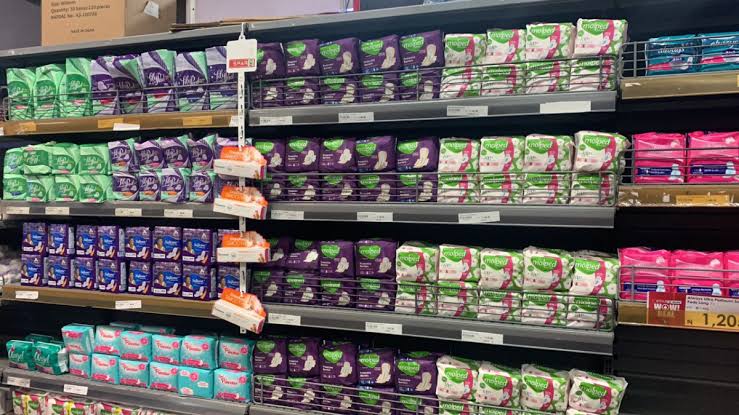
Nigeria's sanitary pad shelf is anchored by one unmistakable market leader, alongside a genuinely wide field of homegrown challengers built specifically around affordability. Always, produced by Procter & Gamble, sits at the very top of consumer recognition, described consistently as the default name for all sanitary pads in the country because of its popularity among many women, a brand that has become synonymous with the category itself much like a well known brand of instant noodles or bottled water.
Beneath that dominant name sits a genuinely competitive field of Nigerian owned manufacturers that have built loyal followings on price and consistency. LadyCare, produced by Sankin Nigeria Limited, a subsidiary of a Japanese parent corporation, has been in the market since 2004 and has grown to become one of the leading brands in the Nigerian market, offering not just pads but panty liners and tampons for light days and backup protection. Libragold, under parent company M&B Petrolube, was established in 2012 and has become popular for its high quality products and innovative marketing campaigns, while Nana, owned by Unichem Industries Ltd and established in 2014, has quickly gained popularity due to its affordable prices and superior quality products.
Multinational names beyond Always have also carved out meaningful space on Nigerian shelves. Carefree, a multinational brand owned by Unilever, entered the Nigerian market in 2018 and has quickly gained popularity among consumers for its reliable and comfortable products, while Molped, originally a Turkish brand under Hayat Kimya, carries a brand history of over 20 years and presence in more than 40 countries, marketed as a trusted companion to young women. Kotex, produced by Kimberly Clark, rounds out the international field, with the company's marketing emphasizing inspiration and confidence, aiming to help women feel empowered while managing their periods. Diva, owned by Nigerian Foundries Limited and established in 2015, and Virony, manufactured locally with a focus on household and personal care products, complete a genuinely crowded field of local names competing directly with global giants.
A Price Story That Keeps Outrunning Every Policy Fix
Nigeria's sanitary pad prices tell a story of a household budget item that has become genuinely difficult to plan for, with wide variation depending on brand, retailer and pack size. Even the market leader spans an enormous price range, since the most expensive Always sanitary pad costs ₦72,000 while the cheapest costs ₦4,200 naira, with the average price of Always sanitary pads for ladies in Nigeria sitting at ₦24,632 as of a recent survey. Mid tier imported brands show similarly wide bands, since the average price of Molped Soft sanitary pads in Nigeria today is 7,500 naira, while the average price of extra heavy flow Molped sanitary pad is ₦15,000 naira for 30 pieces.
Zooming out to annual household spend makes the burden even clearer, since recent findings show that women spend between N47,603 and N142,809 annually on disposable sanitary pads, representing roughly 5.1 per cent to 15.46 per cent of Nigeria's annual minimum wage. Broader inflation tracking confirms this is not a static cost either, since the Consumer Price Index of Personal Care, Social Protection, and Miscellaneous Goods and Services, which includes sanitary products, increased by 63.5 percent between January 2024 and April 2026.
Currency exposure explains much of why prices keep climbing despite policy interventions, since exchange rate fluctuations hit menstrual product prices hard because many components, even in locally assembled pads, are imported, with the superabsorbent polymers, adhesive strips, and packaging materials often sourced from overseas suppliers paid in dollars or euros, so that when the naira weakens against these currencies, manufacturers pass increased costs to consumers within weeks. Retail channel also matters more than many buyers realise, since pharmacies typically charge 15 to 25 percent more than large supermarkets for the same products because of lower purchase volumes and higher operational costs.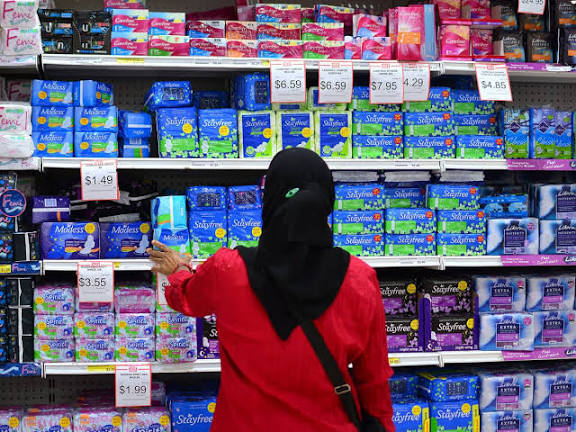
Tax Free on Paper, Still Costly in Practice
Nigeria's most significant recent policy move in this category was designed to ease exactly this affordability crisis, yet its real world impact has been strikingly limited. The exemption itself has deep roots, since sanitary towels, pads, and tampons were exempted from the value added tax as part of the Finance Bill signed by then President Muhammadu Buhari, with the Vice President's office at the time stating the goal was to ensure that the cost of living does not rise for Nigerians because of the changes in the Value Added Tax. That exemption was widened further in 2025, since President Bola Tinubu signed the Nigeria Tax Act, extending VAT exemptions to all sanitary pads, taking effect in January 2026.
Yet the relief has proven largely symbolic against the scale of Nigeria's economic pressures. One recent assessment put it bluntly, noting that while the Nigeria Tax Act exempted all pads from the 7.5% VAT, the savings have been swallowed by rising production and fuel costs. Academic analysis of the original exemption reached a similarly sobering conclusion, since a professor of macroeconomics told reporters that the exemption of VAT from sanitary pads has had very little effect because the product is a consumption tax and not a production tax, meaning the underlying cost drivers behind manufacturing were never actually addressed. Manufacturers under this pressure have responded in ways that hurt product quality, since to stay afloat, manufacturers are producing thinner pads with poor adhesive, leading to reports of increased leaks and rashes, a trend that undermines consumer trust even in previously reliable brands.
For many households, the underlying choice has become starkly binary, since for many households, the choice is not between expensive and cheap pads, it is between buying food or buying menstrual products, a reality that no single tax policy has been able to resolve on its own. Recognising these limits, UNFPA has continued pushing for deeper structural reform, since the organisation is also engaging stakeholders to review taxes, duties and levies on menstrual product manufacturers and importers to reduce production costs and improve affordability, moving beyond the retail level VAT exemption to target the cost of doing business itself.
What Nigerian Women Actually Weigh Before Buying a Pad
Price Against a Tight Monthly Budget
With annual spend on disposable pads consuming a meaningful share of minimum wage for many households, price per pack often outweighs brand loyalty entirely, pushing buyers toward whichever affordable local name is available that month.
Trust Built Through Consistency
Because shrinkflation and quality drops have become a documented industry response to rising costs, women increasingly favour brands with a longer track record of consistent thickness and adhesive quality over newer, unproven options.
Retailer Choice as a Cost Lever
Aware that pharmacies charge a real premium over supermarkets for identical products, price conscious buyers increasingly shop around by retail channel rather than assuming any single store offers the best deal.
Access to Sanitation Infrastructure
Purchase decisions do not happen in isolation from broader hygiene conditions, since a lack of disposal facilities for soiled sanitary materials was linked to missed school days in one Cross River State study, showing that product access alone does not solve the wider menstrual hygiene challenge.
The Rise of Informed Sanitary Pad Buyers
Nigerian women and girls, increasingly vocal about menstrual health and cost pressures, are researching more carefully before choosing a sanitary pad brand. Common searches include:
Cheapest sanitary pad brands in Nigeria 2026
Always versus Molped versus LadyCare comparison
Best sanitary pad for heavy flow in Nigeria
Reusable cloth pads versus disposable pads Nigeria
Sanitary pad prices by brand 2026
Where to donate sanitary pads for schoolgirls
This growing research culture, amplified by menstrual health advocacy groups and social media campaigns, continues to shape which brands earn trust in a market where quality concerns have grown alongside prices.
Challenges Facing Nigeria's Sanitary Pad Industry
Import dependence for raw materials remains the industry's deepest structural weakness, since key manufacturing inputs like superabsorbent polymers and adhesive strips are largely sourced from overseas suppliers, leaving domestic pricing exposed to every swing in the naira's value against the dollar and euro.
Policy interventions have so far struggled to translate into real affordability, since even a full VAT exemption on all pads has been offset by rising fuel and production costs, raising hard questions about whether tax relief alone can ever meaningfully address period poverty without deeper reform of manufacturing costs.
Quality erosion driven by cost pressure now threatens consumer trust industry wide, since manufacturers under financial strain have shifted toward thinner, less reliable products, risking the very brand loyalty that took years to build among Nigerian women.
Weak sanitation infrastructure continues to limit the impact of product access alone, since inadequate water, sanitation and disposal facilities in many schools and communities mean that even a freely available pad cannot fully solve the dignity and health challenges tied to menstruation.
Market Outlook for 2026 and Beyond
Nigeria's sanitary pad market enters the second half of 2026 with genuine regulatory momentum but unresolved affordability questions. Industry and government bodies appear increasingly aligned on the need for coordinated action, since at a recent Nigeria Menstrual Health Product Forum in Lagos, themed around driving standards and policy reform for affordable menstrual products, the Standards Organisation of Nigeria pledged to intensify efforts on standards, consumer protection and regulatory oversight to protect users and build market confidence. Legislative attention is also spreading to the state level, since Bauchi State recently passed a bill to establish sanitary pad banks, building on an earlier pilot programme that ensured more girls in selected schools continued attending classes despite experiencing their menstrual flow, a departure from the norm before the project.
Whether these efforts can outpace the underlying cost pressures remains the category's central open question. For real affordability gains to materialise, stakeholders increasingly agree that tax relief must be paired with deeper cost of production reform, expanded local manufacturing capacity less exposed to currency swings, and sustained investment in school based WASH infrastructure and pad banks, rather than relying on any single policy lever to solve a genuinely multidimensional problem.
Conclusion
Nigeria's sanitary pad market in 2026 is defined by a frustrating gap between policy intention and lived reality, a product now fully exempt from VAT, yet still priced beyond comfortable reach for millions of the women and girls who need it every single month. Always' commanding brand recognition, a resilient field of local challengers like LadyCare, Libragold and Nana, and a wave of new advocacy around pad banks and manufacturing cost reform all point toward a market under genuine pressure to change. Until currency stability, local production capacity and sanitation infrastructure catch up with good intentions, period poverty will likely remain one of Nigeria's most under addressed public health challenges, no matter how many tax lines get cleared from a receipt.
About this Report
The Flipbz Sanitary Pad Brands in Nigeria (2026) Market Report is an independent editorial publication prepared using publicly available information from UNFPA, UNICEF, the World Bank, industry research platforms and market intelligence sources, together with independent market analysis by Flipbz. It is intended to provide market insight and does not constitute purchasing advice.

Please register to comment.
With these components in place, your business...
SolidBase Builders Limited is a professionall...
PrimeStone Construction Nigeria Ltd is a well...
CrestRock Engineering Services Ltd is a scala...
AGRO COMPANY
Discover promising partnership opportunities in various industries.
Pitch Your Startup | Find Partners
.jpg)
.jpg)
.jpg)
Comments