
.jpg "Fair Game: Inside Nigeria's Body Lotion Brands and the Battle Over Skin Tone")
Written By: Flipbz.org
Body lotion in Nigeria is never just a moisturiser, it is a product tangled up with climate, class, counterfeit risk, and one of the most sensitive conversations in Nigerian beauty culture: what "glowing skin" is actually supposed to mean. Multinational giants like Nivea and Vaseline sit on nearly every bathroom shelf, cocoa butter and shea butter formulas battle imported serums for shelf space, and an entire sub industry of brightening and even tone products keeps growing even as regulators wage a very public fight against the toxic chemicals sometimes hiding inside them. This report examines the brands Nigerians actually reach for, the pricing pressures reshaping the category, and the skin tone debate that quietly sits underneath almost every purchase decision.
The Flipbz Body Lotion Brands in Nigeria (2026) Market Report draws on publicly available information from Statista, Euromonitor International, industry research platforms and market intelligence sources, combined with Flipbz's own market analysis. The report does not rank or promote individual brands but examines the pricing, safety and consumer behaviour forces shaping Nigeria's body lotion market.
A Category Growing Faster Than Almost Anything Else on the Shelf
Nigeria's body care segment is expanding at a pace that outstrips most other consumer categories, driven by a young, urbanising population discovering skincare as routine rather than luxury. Market forecasting shows the body segment alone is projected to experience an annual growth rate of 11.91% between 2025 and 2029, with per person revenue generated in Nigeria in 2025 at US$4.36. That growth sits inside a much larger personal care boom, since the Nigeria beauty and personal care market size was valued at USD 1.17 billion in 2025 and is projected to reach USD 2.08 billion by 2032, expanding at a CAGR of 9.30 percent during 2026 to 2032. Population growth is doing much of the heavy lifting behind these numbers, since Nigeria's population is expected to reach approximately 242.4 million by 2026, introducing millions of first time users into grooming cycles.
Skin care specifically remains one of the more resilient corners of that wider market. One forecast pegs the Nigeria skin care market at USD 2.8 billion by 2026, registering a CAGR of 7.6 percent from 2020 to 2026, while a separate projection expects the category to generate approximately USD 207.9 million in additional value between 2025 and 2030, reflecting a compound annual growth rate of about 10.8 percent. Yet affordability still shapes what actually sells, since Euromonitor's own analysis notes that mass brands dominate assortments of skin care due to the limited affordability of premium brands among most Nigerian consumers, even as premium skin care is expected to grow faster over the forecast period.
The Names on Nigeria's Bathroom Shelf
Two multinational names anchor Nigeria's body lotion category more firmly than any others, and both owe part of their dominance to the country's climate. Vaseline in particular has built its reputation on the harmattan season, since Vaseline products are generally favoured in Nigeria during the dry season because of their rich moisturising and hydrating benefits. Its appeal rests on both price and performance, since Vaseline is famed for its affordability and non sticky, moisturising consistency, dries fast and has a heavenly fragrance, with its more advanced lines, such as Vaseline Intensive Care Cocoa Radiant Lotion and Vaseline Intensive Care Dry Skin Repair Lotion, containing ultra hydrating lipids that strengthen the skin barrier and provide up to 90 percent more moisture.
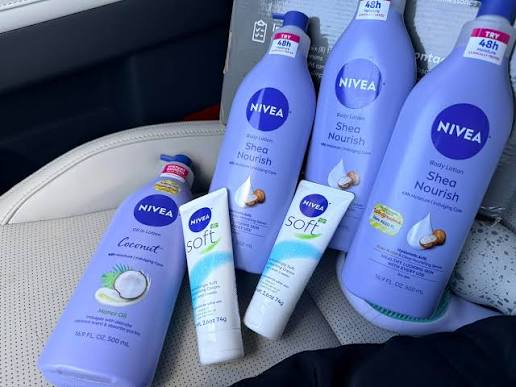
Nivea sits right alongside it as the other default name in most Nigerian homes, spanning everything from everyday moisturisers to more specialised lines. Its catalogue on local marketplaces ranges widely, including formulas like the Nivea Melanin Beauty Hydration Body Lotion and products such as the NIVEA Rich Nourishing Body Lotion, a 5 in 1 intensively hydrating daily moisturizer.
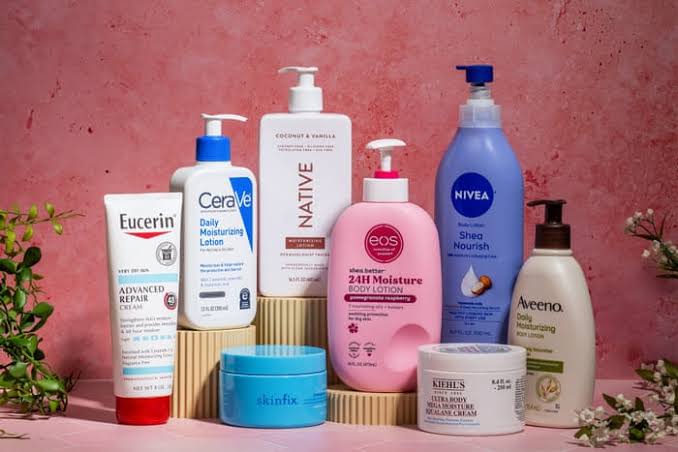
Beyond these two household names, a wider field of imported and specialist brands has been steadily gaining visibility among more research driven buyers. A recent buying guide notes that names like Nivea, E45, CeraVe, Vaseline, Olay, and Dove all trend on Google for a reason, since shoppers want something that actually works, not just a lotion that smells nice and disappears in an hour. Within that field, E45 has carved out a specific dermatological niche, described as a dermatology brand built specifically for eczema prone and extremely dry skin, containing no added fragrance, with clinical testing showing it helps calm redness, flaking, and scaling within days of regular use. Locally sourced ingredients remain a genuine point of pride too, since cocoa butter and shea butter based products, including lines like Palmer's, continue to sell strongly on the promise of skin firming with Q10 and improved elasticity for scars and stretch marks.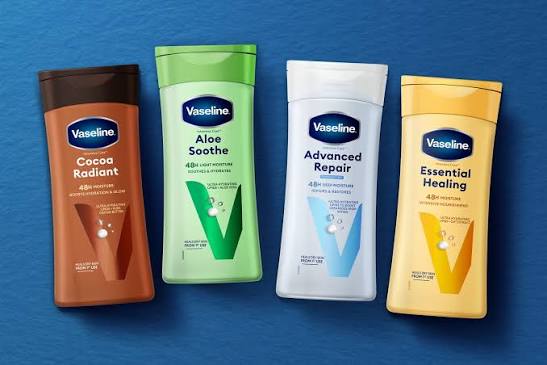
The Brightening Business Nobody Can Ignore
No honest look at Nigeria's body lotion market can skip past the country's uniquely large skin lightening habit, a behaviour that shapes product formulation, marketing language and regulation across the entire category. The scale is genuinely striking, since the World Health Organization found approximately 77 percent of Nigerian women regularly use skin lightening products, among the highest rates globally, a figure echoed elsewhere noting that in every 100 Nigerians, 77 people use a form of skin bleaching product, compared to an average prevalence rate of 27 percent across Africa. Usage skews heavily toward the young and the urban, since skin bleaching is more prevalent in young people less than 30 years old than in other age groups, and more commonly used in urban areas (75 percent) than rural areas (21 percent), with many users motivated by genuine skin concerns rather than vanity alone, since a WHO survey found 49 percent of women admitted to using it to ensure healthier and smoother skin.
That demand has not gone unregulated. Nigeria's drug and cosmetics authority has taken the issue seriously enough to treat it as a national emergency, since NAFDAC formally declared skin bleaching a public health emergency in February 2024, following an earlier state of emergency declaration in 2023. The legal framework itself sets clear limits, since under the Cosmetic Products (Prohibition of Bleaching Agents) Regulations of 2019, mercury is banned outright in cosmetics, hydroquinone is capped at 2 percent concentration, and kojic acid is limited to 1 percent. Enforcement has visibly ramped up in response, since in 2025 alone, NAFDAC raided and shut down an illegal bleaching cream operation in Kano, arresting six people, and sealed a Lagos facility manufacturing bleaching products falsely marketed as organic, while more recent action has escalated further, with NAFDAC shutting down illegal production sites in Kano and Lagos, and securing a 40 year prison sentence for a counterfeiting conviction in early 2026.
Even with these efforts, enforcement remains an uphill battle against sheer market scale, since raids alone cannot keep up with the sheer size of the trade, as most products are sold through open markets, social media, and cross border smuggling. Independent lab testing backs up this concern, since a study of skin whitening cosmetics sold in Lafia found products where the danger was that some products were labelled free from hydroquinone or not labelled at all, unknown to users. In response, mainstream brands have leaned into safer brightening language rather than outright bleaching, with product lines now marketed around ingredients positioned as gentler alternatives, and safety advocates now advising shoppers to choose safer, non bleaching brighteners if dark spots are the actual concern, such as alpha arbutin and kojic acid.
The Counterfeit Problem Hiding in Plain Sight
Alongside the bleaching debate sits a separate but related trust crisis, fake versions of the very brands Nigerians reach for most. A recent buying guide put it bluntly, noting that there is a trust problem in Nigeria's skincare market, with fake Vaseline, fake Nivea, and diluted body creams common in open markets, counterfeits that can irritate skin, cause breakouts, or simply do nothing at all. That risk has pushed a growing share of buyers toward verified retail channels, since the same guide stresses that buying from a verified, trusted imported skincare source matters just as much as picking the right formula. Safety advocates working on the broader bleaching issue echo the same advice for genuinely unsafe products, urging shoppers to buy from authorized distributors, official brand websites, or verified pharmacies rather than open market stalls, and to verify products before buying.
What Nigerians Actually Weigh Before Buying a Body Lotion
Climate Fit Over Blanket Preference
Nigeria's weather varies sharply by region and season, and buyers increasingly shop accordingly, since a heavy body butter can feel greasy in Lagos humidity, while a light lotion may not do enough during dry harmattan weeks in Abuja or Kano, making matching the product to local climate a genuine deciding factor rather than an afterthought.
Brightening Versus Repair Versus Everyday Hydration
Not every buyer wants the same outcome, since some people need deep repair for very dry or eczema prone skin, others just want a lightweight formula for everyday glow, and a growing number of shoppers also want brightening or even tone lotions that fade dark spots and sun damage, meaning the category now effectively splits into three distinct buyer intents rather than one.
Authenticity and Source Trust
Given how widespread counterfeit products have become in open markets, brand name alone no longer guarantees quality, pushing more buyers toward verified stores, pharmacies and official distributors even at a slightly higher price.
Price Against Household Budget
Even within trusted brands, price still shapes the final decision heavily, since with premium lines like Nivea Q10 retailing well above budget alternatives, most households default to whichever size and formula fits their monthly spend rather than the most advanced option on the shelf.
The Rise of Informed Body Lotion Buyers
Nigerian consumers, particularly younger and more skincare literate buyers, are researching more carefully before choosing a body lotion. Common searches include:
Nivea versus Vaseline body lotion comparison
Best body lotion for harmattan skin in Nigeria
How to spot fake Vaseline or Nivea
Safe brightening lotion without hydroquinone
Best body lotion for eczema and dry skin Nigeria
Body lotion prices 2026
This growing research culture, amplified by beauty bloggers and social media skincare reviews, continues to shape which brands earn first time buyer trust.
Challenges Facing Nigeria's Body Lotion Industry
The skin bleaching crisis remains the industry's most sensitive and persistent challenge, since demand for lightening effects continues to sustain an entire shadow market of unsafe products that NAFDAC keeps raiding but has not been able to eliminate, given that the agency has not considered a wholesale ban on skin bleaching creams but has adopted different measures to curb its influx into the market.
Counterfeit products continue to erode trust even in the most established multinational brands, forcing genuinely safe manufacturers to compete not just on formula but on proving authenticity to increasingly wary buyers.
Affordability constraints keep premium innovation from reaching most households, since mass brands remain dominant precisely because premium alternatives sit outside what most Nigerian consumers can regularly spend, even as premium skin care sees comparatively higher growth.
Regulatory and testing capacity gaps make enforcement harder than the scale of the problem demands, since challenges associated with laboratory analysis in Nigeria, including the lack of access to reliable and affordable laboratory services, continue to slow verification of what is actually inside many products on the shelf.
Market Outlook for 2026 and Beyond
Nigeria's body lotion category is positioned for continued expansion, riding on population growth, urbanisation and rising skincare awareness even as affordability keeps the mass segment dominant. Regional momentum supports this trajectory, since the wider beauty and personal care market in Africa is forecasted to grow by USD 10,842.1 million during 2025 to 2030, accelerating at a CAGR of 9.6 percent. International brands are already responding to this opportunity, since market trackers note the 2025 entry of Urban Skin Rx and the 2026 expansion of Sesderma as signs of growing multinational interest in Nigeria's more specialised skincare demand.
Whether that growth translates into a genuinely safer market will depend heavily on whether enforcement can keep pace with the sheer scale of the informal trade in bleaching products, and whether counterfeit crackdowns can restore full consumer confidence in the mass market names most Nigerians already trust. For now, the category's growth curve looks strong, but its trust curve remains a work in progress.
Conclusion
Nigeria's body lotion market in 2026 is shaped by a tension that goes far beyond ordinary brand rivalry, a category expanding rapidly on genuine demand for hydration and skin health, while simultaneously carrying one of the country's most sensitive beauty conversations on its shoulders. Nivea and Vaseline's dominance of everyday moisturising, a widening field of dermatological and cocoa butter based alternatives, and the ongoing fight against unsafe bleaching products and counterfeits all pull at this market from different directions. The brands that grow fastest from here will likely be those that can offer genuine, verifiable safety alongside the glow Nigerian consumers keep asking for.
About this Report
The Flipbz Body Lotion Brands in Nigeria (2026) Market Report is an independent editorial publication prepared using publicly available information from Statista, Euromonitor International, industry research platforms and market intelligence sources, together with independent market analysis by Flipbz. It is intended to provide market insight and does not constitute purchasing advice.
Please register to comment.
With these components in place, your business...
SolidBase Builders Limited is a professionall...
PrimeStone Construction Nigeria Ltd is a well...
CrestRock Engineering Services Ltd is a scala...
The smm panel is a provider to top panels lik...
Discover promising partnership opportunities in various industries.
Pitch Your Startup | Find Partners
.jpg)


.jpg)

Comments