
Written By: Flipbz.org
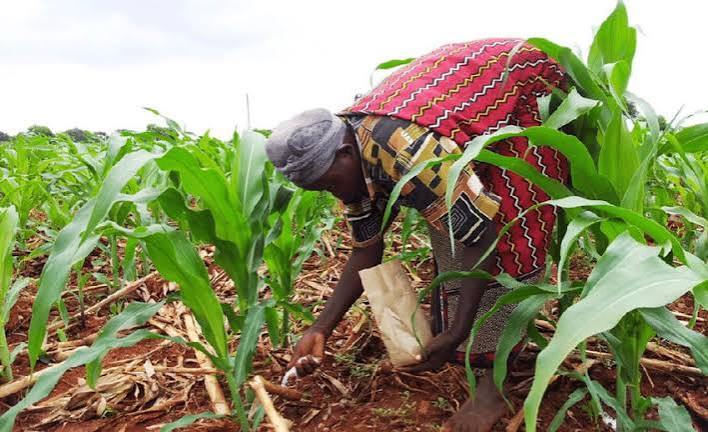
Fertilizer occupies a different emotional space in Nigeria than almost any other consumer category on this list. A wrong choice in body lotion irritates skin, a wrong choice in rice disappoints a meal, but a wrong choice in fertilizer, a fake bag, an underweight sack, an adulterated blend, can wipe out an entire season's harvest and threaten a farming family's income for the year. In 2026, Nigeria's fertilizer market sits at a genuinely pivotal moment, a handful of industrial giants racing to end the country's decades long import dependence, a nationwide push to move farmers from generic blanket formulas toward soil specific blends, and a persistent, dangerous undercurrent of counterfeit product that keeps undermining trust no matter how many times security agencies crack down.
The Flipbz Fertilizer Brands in Nigeria (2026) Market Report draws on publicly available information from industry research platforms, government agricultural bulletins and market intelligence sources, combined with Flipbz's own market analysis. The report does not rank or promote individual brands but examines the pricing, production and farmer behaviour forces shaping Nigeria's fertilizer market.
From Import Dependence to Regional Powerhouse
Nigeria's fertilizer industry has undergone one of the most dramatic transformations of any agricultural input category on the continent, moving from chronic import reliance toward genuine production strength within less than a decade. The scale of that shift shows up clearly in trade data, since Nigeria's urea exports surged from 660,000 tonnes in 2017 to more than 3 million tonnes in 2024, as Dangote and Indorama transform the country into a regional nitrogen hub. Indorama's own facility carries serious historical weight, since Indorama Eleme Fertilizer & Chemicals Limited was the largest producer of granular urea in Sub Saharan Africa before the commissioning of the Dangote plant, a facility with a production capacity of 2300 tons per day of ammonia and 4000 tons per day of granular urea, which made it the world's largest single train urea plant.
That capacity is still expanding rapidly. Indorama's third production line in Port Harcourt, backed by a $1.25 billion IFC financing package, is expected to be commissioned in 2026, lifting the company's total Nigerian urea output to 4.2 million tons per year. Dangote's own footprint has grown just as aggressively beyond Nigeria's borders, since the company has quietly built one of Africa's largest fertiliser businesses, with its Nigerian urea plant already producing roughly 3 million tonnes annually, while simultaneously increasing its planned investment in Ethiopia from $2.5 billion to more than $4 billion. Morocco's OCP Group remains the dominant force at continental scale, commanding a 54% market share across Africa, and has co invested with Nigeria's Sovereign Investment Authority to leverage Nigeria's abundant natural gas and the phosphoric acid supplies from OCP production facilities in Morocco to locally produce DAP for the country's numerous blending plants.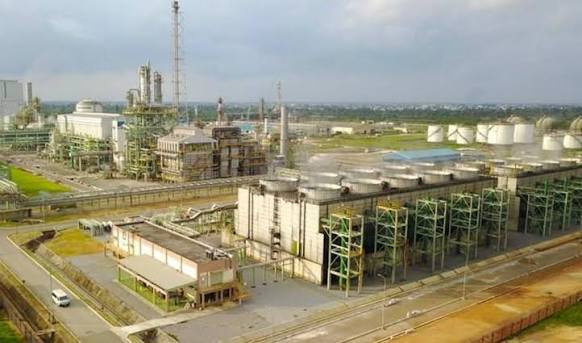
The Names Behind Nigeria's Bags
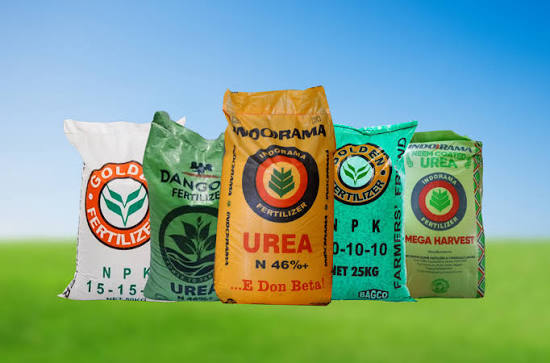
Nigeria's fertilizer market operates through a structure most consumers never see, a small number of large producers supplying raw urea and phosphate, and a much wider field of blending companies that turn those raw materials into the branded NPK bags farmers actually buy. Industry mapping describes the sector as moderately concentrated, with a small number of large domestic producers and blending companies alongside numerous distributors, agro dealers, and government program participants competing across the value chain, noting that Dangote Fertilizer and Indorama Eleme together represent a significant share of domestic urea production capacity, while OCP Africa, Notore, and WACOT are prominent in blended NPK supply.
Beyond these leading names, the wider competitive field includes producers such as Golden Fertilizer Company, EarthCare Nigeria Limited, Kano Agriculture Supply Company, Superphosphate Fertilizer and Chemicals, Springfield Agro and Hamdala Fertilizer and Chemicals among the top companies operating in the Nigeria fertilizer market. Government backed blending has its own dedicated structure too, since the Presidential Fertilizer Initiative arranges for Di ammonium phosphate and Muriate of potash to be supplied under negotiated arrangements by OCP and European suppliers, while urea is supplied locally by Indorama Eleme Fertilizer and Notore Chemical Industries, both in Port Harcourt, with the blending program itself driven by FEPSAN and the Nigeria Sovereign Investment Authority through a special purpose vehicle known as NAIC NPK.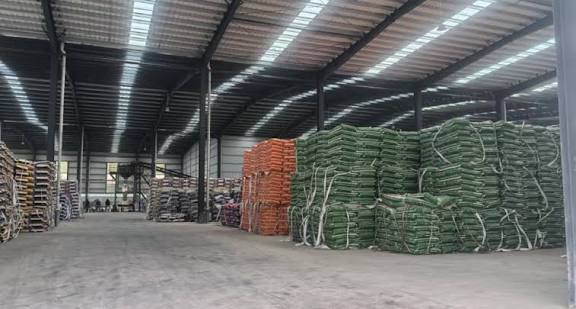
A Price Story Written in Sudden Spikes
Few agricultural inputs in Nigeria have swung as sharply as fertilizer prices have through 2026, a volatility driven by currency pressure, global supply shocks and seasonal demand all colliding at once. Global monitoring captured the scale of the jump directly, since Nigeria experienced significant fertilizer price increases despite relatively low demand at the start of the planting season, with urea rising by about 43 percent from 35,000 naira per 50kg bag in February to 50,000 naira in May, while NPK 20:10:10 rose by about 12 percent from 43,000 to 48,000 naira per 50kg bag, driven by global market uncertainty, foreign exchange pressures, higher natural gas costs, and increased import costs for key raw materials.
A major geopolitical disruption compounded these pressures further, since a near closure of the Strait of Hormuz since late February 2026, following escalating US Iran military exchanges, has disrupted the supply of ammonia, urea, sulfur and phosphatic fertilizers from the Gulf, a region that accounts for roughly a third of globally traded fertilizers, with global fertilizer prices projected to rise 31 percent in 2026 as a result. Retail level surveys give a more granular sense of what farmers actually face at the market stall, showing that a 50kg bag of NPK 15:15:15 fertilizer sells for between 28,000 and 30,000 naira depending on the market, while brand itself moves the price, since the price of Indorama NPK fertilizer is higher than the price of Notore NPK fertilizer, and country of origin plays a role too, since NPK fertilizers imported from Europe and the US are usually far more expensive than those imported from China and Turkey.
State governments have stepped in directly to soften the blow for farmers facing these swings. In Bauchi State, officials unveiled a major fertilizer subsidy that will see farmers purchase a bag of NPK fertilizer for 20,000 naira, significantly below the prevailing market price of 38,000 naira, launched specifically to reduce production costs and encourage higher agricultural output ahead of the 2026 rainy season farming campaign.
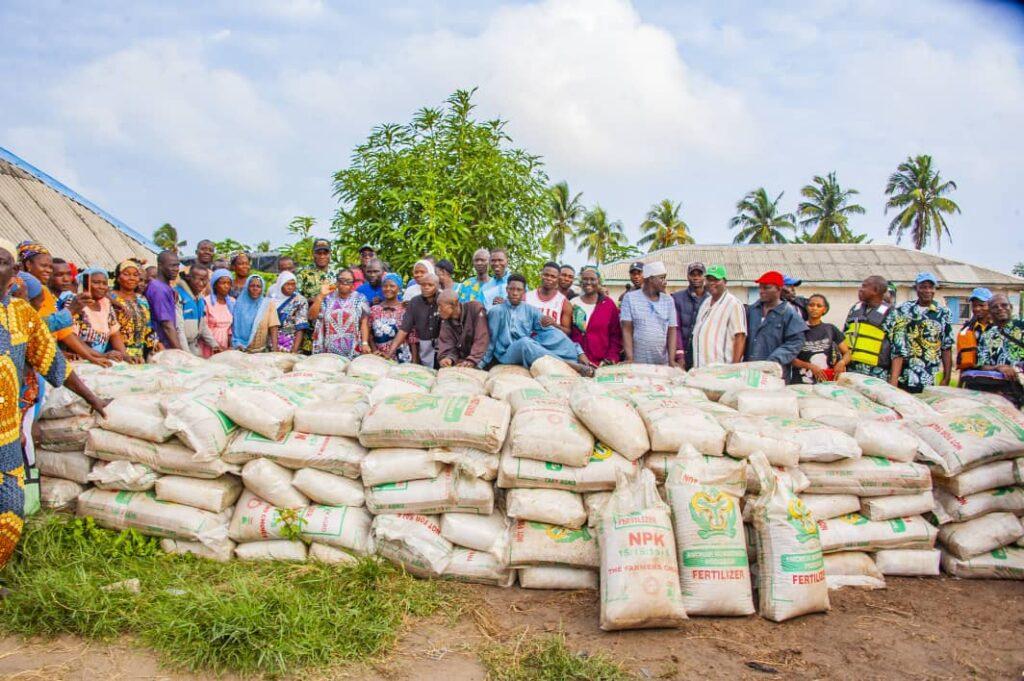
The Fake Fertilizer Crisis Farmers Cannot Shake
Beneath the industrial growth story sits a much older and more troubling problem, the persistent circulation of fake, adulterated and underweight fertilizer that has plagued Nigerian farmers for decades and shows no sign of disappearing. Longstanding research into the sector confirms just how entrenched this issue is, since fake, adulterated, and misbranded fertilizers, as well as underweight fertilizer bags, are prevalent in the Nigerian market, with fertilizer quality issues identified as another major constraint to fertilizer use in the country. The human cost of this problem is significant, since many farmers who were victims of bad fertilizers use less fertilizer than the recommended quantities, a defensive response that ultimately suppresses yields further.
2026 has already produced fresh, concrete examples of the scale of this trade. In Plateau State, farmer associations issued urgent public warnings, cautioning against the increasing circulation of fake and adulterated fertilisers and other farm inputs in various markets, stressing that at a time when farmers are already grappling with economic hardship and losses, it would be unacceptable for desperate individuals to further exploit them through the sale of substandard agricultural products. Enforcement action followed swiftly in other states, since security operatives in Zamfara apprehended a suspect in possession of suspected counterfeit fertiliser filled bags loaded for distribution, with a total of 550 bags recovered, in a case investigators say involved unlawfully manufacturing fertiliser and counterfeiting an established local brand.
In direct response to this quality crisis, the Nigerian government has moved to formalise national standards for the first time in over a decade. The Harmonized Fertiliser Recommendations for Nigeria, 2026 Edition, was developed through a rigorous process involving exhaustive technical workshops and peer reviewed validations spanning June 2025 through February 2026, with the manual seamlessly integrating the core sustainable soil practices of the 4Rs of nutrient stewardship, ensuring farmers apply the right source of fertilizer, at the right rate, at the right time, and in the right place, while replacing confusing technical measurements with real world bag equivalents to simplify blending for smallholder operators.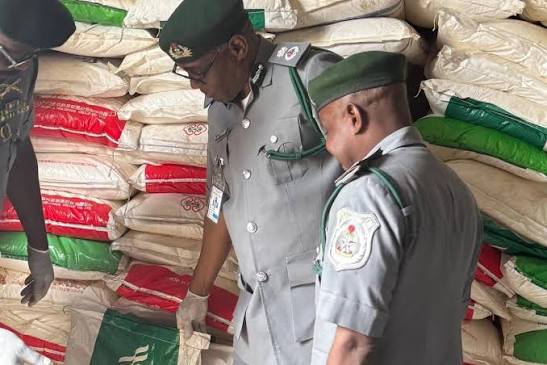
The Custom Blend Revolution Reaching Smallholder Farmers
Alongside the fight against fakes, a quieter but genuinely promising shift is underway in how fertilizer actually gets matched to Nigerian soil, moving away from one size fits all blends toward site specific formulas. One partnership model illustrates this shift clearly, since at dedicated blending facilities, farmers' soils are tested in a laboratory to determine the nutrient content and generate a custom fertilizer blend for their soils, with the nutrient test also helping farmers determine the quantity of fertilizer to use, helping them save on fertilizer costs. The results for participating farmers have been substantial, since this approach has produced more than 15,000 metric tons of fertilizer tailored to the soil needs of smallholder farmers and a 24 percent increase in maize yield for participating farmers, reaching 74,000 smallholder farmers, half of them women, through one specific initiative.
Individual testimonies underline just how transformative this can be at the household level, since one smallholder farmer in northern Nigeria who has used customized fertilizer on her five acre farm for three years found that fertilizers introducing the correct ratio of elements like nitrogen and phosphorus that local soils need have quadrupled her maize and rice yield. Scientific research backs up the economic logic behind this shift too, since nutrient expert based recommendations that vary from farm to farm have been shown to maintain high maize yield while increasing use efficiency of nutrients, using available fertilizer blends in Nigeria in a way that meant a decrease in the use of NPK fertilizer, resulting in an investment saving of about $80 per hectare.
What Nigerian Farmers Actually Weigh Before Buying Fertilizer
Trust in the Dealer Over Trust in the Brand Alone
Given how widespread fake fertilizer has become, farmer associations consistently advise buyers to patronise only approved, reputable and registered fertiliser and agro allied dealers rather than relying on brand name recognition alone, since even genuine brand names have been counterfeited successfully in several documented cases.
Price Against a Volatile Season
With naira prices for both urea and NPK swinging by double digit percentages within a matter of months, many farmers now time purchases around subsidy announcements or early season windows rather than committing to a fixed brand or supplier year round.
Blend Match to Actual Soil Needs
A growing share of farmers, particularly those reached by soil testing programs, now prioritise a fertilizer's nutrient ratio and suitability to their specific soil and crop over generic brand loyalty, a shift the new national manual is designed to formalise nationwide.
Bag Weight and Physical Verification
Because underweight and adulterated bags remain a documented problem, experienced farmers increasingly check bag weight, packaging seals and dealer registration before completing a purchase, treating physical verification as seriously as price comparison itself.
The Rise of Informed Fertilizer Buyers
Nigerian farmers and agro dealers, increasingly wary of both price volatility and counterfeit risk, are researching more carefully before buying fertilizer. Common searches include:
NPK fertilizer prices by state 2026
How to identify fake fertilizer in Nigeria
Dangote versus Indorama versus Notore urea comparison
Best fertilizer blend for maize and rice in Nigeria
Fertilizer subsidy programs by state 2026
Where to buy genuine NPK fertilizer near me
This growing research culture, amplified by farmer association bulletins and agricultural extension programs, continues to shape which dealers and brands earn trust in an increasingly cautious market.
Challenges Facing Nigeria's Fertilizer Industry
Counterfeit and adulterated products remain the industry's most damaging and persistent problem, since the existing institutional framework operating within the public sector has not been able to deal with quality problems, allowing fake and misbranded fertilizer to keep circulating despite repeated seizures and warnings.
Price volatility tied to global supply shocks continues to squeeze farmer affordability, since disruptions to Gulf shipping routes and broader geopolitical tension have already pushed global fertilizer prices sharply higher in 2026, feeding directly into the naira cost of every bag sold locally.
Import dependence for key raw materials persists even amid Nigeria's manufacturing gains, since roughly 80 percent of fertilizer used across sub Saharan Africa is imported, often at prices much higher than in Europe due to freight, financing and logistics costs, a burden that still shapes blending costs even for Nigeria's own domestic producers.
Historical governance failures continue to cast a long shadow over public subsidy programs, since past allegations of fraud within federally backed fertilizer initiatives have made both farmers and industry observers more cautious about how new subsidy schemes are structured and monitored.
Market Outlook for 2026 and Beyond
Nigeria's fertilizer sector enters the second half of 2026 with genuinely strong industrial momentum even as affordability and trust challenges persist at the farmer level. The competitive race among Africa's three industrial giants shows no sign of slowing, since Morocco's OCP, Nigeria's Dangote Fertiliser, and Singapore based Indorama are racing to close a structural gap that leaves sub Saharan Africa importing 90 percent of its mineral fertilizers, with OCP alone investing $5.25 billion in 2026 as part of a $13 billion green investment programme running through 2027. This scale of investment suggests Nigeria's position as a regional nitrogen and blending hub will likely deepen further over the coming years.
Whether that industrial growth translates into genuinely better outcomes for ordinary farmers will depend heavily on two unresolved questions, whether counterfeit enforcement can finally outpace a trade that keeps adapting faster than regulators can shut it down, and whether the shift toward soil specific custom blending can scale beyond pilot programs to reach the millions of smallholder farmers still applying generic formulas by habit. For now, Nigeria's fertilizer story looks a great deal like its rice and tyre markets before it, genuine production strength being built at the top of the industry, while trust and affordability remain hard won at the bottom.
Conclusion
Nigeria's fertilizer market in 2026 is defined less by competition between household brand names and more by a deeper struggle over trust, whether a farmer can be confident that the bag they are buying is genuine, correctly weighted, and suited to their soil. Dangote and Indorama's rapid rise as regional urea powerhouses, OCP's dominant continental footprint, and a wave of custom blending and soil testing initiatives all point toward a more sophisticated market taking shape. Yet until counterfeit fertilizer stops circulating freely in markets from Plateau to Zamfara, and until price volatility stops swinging as violently as it has through 2026, the brands and dealers that earn lasting farmer loyalty will be those that can prove, bag by bag, that what is inside matches what is promised outside.
About this Report
The Flipbz Fertilizer Brands in Nigeria (2026) Market Report is an independent editorial publication prepared using publicly available information from industry research platforms, government agricultural bulletins and market intelligence sources, together with independent market analysis by Flipbz. It is intended to provide market insight and does not constitute purchasing advice.

Please register to comment.
With these components in place, your business...
SolidBase Builders Limited is a professionall...
PrimeStone Construction Nigeria Ltd is a well...
CrestRock Engineering Services Ltd is a scala...
Open the Listing model file located in the ap...
Discover promising partnership opportunities in various industries.
Pitch Your Startup | Find Partners
.jpg)
.jpg)
.jpg)


Comments