
Written By: Flipbz.org
Few household categories in Nigeria carry as much everyday ritual as toothpaste, a product used at least once, often twice, in nearly every home across the country every single day. Nigeria consumes an estimated 540 million tubes of toothpaste annually, a habit that has become deeply ingrained across urban centres and rural communities alike, often used alongside traditional chewing sticks that remain part of the country's oral hygiene heritage. As with laundry detergent, this is a category that once had a name so dominant it briefly became the generic word for the product itself, before genuine multi-brand competition took hold.
The Flipbz Toothpaste Brands in Nigeria (2026) Market Report draws on publicly available data from company disclosures, NAFDAC public alerts, Statista and Euromonitor market data, and industry research platforms, combined with Flipbz's own market analysis. The report does not rank or promote individual brands but examines the forces shaping pricing, brand loyalty and competition across Nigeria's oral care sector.
From a Generic Name to a Genuine Contest
Nigeria's toothpaste story, much like its detergent story, begins with a single name that briefly swallowed the entire category. A generation of Nigerian children grew up knowing toothpaste as 'Macleans,' such was the patronage that made the brand command a generic name then. That dominance did not last. The brand lost its place, giving room for Close Up to snatch market leadership position. Close Up, a flagship product of Unilever Nigeria became the cash cow of the company, sustained by an elaborate marketing campaign and social initiatives that helped build brand loyalty and love.
Competition sharpened considerably once Procter & Gamble entered the fray. Oral-B is relatively new in the market, having just been introduced in 2011, making it more than thirty years younger than Close-Up. Despite its late arrival, the brand moved quickly. Investigations into the category have revealed that the gap between Oral-B and other toothpaste brands shows a slim leadership margin, particularly for the leading brand.
Herbal positioning added a further competitive layer. Dabur herbal toothpaste, manufactured by Indian company Dabur International Limited, was first imported into Nigeria in the late 1990s before its parent company established a plant in the country, and although not as popular as other brands, it has managed to maintain its place in the Nigerian dental market. Around 2015, Dabur Herbal came into the market with the aim of altering the status quo, appealing to consumers with the claim that the paste was made with natural herbs, and it got patronage from consumers who share the sentiments of African herbs. The rivalry has not always been friendly, either. Around the time Oral-B entered, Dabur suffered from a smear campaign, as information went round that the product had damaging side effects.
The Brands on Nigerian Shelves Today
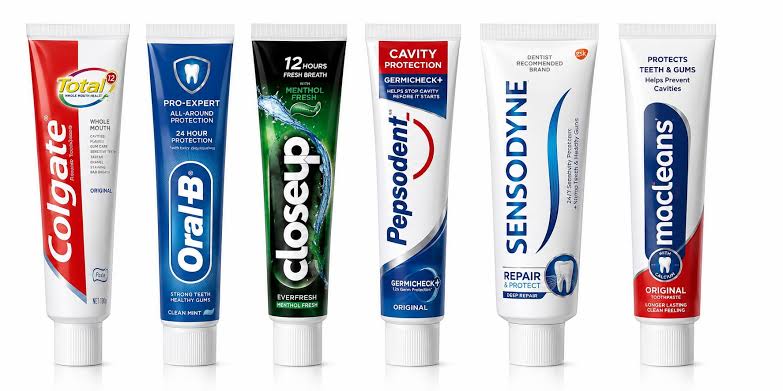
Today's Nigerian oral care aisle spans multinational heavyweights, herbal challengers and a long tail of value brands. Nigeria has over 32 toothpaste brands in the market, including Pepsodent and Close Up from Unilever Nigeria Plc, Macleans by Glaxosmithkline Nigeria Plc, MyMy from Daraju, Colgate from Colgate Palmolive, Oral-B from Procter and Gamble and Dabur from African Consumer Care Limited.
Close-Up currently sits at the top of the popularity ladder. Close Up is the most popular toothpaste brand in Nigeria, containing properties that enable fresh breathing, whiten and strengthen teeth, with freshness that can last for 12 hours, and it remains one of the cheapest and most affordable options because it comes in small sachets. Globally, Closeup is the third most-chosen toothpaste in the world, reaching consumers in over 57 countries, with innovation baked into its DNA since its 1967 launch.
Pepsodent, Unilever's other major toothpaste brand, has carved out its own space through dental-health credentials. Pepsodent, a toothpaste brand belonging to Unilever, is one of the most popular toothpaste brands in Nigeria and has been endorsed by the Nigerian Dental Association, with products including Pepsodent Complete Care, Pepsodent Herbal and Pepsodent Sensitive Expert.
Oral-B has grown into one of the category's four heavyweight names despite its youth. In the Nigerian oral care market, four toothpaste brands can be piled together in the 'A' category: Oral-B by Procter and Gamble, Close Up by Unilever Nigeria Plc, Dabur by African Consumer Care Limited, and Macleans by Glaxosmithkline Nigeria Plc. The Oral B Toothpaste is a leading and youngest toothpaste brand in Nigeria, designed with unique formulas that fit different needs, from whitening to enamel care.
Colgate rounds out the multinational contenders as an imported name with wide household reach. Colgate is an American brand principally used for oral hygiene products such as toothpastes, toothbrushes, mouthwashes and dental floss, manufactured in America by Colgate-Palmolive.
Macleans, meanwhile, has faded from shelf prominence following a major corporate exit. The biggest turning point came in 2023 when GlaxoSmithKline Consumer Nigeria Plc announced its exit from Nigeria after more than five decades of operations, ending its direct commercial presence, delisting from the Nigerian Exchange, and shutting down local operations. The brand's new owner, Haleon, has focused more heavily on premium oral care brands such as Sensodyne, which generates higher profit margins, and as a result Macleans has received less promotional attention and distribution support in several markets, including Nigeria. That said, the brand has not disappeared entirely. Products including Macleans are set to adopt new Haleon branding in phases, a rollout that comes amid continued adjustments in Nigeria's pharmaceutical market following GSK's 2023 exit from direct operations.
Why Small, Affordable Tubes Now Define the Market
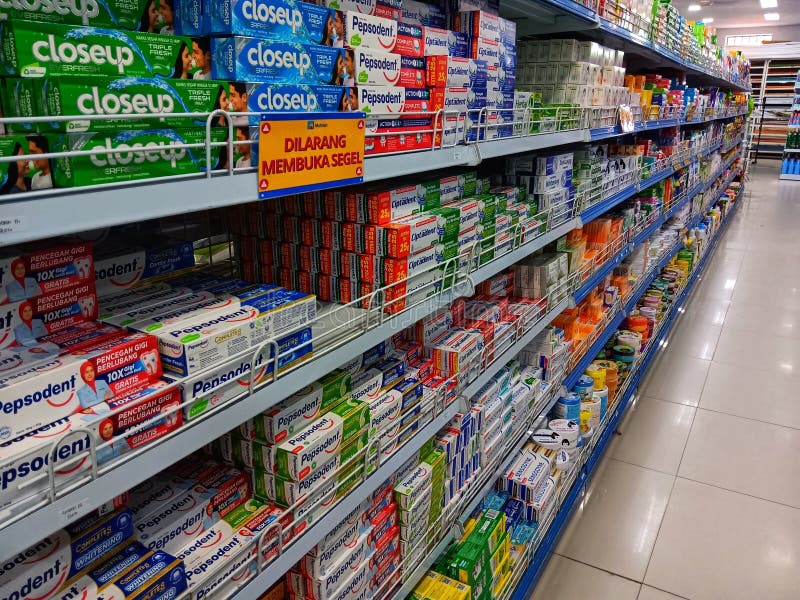
As with detergent's sachet economy, pack-size affordability has become central to how ordinary Nigerian households actually buy toothpaste. Annually, an estimated 540 million tubes of toothpaste are consumed nationwide, with usage extending beyond urban centres into rural communities, where it is often used alongside traditional chewing sticks, Nigeria's oldest form of oral hygiene. Nigeria represents one of the largest and most resilient oral care markets in Africa.
Manufacturers have responded to income pressure by leaning into smaller, cheaper formats rather than relying solely on standard-size tubes. Close-up's affordability is helped by the fact that it comes in small sachets, keeping it among the cheapest options on the market. This mirrors a broader continental trend toward format diversification. Premium and functional toothpaste segments, covering sensitivity relief, whitening and enamel repair, are gaining share, now accounting for an estimated 30 to 35 per cent of the total market by value in the largest economies including Nigeria, as consumers trade up from ultra-value and mass-market brands. This creates a two-track market, small affordable tubes driving volume at the bottom, while premium formats grow steadily at the top.
What Nigerian Consumers Consider Before Choosing a Toothpaste Brand
Price and Pack Size Flexibility
Affordability remains the deciding factor for most households, with small tube sizes allowing consumers to match spending to immediate need rather than committing to a larger, costlier pack.
Cavity Protection and Freshness Performance
Cleaning strength and lasting freshness remain core purchase drivers. Consumers continue to weigh properties like fresh breathing, whitening and strengthening effects, with freshness claims of up to 12 hours shaping brand comparison.
Herbal and Natural Ingredient Preference
A meaningful segment of buyers now gravitates toward herbal claims. The shift in consumer preference toward herbal and natural formulation-based products is driving the market, as oral care is increasingly perceived not merely as a hygiene routine but as a daily wellness and safety choice, with consumers becoming more aware of the long-term effects of synthetic chemicals. This global pattern helps explain the sustained, if modest, following that Dabur has retained in Nigeria over the years.
Authenticity and Product Safety
Counterfeit toothpaste has become a live regulatory concern. NAFDAC alerted the public to the circulation of unregistered and suspected counterfeit toothpaste products in Kaduna State, after officials visited a retail outlet and discovered two suspicious items labelled Coglaet ActivGel 100g and Coglaet Herbal 100g. The agency noted that the products were neither registered nor approved, raising concerns about their safety, quality and authenticity.
The Rise of Informed Toothpaste Buyers
Nigerian households, increasingly budget-conscious amid ongoing cost-of-living pressure, are researching more before they buy. Common searches include:
Best toothpaste for cavity protection in Nigeria
Close-Up vs Oral-B vs Colgate comparison
Cheapest toothpaste prices in Nigeria
Is herbal toothpaste better than regular toothpaste
Toothpaste price list 2026
Is my toothpaste original or fake
This growing research culture, amplified by social media discovery, is reshaping brand consideration in ways traditional advertising alone no longer fully controls.
Challenges Facing Nigeria's Toothpaste Industry
Corporate exits and distribution disruption have reshaped the competitive map in ways few predicted a few years ago. GlaxoSmithKline announced its exit from Nigeria after 51 years, citing Nigeria's shaky foreign exchange market. In H1 2023, its sales dropped to ₦7.75 billion from ₦14.8 billion in H1 2022, a 47.6 per cent decline, before the company fully wound down local commercial operations. Such exits create real distribution gaps that rival brands and new entrants continue to compete to fill.
Counterfeiting remains a persistent threat to legitimate manufacturers, as seen in the ongoing Coglaet case, where officials confirmed the fake products were designed to closely resemble a leading legitimate brand while bypassing all regulatory safety checks.
Currency and import exposure continues to weigh on manufacturers, since many toothpaste formulations still rely on imported chemical and packaging inputs whose costs move directly with naira depreciation.
Market Outlook for 2026 and Beyond
Nigeria's oral care segment is positioned for solid, if measured, growth. The oral care market in Nigeria is projected to grow by 10.45 per cent between 2024 and 2029, resulting in a market volume of US$0.97 billion by 2029. Toothpaste specifically remains the backbone of that growth. Being the dominant category in terms of value size, toothpaste is expected to continue driving oral care growth over the forecast period, and despite being negatively impacted by a poor economy in 2024, it is expected to see stronger improvement after 2025 as the economy picks up.
Across the wider continent, the trajectory points further upward. Africa's toothpaste market is projected to expand at a compound annual growth rate of 6 to 8 per cent from 2026 to 2035, driven by rising oral-health awareness, a young and growing population, and increasing urban household penetration of branded oral-care products. Premiumisation is expected to be a defining theme rather than a niche trend, with functional claims around sensitivity, whitening and enamel repair continuing to command a growing share of value even as affordable small-format tubes remain the primary volume driver for most Nigerian households.
Conclusion
Nigeria's toothpaste market in 2026 tells a story that closely echoes the country's detergent category, a single legacy name that once defined the product before genuine multi-brand competition took hold. Close-Up, Oral-B, Colgate and Dabur now anchor a market shaped as much by affordability and small-pack accessibility as by decades of brand trust, while Macleans navigates a quieter chapter following GSK's 2023 exit and Haleon's ongoing rebranding rollout. For manufacturers, sustained growth will likely depend on balancing affordability at the mass-market base with premiumisation at the top, all while defending shelf space against a rising tide of counterfeit products.
About this Report
The Flipbz Toothpaste Brands in Nigeria (2026) Market Report is an independent editorial publication prepared using publicly available information from company disclosures, NAFDAC public alerts, Statista, Euromonitor and industry research platforms, together with independent market analysis by Flipbz. It is intended to provide market insight and does not constitute purchasing advice.
Please register to comment.
With these components in place, your business...
SolidBase Builders Limited is a professionall...
PrimeStone Construction Nigeria Ltd is a well...
CrestRock Engineering Services Ltd is a scala...
Open the Listing model file located in the ap...
Discover promising partnership opportunities in various industries.
Pitch Your Startup | Find Partners


.jpg)
.jpg)

Comments