
Written By: Flipbz.org
Nigeria's beer industry in 2026 is a market of contradictions. Overall spending keeps climbing, brewers keep reporting stronger revenues, and a fresh wave of excise duties is set to push prices even higher, yet actual beer consumption volumes have been quietly shrinking for over a decade as younger Nigerians increasingly reach for spirits, wine and non-alcoholic alternatives instead. For the country's dominant brewers, growth now depends less on selling more beer and more on selling the same beer at higher prices to a shrinking pool of loyal drinkers.
The Flipbz Beer Brands in Nigeria (2026) Market Report draws on publicly available data from the financial disclosures of Nigeria's listed brewers, the Federal Ministry of Finance, and industry research platforms, combined with Flipbz's own market analysis. The report does not rank or promote individual brands but examines the forces shaping pricing, brand loyalty and competition across Nigeria's beer sector.
A Market Spending More While Drinking Less
Nigeria's beer industry presents a genuine paradox: rising naira figures sitting alongside a long-term volume decline. Nigerians spent an estimated ₦1.41 trillion on beer, malt and spirits during the first half of 2026, as the country's three largest brewing companies recorded stronger revenues and improved profitability despite inflationary pressures and changing consumer preferences. Those figures come from Nigerian Breweries, International Breweries and Guinness Nigeria, which together account for about 90 percent of Nigeria's formal beer market.
Individually, the picture varies by brewer. Nigerian Breweries, the industry's market leader, generated ₦803.7 billion in revenue during the six-month period, representing a 9% increase from the corresponding period in 2025, while International Breweries reported revenue of ₦342.1 billion, remaining broadly unchanged from the N341 billion reported in the corresponding period of the previous year. Guinness Nigeria, now managed by the Tolaram Group following Diageo's divestment, recorded an 11.8% increase in revenue to ₦265 billion as it expanded its beverage portfolio and targeted younger consumers.
But revenue growth masks a deeper structural challenge. While two of the three brewers delivered meaningful revenue growth during the period, the industry continues to face a longer-term structural challenge as younger Nigerians increasingly shift away from traditional beer consumption toward spirits, wine, ready-to-drink beverages and non-alcoholic alternatives. That shift is not new. Nigeria's annual beer consumption of approximately 2 million tons is significantly lower, by around 20 percent, than the 2.5 million tons average recorded in the early 2010s, with volumes dipping to a low of 1.8 million tons in 2022. Despite this changing consumer landscape, the brewers continued to grow revenues through price increases, portfolio diversification and sustained investment in marketing and production capacity.
The Brands Nigerians Actually Drink
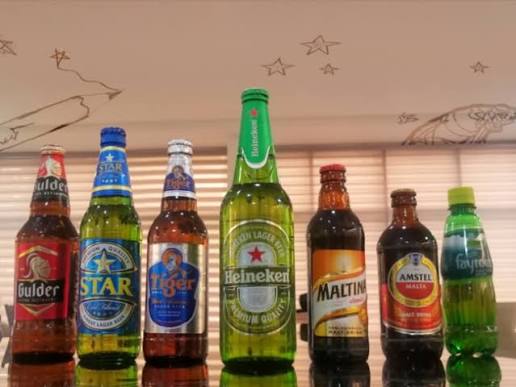
Nigeria's beer market is dominated by three major brewers, each carrying a distinct portfolio of household names. Nigerian Breweries has held the clear lead for decades, with the company estimated to control about 55 per cent of Nigeria's beer market. Its dominance traces back to an early start, having begun operations in 1946 and launched Star Lager in 1949, a head start that allowed it to build lasting relationships with distributors and consumers while expanding its portfolio to serve different market segments. Its stable of brands includes Star Lager, Gulder, Legend Extra Stout, Heineken, Goldberg, Life and Star Radler, alongside non-alcoholic lines like Maltina and Amstel Malta.
International Breweries, backed by AB InBev, sits in second position, having recorded 25 percent of the total market share in a recent reporting period, up from 23.2 percent the year before, with the company deploying heavy discounting to protect its lager market share. Guinness Nigeria rounds out the big three, though its position has softened in recent years, with the company's share dipping to 18.8 percent from 23.1 percent in one comparison period. Guinness has responded by leaning into its stout portfolio to maintain dominance in the northern and western regions, while also expanding into ready-to-drink beverages, malt drinks and spirits distribution to offset softening beer volumes. Champion Breweries Plc, a smaller listed player, has retained a market share of around 1.1 percent, occupying a modest niche within the broader industry.
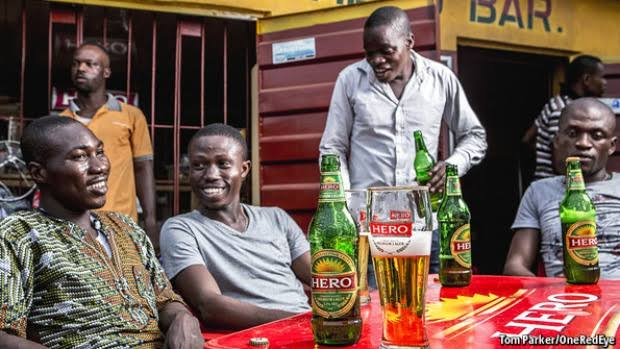
Brand loyalty in this market runs unusually deep. About 60% of beer consumers will always stick to their brand of choice and not be easily convinced to switch, with brand visibility and popularity influencing roughly 10 percent of consumers' choices, and names like Hero, Heineken and Trophy ranking top in that category. Interestingly, a smaller share of consumers, around 5 percent, select specific brands, particularly Guinness Stout and other stouts, because they are perceived as healthy.
Government Taxes Are Reshaping the Price of Every Bottle
Beer pricing in Nigeria is no longer determined purely by brewing costs, distribution and marketing, government excise policy is now a direct and rising factor. Under Nigeria's revised excise schedule, beer and stout will attract N72 per liter in 2026, rising to N76 per liter in 2027 and N80 per liter in 2028. Other government documentation places the effective date more precisely, noting that from 1 July 2026, NGN 72 per litre is payable on beer and stout, with the rate again climbing to NGN 76 and then NGN 80 per litre in the two years that follow.
This is not the first such increase, and it will not be the last. The new duties build on a pattern that stretches back years, following a broader trajectory where alcoholic beverages such as beer, wines, and spirits are taxed through specific rates per litre, increasing each year through successive fiscal cycles. The World Bank has actively encouraged this direction, having urged the Nigerian Government to issue a presidential order raising excise duties on goods such as alcohol, tobacco, and sugary drinks, tied to a broader non-oil revenue reform programme.
Brewers have already begun passing these pressures directly to consumers well ahead of the formal excise implementation. In March 2026, Nigerian Breweries stated it would review prices for some products across its stock-keeping units, citing rising operational expenses and increased input costs driven by prevailing economic conditions in the country, with Guinness Nigeria following with a similar move shortly after.
What Nigerian Consumers Consider Before Choosing a Beer Brand
Taste, Familiarity and Brand Loyalty
For most Nigerian beer drinkers, switching brands is genuinely uncommon once a preference is established, with brand loyalty in this category running higher than in many other consumer categories, reinforced by decades of advertising, sponsorship and cultural association built around specific brands.
Price and Pack Size
With excise duties climbing and naira depreciation pushing up input costs, affordability has become a growing concern even for loyal drinkers. Nigerian Breweries bemoaned the naira devaluation and rising interest rates as key pressures affecting its cost base, pressures that inevitably influence retail pricing decisions across the industry.
Perceived Health Positioning
A smaller but meaningful segment of consumers factor perceived health attributes into their choice, particularly around stout products, which some drinkers associate with strength or nutritional benefit compared with lighter lagers.
Regional and Cultural Preference
Beer preference in Nigeria often follows regional lines, with certain brands maintaining stronger dominance in specific regions, reflected in how brewers themselves tailor marketing and distribution, such as Guinness leveraging its stout portfolio to maintain dominance in the northern and western regions specifically.
The Rise of Informed Beer Buyers
Nigerian consumers, particularly younger drinkers weighing beer against spirits or ready-to-drink alternatives, are increasingly researching before they buy. Common searches include:
Beer prices in Nigeria 2026
Star vs Gulder vs Heineken comparison
Cheapest beer brand in Nigeria
Why are beer prices increasing in Nigeria
Best stout beer in Nigeria
Non-alcoholic beer options in Nigeria
This growing research culture reflects a market where price increases and shifting drink preferences are making comparison shopping and brand switching more common than in previous decades of near-automatic brand loyalty.
Challenges Facing Nigeria's Beer Industry
Rising input costs remain one of the industry's most persistent pressures. Recent financial disclosures showed Nigeria's beer makers recording a combined cost of sales of N278.4 billion, an 80.4 percent growth from the same period the prior year, with cost of sales consuming about 67.5 percent of total revenue, a margin squeeze that leaves brewers with little room to absorb new excise costs without passing them to consumers.
Shifting consumer preference toward alternatives poses a longer-term structural threat. Demand appears to be shifting to the spirits market as consumer preference for spirits has improved, a trend serious enough that even Guinness Nigeria has moved to acquire more rights to distribute different spirits brands in the Nigerian market, effectively hedging against its own core category.
Aggressive marketing spend to defend market share is also compressing profitability. Nigeria's three listed breweries have unleashed a combined N220 billion marketing offensive in the first half of 2026, battling for market share as inflation erodes consumer purchasing power, a strategy reflecting sector-wide consensus that volume retention is more critical than pricing power in an environment where the average Nigerian consumer is actively downtrading to cheaper alternatives or non-alcoholic beverages.
Market Outlook for 2026 and Beyond
The scheduled excise increases through 2028 mean pricing pressure on Nigerian beer is not a one-time event but a multi-year trajectory that brewers and consumers alike will need to navigate. Analysts have historically noted that revised excise duties pose a real risk to Nigeria's alcohol sector but are not necessarily ruinous to its long-term outlook, since companies typically respond by passing on the duties to consumers while also cutting costs through refocused production and cheaper local ingredient sourcing.
Portfolio diversification is likely to define competitive strategy over the next few years more than beer innovation itself. With brewers increasingly investing in malt drinks, ready-to-drink beverages and spirits distribution alongside their core beer lines, the companies best positioned for 2026 and beyond may be those that successfully capture Nigerian drinkers moving away from beer, rather than those simply trying to keep them from leaving.
Conclusion
Nigeria's beer industry in 2026 tells a story of resilience built on pricing power rather than volume growth. Nigerian Breweries continues to lead comfortably through scale, distribution and brand heritage, while International Breweries and Guinness Nigeria compete through discounting, regional strength and portfolio expansion into adjacent categories. For consumers, rising excise duties mean the cost of a bottle of beer is set to keep climbing through 2028 regardless of brand choice, while for brewers, the real battle increasingly lies in convincing a new generation of Nigerians to keep choosing beer at all.
About this Report
The Flipbz Beer Brands in Nigeria (2026) Market Report is an independent editorial publication prepared using publicly available information from the financial disclosures of Nigeria's listed brewers, the Federal Ministry of Finance, and industry research platforms, together with independent market analysis by Flipbz. It is intended to provide market insight and does not constitute purchasing advice, and does not promote alcohol consumption.
Please register to comment.
With these components in place, your business...
SolidBase Builders Limited is a professionall...
PrimeStone Construction Nigeria Ltd is a well...
CrestRock Engineering Services Ltd is a scala...
Open the Listing model file located in the ap...
Discover promising partnership opportunities in various industries.
Pitch Your Startup | Find Partners



.jpg)
.jpg)

Comments