
.jpg "The Nigerian Soap That Conquered Fifty Countries While Nobody Was Watching")
Written By: Flipbz.org
Toilet soap looks like the simplest category in Nigerian retail, a bar of soap, a bathroom shelf, a habit repeated twice a day in millions of homes. But look closer and two genuinely surprising threads emerge. The first is that Nigeria did not just adopt this global category, it invented one of its most exportable products, a black soap first developed by the Yoruba people that has since travelled from local markets into stores across dozens of countries. The second is that Nigeria's own soap industry has quietly become one of Africa's biggest producers and consumers at once, even as currency pressure keeps rewriting what a single bar costs from one year to the next.
The Flipbz Toilet Soap Brands in Nigeria (2026) Market Report draws on publicly available information from Euromonitor International, industry research platforms and market intelligence sources, combined with Flipbz's own market analysis. The report does not rank or promote individual brands but examines the pricing, production and consumer behaviour forces shaping Nigeria's toilet soap market.
A Category Nigeria Doesn't Just Buy, It Produces
Unlike many consumer categories built almost entirely on imports, toilet soap is one where Nigeria sits among the continent's genuine production powerhouses rather than only its customers. Regional trade data ranks Nigeria among the leading production countries in 2022 with 550 thousand tons, alongside Egypt with 292 thousand tons and Kenya with 250 thousand tons, together representing 42% of total African production. On the consumption side, the picture is just as significant, with Nigeria recording the highest consumption volume on the continent in 2023 at 585 thousand tons, ahead of Egypt at 301 thousand tons and the Democratic Republic of the Congo at 228 thousand tons, together accounting for 37% of total consumption.
Nigeria's role in regional trade extends beyond its own borders too. Export data shows Ghana remains the key foreign market for soap exports from Nigeria, comprising 66% of total exports, with Cote d'Ivoire in second position at 9.1% share, followed by Uganda at 5.2%. Even so, Nigeria remains a significant importer for the ingredients and finished products it cannot produce locally, since the largest soap suppliers to Nigeria in value terms were Indonesia, Malaysia and the United States, with a combined 94% share of total imports.
The wider domestic market reflects this dual identity of production power and import dependence at once. Local forecasting puts Nigeria's soap market size at USD 287.99 million in 2025, expected to expand to USD 497.66 million by 2034, growing at a CAGR of 6.19% spanning 2026 to 2034, converting to roughly ₦403 billion in 2025 and ₦697 billion by 2034 at current naira value. Within that, bar soap held the leading position among product type segments in 2025 based on market size, and is projected to post the fastest growth rate, sustaining its position as the most attractive segment during the forecast horizon.
The Brands Nigerians Actually Reach For
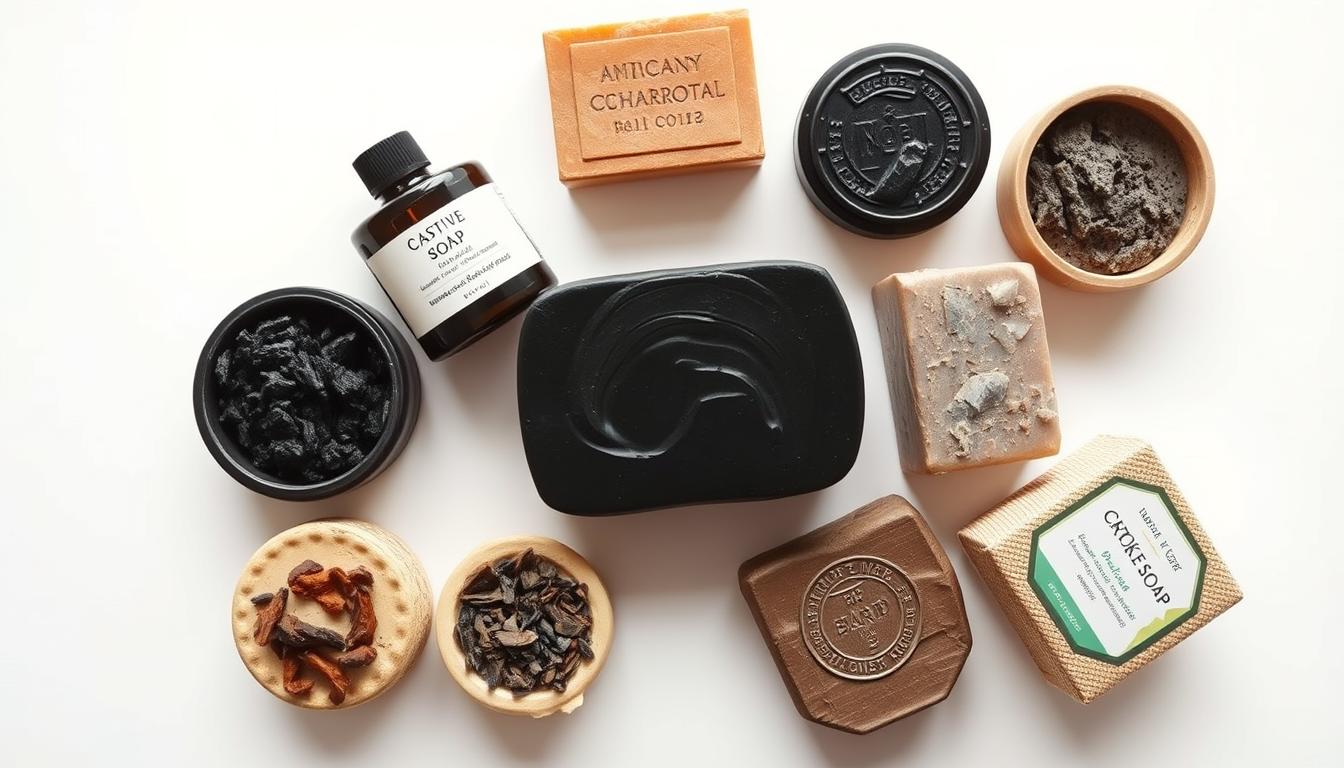
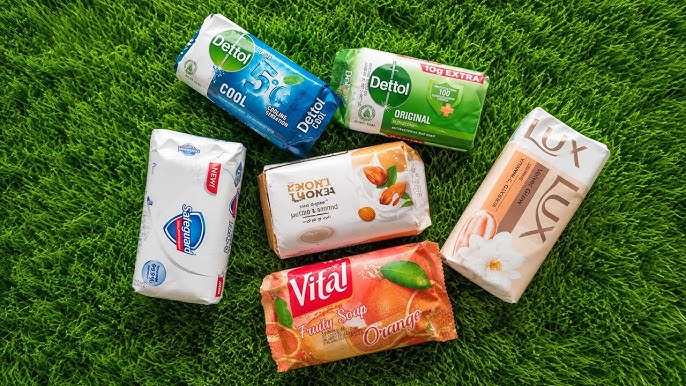
Nigeria's toilet soap shelf has long been dominated by a small cluster of multinational owned names manufactured locally, alongside a growing wave of homegrown natural soap brands. Industry reporting on the category names the leading local brands as Joy and Imperial Leather, produced by PZ Cussons Plc, Lux from the stable of Unilever Nigeria Plc and Eva manufactured by Evans Industries Limited, a lineup that has anchored Nigerian bathroom shelves for decades.
Imperial Leather carries a brand story that stretches back centuries before it ever reached Nigerian shelves. The soap's origin traces to 1768 when Russian nobleman Count Grigory Orlov commissioned a brand of perfume from Bayleys of Bond Street in London, later renamed Imperial Leather after Cussons Sons & Co acquired the perfume house. That heritage positioning still anchors the brand's marketing today, described as the original classic ivory bar soap, trusted for generations, famed for its classic, luxury fragrance.
Lux has built its position around a similar promise of everyday luxury rather than medicated function, with Unilever itself confirming its continued commitment to the brand, stating that Unilever has been actively driving the brand across mediums and channels and getting stellar growth, with demand for the Lux brand still very high and growing. Eva, meanwhile, has carved out loyalty through practicality rather than prestige, with one consumer explaining her preference simply because the soap is Eva, because of its size, fragrance and forming, while others noted the price is right at its size.
Dettol occupies its own lane entirely, built around antiseptic credibility rather than fragrance or fashion. The brand is widely marketed on its germ fighting reputation, described as a soap that kills 99.9% of germs and bacteria, leaving your skin clean and healthy, a positioning that has made it a household staple wherever health consciousness drives the purchase decision.
Dudu Osun: The Black Soap That Went Global
No story in Nigeria's toilet soap category is more surprising than that of Dudu Osun, a soap whose roots reach back centuries before modern branding existed. The product category itself, African black soap, is described plainly as a kind of soap originating in Nigeria, invented by the Yoruba people, traditionally made from the ash of locally harvested African plants and dried peels, which gives the soap its characteristic dark colour as well as oils derived from plant sources.
The modern commercial version of that tradition came from a company called Tropical Naturals Limited, established in 1995 by Abiola Ogunrinde, based in Lagos, Nigeria, and committed to producing superior, all-natural skincare products that address a range of skin requirements. What began as a locally sold bar has since scaled into something few Nigerian consumer brands can claim, with the company stating that our brand's flagship product, Dudu-Osun, has since then grown to receive global recognition with sales in over fifty countries worldwide.
The formulation itself reads like a list of ingredients drawn straight from Nigerian farmland rather than a laboratory, made from 100% natural African soap with shea butter and honey, and more specifically crafted from a blend of natural ingredients like shea butter, palm kernel oil, cocoa pod ash, lime juice, and honey. Even the raw material sourcing carries a distinctly Nigerian, small farmer story, since the palm oil comes from small Nigerian farmers who cultivate the oil palms in the traditional way.
That success has not gone unnoticed by imitators, a reality the brand and its retailers openly acknowledge. One retailer selling authentic black soap products cautions that Dudu Osun is one of the few original Black soaps that is still made with natural ingredients, since most of the so-called Black Soaps on the market are not Black Soap at all, but un-natural soaps that have been dyed black with chemicals. That single warning captures something genuinely important about this category, Nigeria's most exportable soap success story has also become one of its most counterfeited.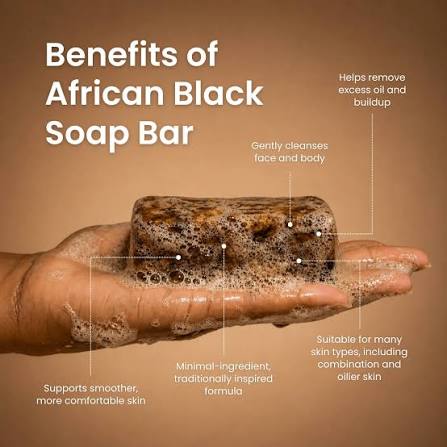
Why Currency, Not Demand, Keeps Rewriting the Price Tag
Whatever brand a Nigerian household reaches for, the price on the shelf has become far less predictable than it used to be, and the reason has little to do with how much soap people actually want to buy. Category tracking across Nigeria's wider personal care sector shows this clearly, since retail sales for the wider toilet care category are set to grow at a current value CAGR of 23%, compared with a much smaller 2024 constant value CAGR of 6%, and retail volume set to rise at a CAGR of 6%, a gap between value growth and volume growth that reveals just how much of the increase is coming from pricing rather than genuinely higher consumption. The same reporting notes plainly that demand in Nigeria has historically been driven by growing incomes and urbanisation, with consumers switching to substitutes during tough economic periods.
Import costs sit at the center of that price pressure. Trade data shows the average soap import price stood at $1,754 per ton in 2022, surging by 39% against the previous year, roughly ₦2.46 million per ton at current naira value, a jump that inevitably lands on the retail shelf. That currency exposure has already reshaped which product formats even survive in the Nigerian market, since niche categories such as rim blocks and in-cistern devices have historically been available in Nigeria, but virtually disappeared over the review period as import prices soared due to the depreciation of the local currency.
That same pressure has, somewhat counterintuitively, opened real opportunity for locally produced brands. Industry analysis notes strong competition by local brands is expected to boost toilet care demand, particularly towards lower income consumers, with the depreciation of the local currency impacting imports giving local brands good scope to gain even stronger share in the category, with more players expected to join the market given its potential.
What Nigerian Consumers Consider Before Choosing a Toilet Soap Brand
Fragrance and Lather Quality
For many Nigerian households, the sensory experience of a soap matters as much as its function, with buyers frequently citing fragrance and how well a bar forms lather as deciding factors between otherwise similar priced brands.
Antiseptic and Health Credentials
Households increasingly favour soaps marketed on germ protection rather than fragrance alone, a preference reinforced by brands built specifically around antibacterial claims and dermatological testing.
Natural Ingredients and Skin Healing Properties
A growing segment of buyers now seeks out soaps positioned around natural, therapeutic ingredients, since black soap variants are widely marketed as helpful for skin conditions including acne, eczema and uneven skin tone, a positioning that has helped homegrown natural brands compete directly with imported chemical formulations.
Price Relative to Pack Size
Affordability weighed against bar size remains a deciding factor for budget conscious households, with some consumers explicitly choosing a brand because the price matches the size and value they expect from it.
The Rise of Informed Toilet Soap Buyers
Nigerian consumers, increasingly weighing skin health alongside price, are researching more carefully before choosing a toilet soap brand. Common searches include:
Best soap for acne and eczema in Nigeria
Original Dudu Osun vs fake black soap
Dettol vs Lux vs Imperial Leather comparison
Best moisturizing soap for dry skin Nigeria
Toilet soap price list 2026
How to identify authentic African black soap
This growing research culture, amplified by skincare influencers and pharmacy counter recommendations, continues to shape which brands earn long term consumer trust.
Challenges Facing Nigeria's Toilet Soap Industry
Currency exposure remains the industry's most persistent structural weakness, since import price surges of nearly 40% in a single year translate directly into retail price increases that outpace real demand growth, as reflected in the wide gap between value and volume growth rates.
Counterfeiting threatens the reputation of the industry's most successful export story, since Nigeria's own black soap producers and retailers openly warn that most imitation products on the market are not genuine black soap at all, but chemically dyed substitutes.
Import dependence for raw materials and finished imported alternatives means every currency swing reshapes retail pricing across nearly every price tier, from budget bar soaps to premium imported brands.
Market Outlook for 2026 and Beyond
Nigeria's toilet soap category is positioned for continued expansion, anchored by both its scale as a domestic producer and its growing reputation as an exporter of genuinely differentiated products. Category forecasting for the wider household products sector shows toilet care in Nigeria saw a modest recovery in 2025 after declining in 2024 due to harsh unit price increases, with the category's essential nature and widespread availability of liquid toilet care products driving performance, as toilet liquids and foam emerged as the largest and fastest growing segment.
Regional forecasting suggests the broader African soap and detergent sector will keep expanding steadily, projected to grow to 36 million tons and $57.2 billion by 2035, driven by rising demand, equivalent to roughly ₦79.9 trillion in naira terms, with Nigeria, Egypt, and Ethiopia leading consumption, while production and trade face significant challenges. Growth over the coming decade is expected to be shaped by powerful demographic tailwinds including rapid urbanization and a growing, youthful population, alongside rising health consciousness, environmental awareness, and economic stratification.
Layered against this steady structural growth is the continued global rise of brands like Dudu Osun, whose fifty country footprint suggests Nigerian soap makers are no longer just competing for local shelf space, they are increasingly building products the rest of the world wants to buy too.
Conclusion
Nigeria's toilet soap market in 2026 is not simply a story of multinational brands competing for local loyalty, though Lux, Imperial Leather, Eva and Dettol continue to do exactly that. The more surprising story is that this unassuming category has quietly made Nigeria both one of Africa's biggest soap producers and, through Dudu Osun, one of its most successful soap exporters, carrying a centuries old Yoruba invention onto shelves in more than fifty countries. With currency pressure still deciding much of what a bar of soap costs from year to year, the brands that thrive from here will likely be those that can combine authentic local identity with the pricing discipline Nigerian households have come to expect.
About this Report
The Flipbz Toilet Soap Brands in Nigeria (2026) Market Report is an independent editorial publication prepared using publicly available information from Euromonitor International, industry research platforms and market intelligence sources, together with independent market analysis by Flipbz. Naira conversions in this report are approximate, calculated at a rate of ₦1,400 to US$1, reflecting exchange rates prevailing in 2026, and are provided for reader context only. It is intended to provide market insight and does not constitute purchasing advice.
Please register to comment.
With these components in place, your business...
SolidBase Builders Limited is a professionall...
PrimeStone Construction Nigeria Ltd is a well...
CrestRock Engineering Services Ltd is a scala...
AGRO COMPANY
Discover promising partnership opportunities in various industries.
Pitch Your Startup | Find Partners
.jpg)

.jpg)
Comments