
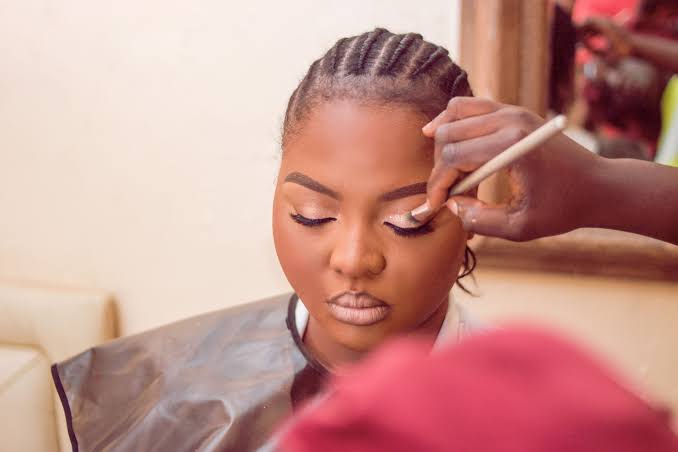
Written By: Flipbz.org
Nigeria's cosmetics shelf looks like a success story on the surface: a fast growing market, dozens of local founders building real businesses, and a population of over 230 million people increasingly comfortable spending on beauty. But sit with the numbers a little longer and a stranger picture appears. This is not just a market chasing growth, it is a market quietly fighting two invisible battles at once, an epidemic of counterfeit products so severe that regulators now call cosmetics the single most faked category in the entire country, and a decades old obsession with skin lightening whose real scale has been wildly exaggerated by one of the most repeated statistics in African consumer research.
The Flipbz Cosmetics Brands in Nigeria (2026) Market Report draws on publicly available information from Euromonitor International, NAFDAC enforcement disclosures, industry research platforms and market intelligence sources, combined with Flipbz's own market analysis. The report does not rank or promote individual brands but examines the pricing, safety and consumer behaviour forces shaping Nigeria's cosmetics market.
A Market Growing Fast, But Not Always Growing Safely
Nigeria's cosmetics and personal care market has moved firmly into growth territory, with most industry estimates now placing it above the one billion dollar mark. Market tracking values the sector at USD 1.17 billion in 2025, reaching USD 1.22 billion in 2026 and USD 2.08 billion by 2032, with the industry projected to witness steady growth at a CAGR of 9.30% during the forecast period. A separate forecast places the market even higher, valuing it at USD 1.21 billion in 2026 and set to reach USD 2.43 billion by 2034, growing at a 9.1% CAGR from 2026 to 2034, while other analysts see faster momentum still, projecting the category to expand at a double digit CAGR of 13.2% during 2025 to 2032, driven by rapid urbanization and improving income levels, growing focus on personal and skin care, proliferation of affordable brands, and growing influence of social media.
Skincare, not makeup, is the true engine behind this growth. Category data shows skin care accounting for approximately 30% of the share among all product types in 2026, with women consumers dominating with around 47% of the total share. Ownership of the market itself remains fairly open rather than locked down by a handful of giants, since the industry remains moderately fragmented, with the top five players collectively contributing nearly 48% share, reflecting balanced competition between multinational and local brands.
Yet growth has come with real strain on affordability. Because colour cosmetics saw current value growth in Nigeria in 2024, driven by a strong increase in unit price, with the average unit price increasing by more than 50%, and because practically all colour cosmetics brands and production materials are imported, every fall in the naira lands directly on the price tag. That pressure has been visible across the industry, with beauty specialists in Nigeria facing significant headwinds in 2024 due to rising inflation and the steep depreciation of the naira, factors that led to elevated prices for imported beauty products and dampened consumer spending, even as skincare, especially products with natural ingredients, showed resilience.
The Category Regulators Say Is Nigeria's Most Faked
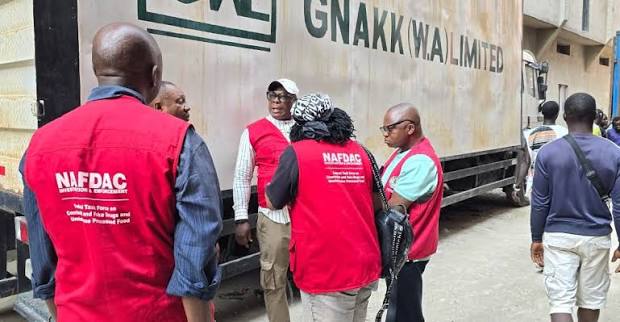
Here is the twist that makes this market genuinely different from almost any other consumer category in the country: cosmetics are not just popular, they are the most counterfeited product type in Nigeria, ahead of food, beverages and even pharmaceuticals. NAFDAC has stated plainly that cosmetics account for the most counterfeited products in Nigeria, followed by food and beverages, accounting for more than 50 per cent of seizures. The scale of individual raids underlines how serious this has become. One enforcement operation alone uncovered counterfeit and unregistered cosmetic products valued at more than N3 billion at the APT Trade Fair Complex in Lagos State, while a separate raid on a hidden production site saw NAFDAC seize ₦500 million, about US$335,000, worth of illegal cosmetics from a facility disguised inside a market.
What makes the problem especially difficult to police is how convincing the fakes have become. Investigators describe counterfeiters who import or reproduce the containers, refill them with fake creams, and sell them on informal markets, a method that makes it nearly impossible for an ordinary shopper to tell a genuine product from a dangerous imitation just by looking at the packaging. NAFDAC's own leadership has acknowledged this directly, noting that counterfeiters now replicate genuine products with remarkable accuracy, including packaging designs and registration numbers, and warning shoppers that if their budget cannot stretch to the real product, buying a cheaper imitation is not a safe alternative.
This counterfeit pressure is precisely why regulation has become a market force in its own right rather than background noise. Nigeria's NAFDAC Cosmetic Product Registration Program strengthens quality control, product safety monitoring, and regulatory compliance for cosmetic and personal care products entering the Nigerian market, and it is increasingly the deciding factor in which brands consumers feel safe trusting with their skin.
The Brands Nigerians Actually Choose
Nigeria's cosmetics shelf is a genuine mix of global names and homegrown success stories, and the balance between them is closer than in most African markets. Industry mapping lists the market's leading players as Mac, Maybelline, Beiersdorf, Loreal, Clarins, Zaron, Procter and Gamble, Oriflame, Unilever, House of Tara, Franemm, Estée Lauder, Yanga Beauty and several others, a lineup that shows just how far local brands have pushed their way into the same conversation as global giants.
House of Tara remains the clearest example of that local rise. Founded in 1998 and based in Lagos, House of Tara is a pioneer in Nigeria's beauty industry and one of the most recognized local makeup brands, built around a mission to empower women through beauty and entrepreneurship. The brand has stayed relevant for over two decades in part because it was one of the first Nigerian brands to champion inclusivity in beauty, known for creating products tailored specifically for African skin tones, while also running its own beauty academy to train the next generation of makeup artists.
Zaron Cosmetics tells a similar growth story from a slightly younger starting point. Founded in 2011 and based in Lagos, Zaron Cosmetics is a women focused brand that delivers affordable, high quality makeup products for African skin tones, and it has since scaled into over 20 franchise outlets and 700 distributors across Nigeria and Africa. Its Skin By Zaron line has become a genuine value pick, with published pricing showing products like the skin regenerating hydrating serum priced between N6,700 and N7,500, and an exfoliating and hydrating glow face wash between N5,600 and N6,500, well within reach of Nigeria's growing middle income beauty shopper.
Beyond these two, a wave of newer Nigerian labels is filling the affordable end of the market. Brands such as Aavour offer affordable complexion and colour products suited for everyday Nigerian glam and professional artistry at price points that reach as low as a few thousand naira, while Blossom Makeups has built a following on affordable, colourful cosmetics including foundations, lip products, primers and highly pigmented eyeshadow palettes. This crowded budget tier is exactly why the market remains, as noted earlier, only moderately concentrated rather than dominated by a small elite.
The Skin Lightening Number Everyone Quotes, and Why It Deserves a Second Look
No conversation about Nigerian cosmetics is complete without confronting skin lightening, since it remains the single most repeated statistic in the entire category. For over a decade, reports have circulated the claim that the World Health Organization found 40% of African women bleach their skin, with Nigeria's figure standing at 77%, compared to 59% in Togo, 27% in Senegal and 25% in Mali. That number has shaped headlines, business plans and public health campaigns alike, and it has helped push the global skin lightening market toward genuinely large numbers, with the United States alone spending $2.3 billion on skin bleaching creams in 2020, and experts projecting the global skin bleaching market will reach $12.3 billion by 2027.
But the surprising real story here is that the 77% figure, cited by nearly every article on this topic for over a decade, does not actually describe Nigeria as a whole. Fact checking work tracing the number back to its source found it originated from a 2002 survey carried out in three markets in Lagos between May and July 1998, in which 77.3%, or 348 of 450 people surveyed, said they used skin lightening cosmetics, a study of traders in one city, not a national sample. More recent, narrower studies tell a much more moderate story. A study among female medical undergraduates found a prevalence of skin lightening product use of 40.9%, with facial cleansers being the most commonly used product, while a global pooled analysis put lifetime use at a considerably lower 27.7% globally and 27.1% among Africans.
None of this means skin lightening is a minor force in Nigeria's cosmetics market, it very much remains one. It simply means the real picture is more layered than a single repeated headline suggests, and brands positioning themselves around pigmentation, tone correction and dermatological skincare are responding to something genuinely real rather than a myth. That is likely why 2026 has already brought fresh international entrants targeting exactly this need, with Sesderma expanding its African operations through entry into Nigeria in 2026, introducing dermatological skincare products focused on pigmentation management, hydration, anti-aging solutions, and overall skin wellness, following the earlier arrival of Urban Skin Rx.
What Nigerian Consumers Consider Before Choosing a Cosmetics Brand
Authenticity and Regulatory Trust
With counterfeit products making up more than half of everything NAFDAC seizes in the category, buyers increasingly check for registration numbers and buy only from outlets they trust, since the agency itself continues to advise Nigerians to purchase from authorised distributors and reputable outlets.
Price Relative to Naira Volatility
Because nearly all colour cosmetics and much of the raw material behind local skincare is imported, shoppers now weigh every purchase against currency swings, favouring brands that have managed to hold pricing steady despite the sharp unit price increases the category saw in 2024.
Suitability for African Skin Tones
Buyers consistently favour brands built with deeper skin tones and local climate conditions in mind, which is a large part of why homegrown names like House of Tara and Zaron have kept pace with global multinationals rather than being pushed aside by them.
Social Proof and Influencer Recommendation
With Nigeria's social media user base continuing to grow, beauty routines shared by influencers on Instagram, TikTok, Facebook and YouTube have become one of the strongest forces steering which products first time buyers decide to trust.
The Rise of Informed Beauty Buyers
Nigerian consumers, increasingly weighing safety alongside style, are researching more carefully before choosing a cosmetics brand. Common searches include:
How to identify fake Zaron or House of Tara products
Best foundation for dark skin tones in Nigeria
NAFDAC registered skincare brands list
Affordable Nigerian makeup brands 2026
Best skincare for hyperpigmentation in Nigeria
Cosmetics price list Nigeria 2026
This growing research culture, driven partly by fear of counterfeits and partly by beauty influencer content, continues to shape which brands earn long term consumer trust.
Challenges Facing Nigeria's Cosmetics Industry
Counterfeiting remains the industry's single biggest threat to consumer trust, since regulators have confirmed that cosmetics, alongside food and beverages, account for over half of all counterfeit products circulating in the country, undermining confidence in genuine brands even as demand keeps rising.
Currency exposure continues to squeeze affordability, since practically all colour cosmetics brands and their production materials are imported, meaning naira depreciation feeds directly into retail prices across both budget and premium tiers.
Price sensitivity is reshaping product formats, with industry researchers pointing to sachet based product innovation as one of the clearest opportunities emerging from a market where many consumers cannot afford full sized imported products.
Market Outlook for 2026 and Beyond
Nigeria's cosmetics category is positioned for continued expansion, even if growth will likely stay measured rather than explosive given the pressures already outlined. Regional data shows the broader beauty and personal care market across Africa is forecast to grow by USD 10,842.1 million during 2025 to 2030, accelerating at a CAGR of 9.6% during the forecast period, and Nigeria sits at the center of that momentum thanks to its scale. Some market watchers see even faster upside domestically, pointing to a projected CAGR of 14.97% and over 57 million active female consumers as evidence the category is still early in its growth curve.
Much of that future growth will be shaped by how the market answers its two defining tensions. On one hand, industry expansion is supported by increasing participation from international beauty companies introducing products tailored for African consumers, bringing more credible, clinically positioned options onto shelves. On the other, many businesses have recognized the financial challenges Nigerians are experiencing and are modifying their price management strategies, with items once deemed luxury goods now priced more affordably, a shift that keeps the market accessible even as import costs climb. Layered underneath both trends is the ongoing fight against fakes, meaning trust, not just price or performance, is quickly becoming the real currency of Nigeria's beauty market.
Conclusion
Nigeria's cosmetics market in 2026 is not defined by a simple contest between local and global brands, it is defined by trust. Genuine growth is real, skincare is thriving, homegrown names like House of Tara and Zaron have proven they can stand shoulder to shoulder with global giants, and international players are arriving with products built specifically for African skin. But so is the counterfeit crisis regulators keep sounding alarms about, and so is the more complicated, more honest version of the skin lightening story than the headlines have told for years. The brands that win from here will likely be the ones that make authenticity, not just affordability or trend appeal, their loudest selling point.
About this Report
The Flipbz Cosmetics Brands in Nigeria (2026) Market Report is an independent editorial publication prepared using publicly available information from Euromonitor International, NAFDAC enforcement disclosures, industry research platforms and market intelligence sources, together with independent market analysis by Flipbz. It is intended to provide market insight and does not constitute purchasing advice.

Please register to comment.
With these components in place, your business...
SolidBase Builders Limited is a professionall...
PrimeStone Construction Nigeria Ltd is a well...
CrestRock Engineering Services Ltd is a scala...
AGRO COMPANY
Discover promising partnership opportunities in various industries.
Pitch Your Startup | Find Partners
.jpg)


.jpg)
Comments