
Written By: Flipbz.org
Ask most people what Nigeria's hair care market looks like and they will picture shelves of shampoo, conditioner and relaxer kits. That picture is not wrong, but it is incomplete in a way that changes the entire story. The real surprise sitting underneath Nigeria's hair category in 2026 is twofold. First, packaged hair care, the shampoos, conditioners and treatments most reports focus on, is dwarfed by an entirely separate economy built around wigs and human hair extensions, one so large and so steady that industry watchers now compare its buying pattern to groceries rather than beauty. Second, while lawsuits and health scares have pushed American consumers away from chemical relaxers, the same relaxer brands are, by some measures, growing in popularity across Nigeria and its neighbours, even as a loud natural hair movement claims the opposite is happening.
The Flipbz Hair Care Brands in Nigeria (2026) Market Report draws on publicly available information from Euromonitor International, industry research platforms and market intelligence sources, combined with Flipbz's own market analysis. The report does not rank or promote individual brands but examines the pricing, cultural and consumer behaviour forces shaping Nigeria's hair care market.
A Market That Looks Modest on Paper and Enormous in Real Life
By the numbers most analysts track, packaged hair care in Nigeria looks like a solid but unremarkable category. Revenue in the Nigerian hair care market is projected to reach US$1.31 billion in 2024, with an anticipated annual growth rate of 10.60% between 2024 and 2028. That pace of growth is real, since the market is projected to grow by 10.60% from 2024 to 2028, resulting in a market volume of US$1.96 billion in 2028. Wider industry tracking paints an even more optimistic picture for the sector overall, describing hair care as poised for rapid expansion, with a projected increase of USD 356.2 million, reflecting a robust CAGR of 15.5% over the forecast period from 2025 to 2030.
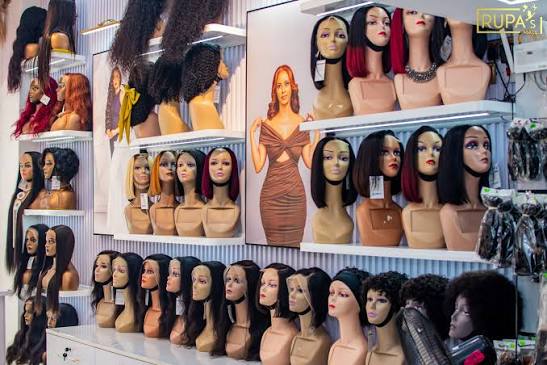
But those figures only capture what happens inside registered product categories like shampoo and conditioner, not the far larger, more informal economy sitting right beside it. Recent reporting on Nigeria's wig and extension trade puts real scale on that gap, noting that up to 60% of Nigerian women buy wigs or extensions regularly, yet most units are still imported from Asia, and that globally, the wig and hair extension market is projected to surpass $13 billion by 2026, with Nigeria counted among its fastest growing markets. The same reporting frames just how consistent this spending has become, describing it as behaving closer to groceries, a purchase that recurs often enough that a whole business can be planned around steady, repeat demand rather than a single high stakes rush.
Older estimates of this shadow economy are even larger, with one industry account claiming the hair extensions and wig market in Nigeria reached the threshold of 6 billion dollars in 2014 and exceeded 10 billion dollars in 2021. Whichever figure proves most accurate, the direction is clear, the money Nigerian women spend on their hair each year is not primarily going into a shampoo bottle, it is going into what sits on top of, or is woven into, their natural hair.
The Brands Nigerians Actually Reach For
Within the packaged hair care shelf itself, Nigeria's market remains genuinely competitive rather than dominated by one obvious winner. Industry mapping of the category lists leading companies including Franemm Industries Limited, N.N. FEMS Industries Ltd., L'Oreal S.A., SoulMate Industries Limited, Godrej Group, Dabur India Limited, Revlon Inc., Zenon Laboratories, Procter and Gamble, Unilever PLC, Dr Miracle's Inc., Luster Products Inc., Henkel AG, Oriflame Cosmetics and PZ Cussons Plc, a lineup spanning multinational giants and homegrown Nigerian manufacturers built specifically around local hair textures.
Within that crowded field, one brand has quietly built a level of trust few others can match. On the relaxer shelf specifically, reporting on the category states plainly that Dark and Lovely, owned by L'Oreal, is the top relaxer in Nigeria. Local retailers reinforce that positioning around its suitability for Nigerian conditions, describing its moisturizing formula packed with shea butter as ideal for dry, frizzy or brittle hair in humid Nigerian climates.
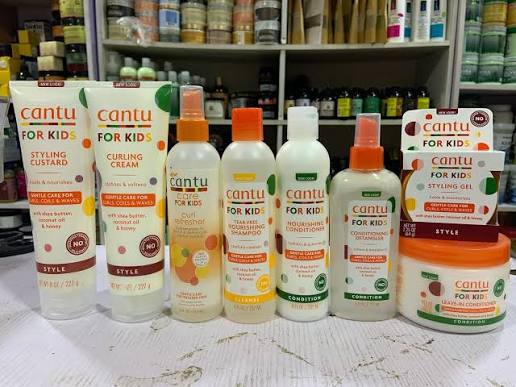
Beyond relaxers, natural and protective styling brands have carved out fast growing territory of their own. Cantu has become one of the more visible natural hair names on Nigerian shelves, sold through multiple dedicated distributors and retailers across the country, while global names like Pantene continue to compete on the strength of decades of brand recognition, having spent since its creation in the 1940s helping women worldwide solve their hair troubles.
The Relaxer Story America Got Wrong, and Nigeria Kept Living
Perhaps the most counterintuitive thread running through this entire category concerns the humble relaxer. In the United States, chemical straighteners have become the subject of serious health scrutiny and litigation, and the market has responded accordingly, since relaxer and perm sales declined by about 9% between 2017 and 2022 there. Industry analysts expect that decline to continue, with one Euromonitor researcher noting that sales of relaxers will probably continue to dip because consumers are apprehensive of the chemical composition of these products and their impact on health.
Across parts of Africa, including Nigeria, the story has moved in the opposite direction. Reporting built on Euromonitor data found Nigeria among the top five countries in sales growth for perms and relaxers from 2017 to 2022, with Tunisia and Kenya jumping as much as 10 percent over the five year span, and South Africa and Nigeria also seeing growth. A Nairobi salon owner captured the sentiment behind that resilience simply, insisting that people still use hair relaxers as much as they did in the past.
This is not to say the natural hair movement has had no effect, older industry commentary on the wider ethnic hair category noted that relaxers, once dominant, saw sales drop sharply as the natural hair movement gained momentum, with the category's earnings share shrinking well below its historic peak. Both realities exist at once in Nigeria today, a loud, visible natural hair and protective styling culture online, and a relaxer aisle that, contrary to global headlines, has not disappeared and may even be growing.
Why Currency, Not Culture, Is Setting the Price Tag
Whatever consumers choose, whether relaxer, natural hair product, or extension, the price they pay has become far less predictable than it used to be, because so much of what fills Nigerian hair care shelves starts life as an import. Market tracking of the wider category found that hair care saw strong growth in current value terms in Nigeria in 2024, but this was driven by a sharp rise in the average unit price of more than 60%, as depreciation of the local currency led to a strong rise in the cost of ingredients and in the import of finished products, pushing prices up strongly. The pattern held the year before as well, since a number of categories of hair care in Nigeria remain essential for local consumers, yet poor economic conditions led to a weak performance in 2023, with retail volume sales for all categories declining while retail current value sales increased only due to strong rises in unit prices.
Even the accessories side of the category has felt this pressure and responded to it. Personal care appliances, the dryers, straighteners and styling tools that sit alongside hair products, only found their footing again once pricing eased, since the segment rebounded in 2025 following price reductions and the launch of cordless and portable hair care appliances that appealed to young, fashionable consumers, as growing health and wellness awareness drove Nigerians towards personal ownership rather than shared equipment.
What Nigerian Consumers Consider Before Choosing a Hair Care Brand
Suitability for Natural Hair Texture
Buyers increasingly favour products formulated specifically for coily and textured African hair, part of why brands built around local conditions, rather than generic global formulas, have kept their footing even as premium multinational names enter the shelf.
Price Relative to Currency Swings
Because so much of the category is imported, shoppers weigh every purchase against naira volatility, favouring smaller pack sizes or trusted local manufacturers when unit prices climb sharply from one year to the next.
Wig and Extension Quality Over Brand Name
For the far larger extension and wig side of the market, buyers care less about a printed brand name and more about hair grade, durability and source, since most wholesale hair vendors are distributors or intermediary companies, as there are only a few or almost none of the hair manufacturers located in Africa, with most warehouses importing raw material from Asia such as Vietnam, India, or China.
Salon and Stylist Recommendation
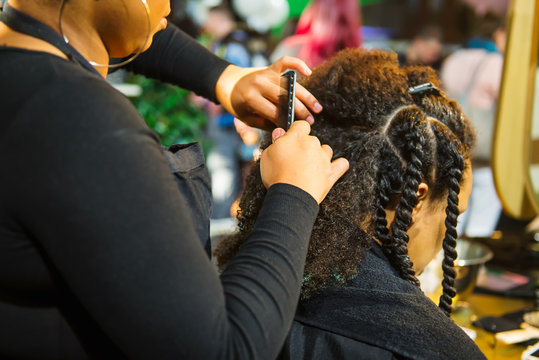
Word of mouth from hairstylists carries enormous weight in this category, since many purchase decisions, from relaxer brand to extension type, are made inside the salon chair rather than on a store shelf.
The Rise of Informed Hair Care Buyers
Nigerian consumers, increasingly weighing cost, health and texture compatibility, are researching more carefully before choosing hair products. Common searches include:
Best relaxer for natural African hair in Nigeria
Human hair wig prices in Nigeria 2026
Cantu vs Dark and Lovely comparison
Is hair relaxer safe or linked to cancer
Best shampoo for dry scalp Nigeria
Glueless wig price list Nigeria
This growing research culture, amplified by salon conversations and social media hair content, continues to shape which brands and hair sources earn long term consumer trust.
Challenges Facing Nigeria's Hair Care Industry
Import dependence remains the industry's most persistent structural weakness, both for packaged hair products and for the far larger extension and wig trade, since currency depreciation feeds directly into retail prices across nearly every price tier.
Health scrutiny around chemical relaxers is growing globally even if Nigerian demand has not yet followed the same downward path, meaning brands built on relaxer sales may eventually face the same reputational pressure now reshaping the category in the United States.
Informal market dominance in wigs and extensions makes the category harder to regulate and track, since so much of the trade runs through small importers and market stalls rather than large, accountable retail chains.
Market Outlook for 2026 and Beyond
Nigeria's hair care category is positioned for continued growth across both its packaged product side and its much larger styling and extension economy. Regional forecasting places the wider African haircare market at USD 3,495.9 million in 2025, growing at a CAGR of 7.9% during the 2026 to 2030 forecast period, driven partly by a cultural shift, since the proliferation of the afrocentric natural hair movement and clean beauty standards is expected to drive the market forward.
On the wig and extension side specifically, growth looks even steadier. Analysts tracking the braided wig and extension segment found Nigeria's slice of that market valued at USD 13.68 million in 2024, projected to grow at about 7% a year, while the country's overall hair market has been described as growing at an estimated 12% a year, one of the fastest rates worldwide. Layered against this, the wider premiumisation trend already visible in the market suggests brands able to combine local trust with genuinely higher quality formulations, whether relaxer, natural hair treatment, or wig grade, will likely capture the most value as household spending power slowly recovers.
Conclusion
Nigeria's hair care market in 2026 is really two markets wearing one name. There is the packaged shelf, shampoos, conditioners and relaxers, growing steadily but constrained by currency pressure and import costs. And there is the far larger, more informal economy of wigs, weaves and extensions, a market so consistent in its demand that it behaves more like a grocery staple than a beauty indulgence. Add to that the quiet contradiction of relaxers climbing in Nigeria even as they decline under legal pressure in the United States, and the real story of this category becomes clear, Nigerian hair culture is not simply following global trends, it is running on its own logic, shaped by climate, culture and currency far more than by what happens on shelves abroad.
About this Report
The Flipbz Hair Care Brands in Nigeria (2026) Market Report is an independent editorial publication prepared using publicly available information from Euromonitor International, industry research platforms and market intelligence sources, together with independent market analysis by Flipbz. It is intended to provide market insight and does not constitute purchasing advice.
Please register to comment.
With these components in place, your business...
SolidBase Builders Limited is a professionall...
PrimeStone Construction Nigeria Ltd is a well...
CrestRock Engineering Services Ltd is a scala...
Here is an opportunity to buy an established...
Discover promising partnership opportunities in various industries.
Pitch Your Startup | Find Partners
.jpg)


.jpg)




Comments