
Written By: Flipbz.org
The Cash Is Coming Back: Why More Nigerians Are Returning Their Money to Banks
More cash is flowing back into Nigeria's banking system as the CBN's policy push begins to bite
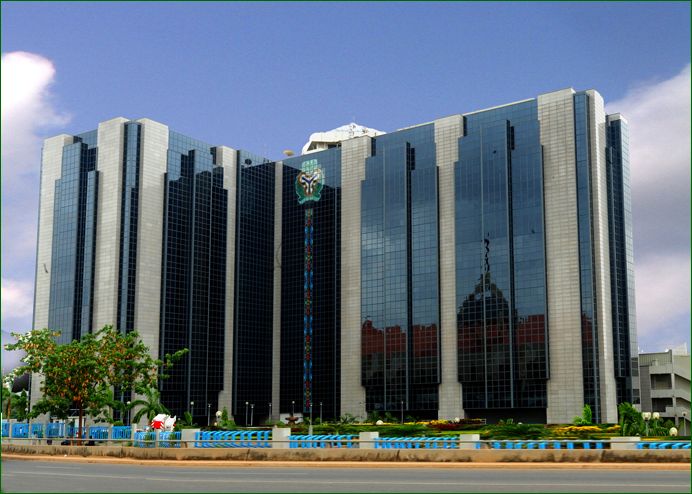
For the first time in months, more naira notes are landing back in Nigerian bank vaults than leaving them. Central Bank data show cash held outside banks has dropped to its lowest level in seven months, signalling a modest but notable shift in how Nigerians manage their money.
According to the latest Money and Credit Statistics released by the Central Bank of Nigeria, the amount of cash held outside Nigeria's banking system declined to N4.92 trillion in June 2026, the lowest level in seven months. The shift is also visible in the ratio of cash sitting outside formal banking channels. For every N100 in circulation, Nigerians held approximately N89.11 outside banks in June 2026, compared with N91.27 a month earlier. That month on month decline of 2.16 percentage points indicates that a larger share of physical cash returned to the banking system during June.
The turnaround becomes starker when measured against where the country stood just six months ago. In December 2025, roughly 94.33% of all currency in circulation was held outside banks, leaving only 5.67% within the banking system. By June 2026, the outside bank share had fallen by more than five percentage points to 89.11%, while the proportion of cash retained within banks nearly doubled to 10.89%.
The retreat in physical cash coincided with a broader expansion of money circulating through formal channels. Quasi money, which comprises savings and fixed term deposits, climbed to N88.54 trillion in June from N84.58 trillion in May, while demand deposits also recorded a modest increase, rising to N39.78 trillion from N39.43 trillion.
Nigeria has long struggled with one of Africa's most stubbornly cash dependent economies. As recently as late 2025, the numbers told a starkly different story. As of November 2025, currency outside banks stood at N4.91 trillion out of a total N5.26 trillion in circulation, meaning about 93.35% of all physical cash in the country was held outside deposit money banks. Economists at the time warned that Nigeria's preference for holding cash outside banks had become a structural feature of the monetary system rather than a temporary response to past policy shocks.
Policy changes introduced at the start of 2026 appear to have played a role in reversing that trajectory. In a circular that took effect January 1, the Central Bank of Nigeria removed the cash deposit limit for all bank customers, ending fees on large deposits, while maintaining strict weekly withdrawal ceilings under a revised set of cash related policies. The regulator explained that the new framework was introduced to reflect present day realities after years of adjustments to cash management rules, and specifically abolished the cumulative deposit limit, noting that the fee for excess deposits would no longer apply.
At the same time, the federal government tightened the rules around cash usage in the public sector. The government's decision to abolish cash payments for all its services from January 2026 was set to reshape how citizens and businesses engage with public institutions. Circulars issued to ministries, departments and agencies made clear that the Treasury intends to enforce a full transition to digital collections, backed by stricter accountability rules and unified reporting systems.
The influx of liquidity into the banking system has produced an unusual side effect. Much of that money is ending up back at the Central Bank of Nigeria instead of flowing to businesses and households in the form of loans, as commercial banks increasingly deposit excess liquidity with the apex bank through the Standing Deposit Facility. Analysts describe this as a paradox in Nigeria's financial system, abundant liquidity alongside relatively subdued credit growth.

Still, there are signs of a cautious lending recovery. Broader monetary data show that the growth in money supply comes after the CBN retained the benchmark interest rate, although analysts warn that rising liquidity could make it harder to control inflation.
Getting more cash into formal banking channels is central to the CBN's long term ambitions. Analysts note that bringing more funds into the formal financial system can improve savings mobilisation, increase access to credit and strengthen monetary policy effectiveness, while greater participation in formal banking channels can also support economic transparency and enhance access to financial services for households and businesses. Conversely, when large volumes of cash sit outside the system, it can weaken the effectiveness of policy measures designed to manage inflation, credit growth and overall economic activity.
CBN Governor Olayemi Cardoso has been explicit about the scale of ambition. At the launch of a new payments roadmap, the goal is to reduce cash outside banks to below 40% of total currency in circulation, with plans including deploying over 10 million QR code and tap to pay points nationwide.
The CBN's near term target is even more specific. Officials have signalled intentions to push cash outside banks down toward roughly N2.83 trillion ahead of the 2027 general elections, building on infrastructure already in place. A senior CBN payments official recently pointed to the scale of the agent banking network underpinning the drive toward digital transactions, noting that the country now has over two million agents spread across it.
Whether June's improvement holds will depend on whether households and small businesses continue trusting banks with their cash, or whether the reduction proves temporary, as it has before. By August and September of the previous year, the outside bank ratio had again risen above 92%, underscoring a persistent reliance on cash across the economy. For now, though, the numbers suggest Nigeria's long cash habit may finally be loosening its grip.
Please register to comment.
With these components in place, your business...
SolidBase Builders Limited is a professionall...
PrimeStone Construction Nigeria Ltd is a well...
CrestRock Engineering Services Ltd is a scala...
Here is an optimized version of your Blade te...
Discover promising partnership opportunities in various industries.
Pitch Your Startup | Find Partners

.jpg)
.jpg)
.jpg)
.jpg)




Comments