
Written By: Flipbz.org
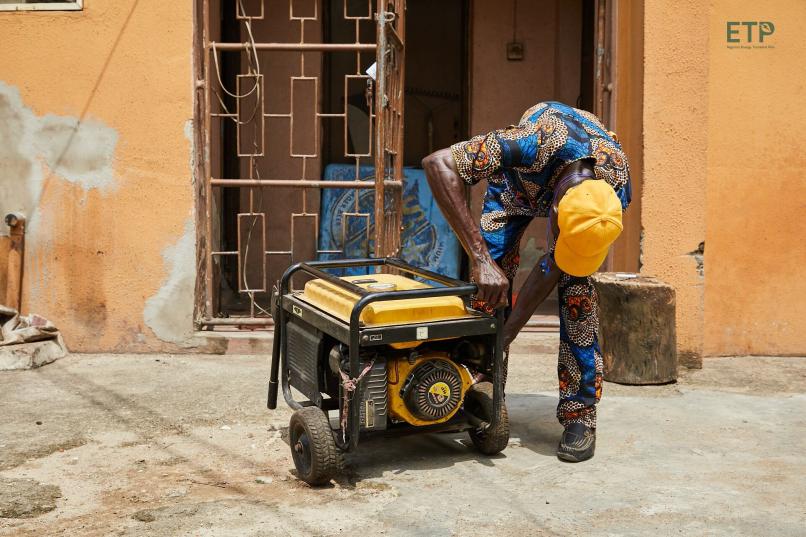
Few product categories in Nigeria carry the weight of daily necessity quite like the generator does, a machine that has, for decades, functioned less as a backup appliance and more as a parallel power utility for millions of homes, offices and factories. In 2026, that reality remains stubbornly unchanged, even as a growing solar and inverter movement begins to chip away at the edges of generator dependence. This report examines a market shaped less by marketing rivalry between brands and more by the raw economics of a national grid that continues to fail its citizens with striking regularity.
The Flipbz Generator Brands in Nigeria (2026) Market Report draws on publicly available data from the Nigerian Electricity Regulatory Commission (NERC), the Nigerian Independent System Operator (NISO), industry research platforms and market intelligence sources, combined with Flipbz's own market analysis. The report does not rank or promote individual brands but examines the forces shaping pricing, brand loyalty and competition across Nigeria's generator sector.
A Market Born From a Broken Grid
Nigeria's generator market cannot be understood as an ordinary consumer electronics category, because its growth has always been dictated by the failures of a different sector entirely: national power supply. The scale of that failure remains staggering even now. Out of an installed national generation capacity of 13,625 Megawatts, the grid could only muster an average of 4,286 MW available for dispatch in April 2026, a Plant Availability Factor of just 31 percent. For context against population, this leaves the vast majority of Nigeria's power infrastructure effectively idle relative to need, with the country generating an average of 4,000MW of electricity for an estimated 200 million citizens across the country.
Grid instability has not merely persisted, it has become a recurring national event. Nigeria's grid collapsed twelve times in the first half of 2024 alone, with continued failures into 2026, and reporting from early 2026 confirms the pattern held, with the electricity grid recording its first collapse of 2026 as generation dropped sharply within the space of an hour. The financial machinery underpinning the sector compounds the crisis further. Of every N280 billion in monthly invoices the generation companies issue, only 35 per cent is ever paid, a shortfall that has pushed accumulated power sector debt toward N8.8 trillion by the end of 2026 if current trends continue.
This is the backdrop against which every generator brand in Nigeria competes. Every outage is a signal to invest in generators, and an ecosystem supporting that demand has grown dense and well established, with companies operating nationwide distribution networks with integrated financing, spare parts logistics, and maintenance services, while global manufacturers remain deeply embedded in these supply chains.
The Brands on Nigerian Shelves Today
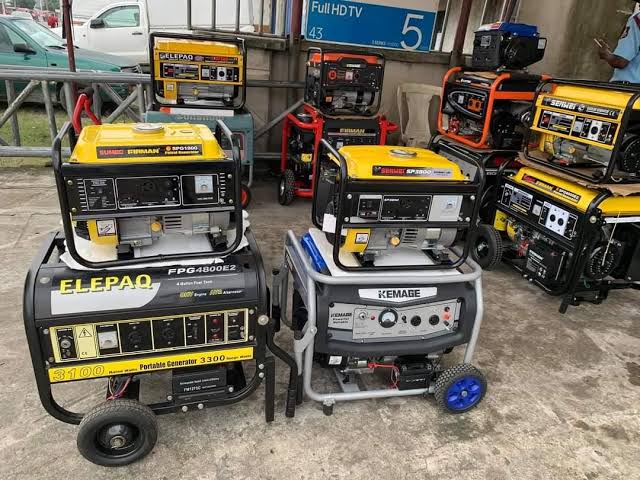
Nigeria's generator market spans a wide spectrum, from small portable petrol units powering a few bulbs and a fan, to heavy duty diesel systems keeping banks, factories and hospitals running. In the household segment of the market, major players include Tiger, Elepaq, Lutian, Thermocool, Sumec and Firman, while in the industrial segment, Mikano, Cummins, Perkins, FG Wilson and CAT battle for market leadership.
Sumec Firman has built one of the most recognisable names in the budget to mid tier household segment. When it comes to generators in Nigeria, Sumec Firman is a name that comes up repeatedly, produced by SUMEC, a large Chinese industrial conglomerate with decades of experience in power generation equipment, and estimated to hold 15 to 20 percent of the budget generator segment. Comparative reviews frequently place it just above its closest rival on quality while below premium names on price. In comparison to Elepaq generators, Firman generators are typically thought to be of greater quality, more fuel efficient, and quieter, while Elepaq, on the other hand, tends to be more affordable and widely accessible in particular markets, with prices ranging from ₦100,000 to as high as ₦3 million depending on capacity.
Honda occupies the premium end of the household and small commercial segment, prized specifically for reliability rather than price. Honda generators are widely praised for their reliability and low noise, with capacities ranging from around 450VA up to 5.5 KVA, models that rely on quality materials to remain profoundly solid when compared with rival brands. Mikano, by contrast, dominates the heavier industrial and commercial tier entirely. Mikano, which assembles Perkins and Cummins gensets locally, dominates the industrial space, while Honda, Sumec Firman, Elepaq, and Thermocool remain strong in the home and SME segments, with Mikano generators running on diesel and valued for being cost effective and durable, alongside the company's practice of maintaining rental warehouses for heavy duty generators used at events and business activities.
Newer entrants like Lutian have leaned on price to gain a foothold against more established rivals. Lutian is quite a new brand on the market but is gaining ground and popularity fast, largely on account of its durability and ruggedness, having been compared favourably to established brands like Thermocool and Sumec Firman with one major advantage being its cheaper prices. At the very top of the market, industrial names such as Perkins, Cummins, Deere, Lister and FG Wilson continue to serve Nigeria's oil and gas, telecom and manufacturing sectors, categories where downtime carries costs far higher than the price of a diesel genset itself.
Why Fuel Costs Now Shape Every Buying Decision
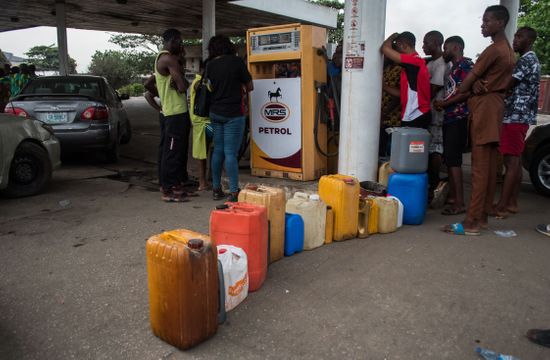
Unlike most household categories where the sachet economy defines affordability, Nigeria's generator market is shaped by a different kind of running cost: the price of the fuel that keeps the machine alive long after purchase. This dynamic has become sharper in recent years as global and local fuel price shocks have hit household budgets directly. Fuel price volatility has made generators increasingly expensive to run, with many households now spending more on fuel monthly than the upfront cost of basic solar systems spread over time.
That shift is now visibly reshaping consumer behaviour at the margins. Even before the latest fuel price shock, solar installations had been increasing in Nigeria in recent years as an alternative to generators among those able to afford the initial outlay, though the upfront cost remains a real barrier, since it costs about 600,000 naira to buy just one inverter battery and two 300 watt solar panels, roughly ten times the minimum monthly wage. Across the continent, the pace of this shift has accelerated sharply. Installations of solar power in Africa jumped 54% in 2025, according to a report by the Global Solar Council, marking the fastest annual growth on record, even though the continent's solar capacity still represents only about 1% of the world's total.
Even so, generator ownership remains deeply entrenched, not merely as a backup but as a habit few Nigerians are ready to abandon outright. Breaking the generator habit isn't easy, given that one feature of generators that consumers value is the ability to turn them off and on as a way to manage costs, a flexibility that competing solar financing models have had to design around directly. For the vast majority of households still without the capital for solar, the generator, powered by whatever fuel is available and affordable that week, remains the default answer to an unreliable grid.
What Nigerian Consumers Consider Before Choosing a Generator Brand
Price and Fuel Efficiency
Upfront cost remains important, but running cost now weighs just as heavily on buying decisions, with fuel efficiency increasingly cited as a deciding factor given how sharply petrol and diesel prices have moved in recent years.
Durability and Spare Parts Availability
The most popular brands succeed by offering three things, durability, fuel efficiency, and spare parts availability, since a generator that cannot be repaired quickly and affordably becomes a liability rather than a solution in a country where backup power is treated as essential infrastructure.
Noise Levels and Soundproofing
Noise has become a genuine quality of life concern in densely populated urban areas, with generators increasingly viewed as loud, disruptive, and intrusive, a factor pushing some buyers toward quieter inverter style units or soundproof canopy models despite the added cost.
Authenticity and Product Safety
Substandard and counterfeit power equipment remains a documented risk across Nigeria's broader power equipment ecosystem, a concern that extends from generators into the adjacent solar and inverter market as households diversify their power sources. The industry also faces broken trust in the technology after an influx of substandard solar lanterns and panels made consumers wary, with the informal market described as flooded with substandard components, including fake batteries, low efficiency panels, and poorly assembled inverters that can undermine trust in power solutions generally.
The Rise of Informed Generator Buyers
Nigerian households and businesses, increasingly cautious amid fuel price volatility and tightening budgets, are researching more before they buy. Common searches include:
Best generator brands in Nigeria
Sumec Firman vs Elepaq vs Honda comparison
Cheapest generator prices in Nigeria 2026
Best generator for small apartments
Generator price list 2026
Generator vs solar inverter cost comparison
This growing research culture, amplified by social media discovery and comparison platforms, is reshaping brand consideration in ways traditional advertising alone no longer fully controls, particularly as more Nigerians weigh generators against solar alternatives for the first time.
Challenges Facing Nigeria's Generator Industry
Persistent grid failure continues to be the industry's biggest demand driver and, paradoxically, its biggest long term risk, since any meaningful improvement in national power supply would directly reduce generator dependence. For now, that risk remains distant. Nigeria continues to face recurring nationwide grid failures, with multiple collapses recorded during 2025 to 2026, resulting in widespread blackouts, and the structural supply demand gap remains severe, with Lagos alone requiring nearly 30,000 MW of electricity but receiving only around 3,000 MW.
Fuel cost volatility represents a direct threat to generator affordability at the point of ongoing use, since even after a household or business has purchased a unit, the cost of keeping it running can quickly rival or exceed the machine's own price over time, a dynamic actively pushing some consumers toward solar alternatives despite higher upfront costs.
Rising competition from solar and hybrid systems is beginning to reshape the competitive landscape, even if slowly. Nigeria's hybrid generator set market is anticipated to grow at a CAGR of 7.84% during the period 2026 to 2033, reflecting a gradual shift toward systems that combine traditional generation with renewable inputs rather than abandoning backup power generation altogether.
Counterfeit and substandard components remain an ongoing concern across the wider power equipment space, with the same informal markets that distribute generators also serving as channels for fake batteries, low efficiency panels, and poorly assembled inverters, undermining consumer confidence in power solutions broadly, whether fuel powered or solar based.
Market Outlook for 2026 and Beyond
Nigeria's generator market remains the largest of its kind on the African continent, a position rooted directly in the severity of its power crisis. Nigeria occupies 1st position in terms of market size in the Africa Diesel Genset market, with the broader Nigerian diesel genset market size projected to grow from USD 536.5 million in 2023 to reach USD 871.1 million in 2030, reflecting a 7.3% CAGR over the forecast period. Regionally, Nigeria's dominance is even starker. Nigeria dominates the regional landscape, accounting for around 23% of the total African diesel generator market share, driven by high demand for reliable backup power solutions, with standby power generators representing the leading segment at approximately 65% of the overall market.
Industrial demand is expected to remain a key pillar of growth. In terms of end users, the industrial segment held a significant share of nearly 34% in 2026, supported by growing industrialization and the need for an uninterrupted power supply across manufacturing and processing sectors, while commercial applications continue to lead overall demand due to widespread reliance on backup power across businesses of every size.
At the same time, the long term trajectory points toward gradual diversification rather than pure generator dominance. Solar capacity across Africa is expanding rapidly, and Nigeria's own renewable energy market is projected to grow substantially in installed capacity over the coming years, even as financing barriers and trust issues around substandard solar equipment continue to slow the pace of full transition for most households. For the foreseeable future, generators are likely to remain Nigeria's primary backup power source, with solar and hybrid systems growing as a genuine complement rather than an outright replacement, particularly among higher income households and businesses able to absorb the higher upfront investment required.
Conclusion
Nigeria's generator market in 2026 remains fundamentally a story about a broken national grid rather than genuine brand rivalry, though competition between Sumec Firman, Elepaq, Honda, Mikano and a host of other names continues to shape which specific product a household or business ultimately buys. With grid capacity still falling far short of national demand and fuel costs adding a persistent running cost burden, the generator remains, for now, an unavoidable fixture of Nigerian life rather than an optional convenience. The real long term question facing the industry is not which brand will win the next sales cycle, but how quickly solar and hybrid alternatives can close the affordability gap that currently keeps millions of Nigerians tied to the familiar hum of a petrol or diesel engine each time the lights go out.
About this Report
The Flipbz Generator Brands in Nigeria (2026) Market Report is an independent editorial publication prepared using publicly available information from the Nigerian Electricity Regulatory Commission (NERC), the Nigerian Independent System Operator (NISO), industry research platforms and market intelligence sources, together with independent market analysis by Flipbz. It is intended to provide market insight and does not constitute purchasing advice.

Please register to comment.
With these components in place, your business...
SolidBase Builders Limited is a professionall...
PrimeStone Construction Nigeria Ltd is a well...
CrestRock Engineering Services Ltd is a scala...
Open the Listing model file located in the ap...
Discover promising partnership opportunities in various industries.
Pitch Your Startup | Find Partners
.jpeg)
.jpeg)



Comments