
.jpeg "Air Conditioner Brands in Nigeria (2026): Flipbz Market Report on Cooling Demand, Energy Efficiency and Pricing Trends")
Written By: Flipbz.org
Air conditioning has moved from an occasional luxury to a genuine household necessity for a growing number of Nigerian families, driven by rising temperatures, expanding urban housing and a widening range of brands competing for shelf and showroom space. For decades, one refrigeration and cooling name built such a strong reputation in Nigerian homes that it became almost synonymous with reliable cooling appliances. That early dominance has since given way to a far more crowded field, with multinational giants and value focused challengers now competing directly for the same customer.
The Flipbz Air Conditioner Brands in Nigeria (2026) Market Report draws on publicly available information from industry research platforms, regulatory bodies including the Standards Organisation of Nigeria (SON) and the Nigerian Electricity Regulatory Commission (NERC), and independent market analysis by Flipbz. The report does not rank or promote individual brands but examines the pricing, energy efficiency and consumer behaviour forces reshaping Nigeria's air conditioner market.
From One Cooling Giant to Many Contenders
Nigeria's air conditioner story has close parallels with the household appliance market more broadly, a single brand once shaped how an entire generation thought about cooling. The brand started out in Nigeria as Thermocool in 1971 with the aim of delivering top of the table fridges and freezers to customers. Thermocool entered the Nigerian market in 1974 and grew into a strong brand among Nigerian consumers. Cooling specifically became part of its identity later in that decade, as increased investment into developing a world class cooling brand led the company into producing cassette type air conditioners in 1987.
The brand's modern identity was cemented at the turn of the century. The name Haier Thermocool came into existence in 2001 after a collaboration between PZ Cussons and the Haier company, aimed at creating a better world class product. That partnership gave the brand lasting staying power, and today Haier Thermocool is described as a trusted brand for over 40 years, combining technology and innovation for household needs, and positioned as the most established supplier in the Nigerian market.
Genuine multi brand competition arrived as global electronics manufacturers scaled up their Nigerian operations. The leading air conditioner companies now active in Nigeria include Hisense Group, LG Corp, Haier Group, Panasonic Corp, Gree Electric Appliances, TCL Corp, Samsung Corp, Midea Group and Daikin Industries, among others. More recently, newer entrants have continued to widen the field. TCL has launched a new range of energy efficient products in Nigeria, including inverter air conditioners, and has partnered with SIMS Nigeria Limited as its sole distribution and after sales partner in the country.
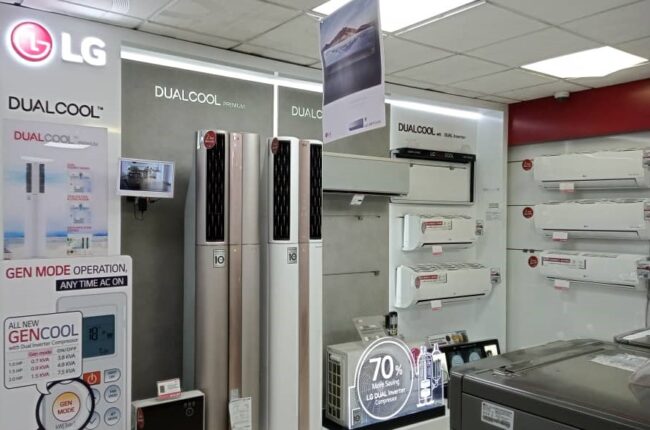
The Brands on Nigerian Shelves Today
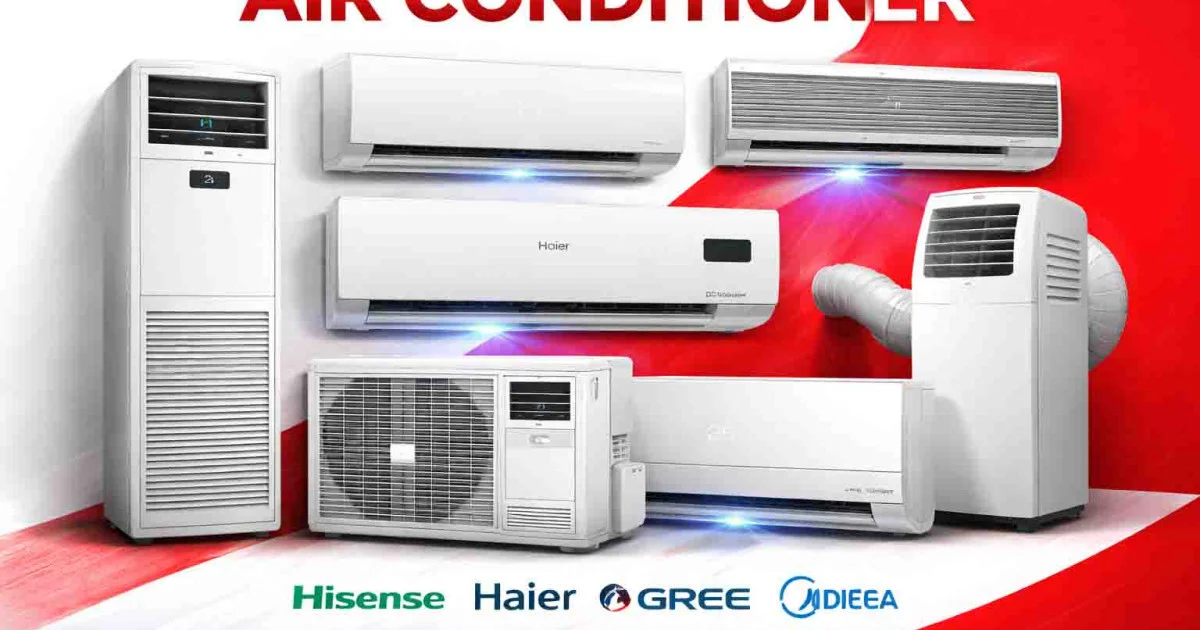
Nigeria's air conditioner market today is broadly organised into three tiers. Industry guides describe a premium tier made up of LG, Samsung and Daikin offering the best quality at the highest price, a mid range tier of Hisense, Haier Thermocool and Midea offering excellent value, and a budget tier of Skyrun and Polystar offering affordable, adequate quality units, with all these brands maintaining service networks across Nigeria.
Haier Thermocool continues to lean on its cooling heritage while pushing into energy saving technology, with the brand's inverter DC technology air conditioner able to save up to 60 percent on energy consumption compared to conventional units. LG has built its position around accessibility and range, as it is a well established brand known for high quality products, offering a wide range of designs, power ratings and functionalities that are easy to maintain, backed by a robust distribution network across the country. Daikin, though less mainstream, has been gaining ground, since the brand is known for its quality, durability and efficiency, and Daikin products are gaining popularity in the Nigerian market.
Samsung has positioned itself firmly at the premium end of the category, with its WindFree and Digital Inverter air conditioners offered as premium products with excellent energy efficiency, priced comparably to LG, with split units ranging from around ₦300,000 to ₦900,000 depending on capacity. Hisense has carved out a different position by combining performance with accessibility, since the brand offers competitive pricing on both inverter and non inverter split units, popular for delivering good performance at accessible prices, making it one of the best selling air conditioner brands in Nigeria. At the more budget conscious end of the market, Midea and Haier offer some of the most affordable air conditioners in Nigeria, with entry level 1HP split units starting from around ₦150,000, representing good value for budget conscious buyers.
Why Inverter Technology Now Defines the Market
Perhaps no single shift has reshaped Nigeria's air conditioner market more than the move toward inverter technology, driven almost entirely by the country's electricity cost crisis. In 2024, the Nigerian Electricity Regulatory Commission raised electricity tariffs for urban customers by 240 percent, with Band A customers, those guaranteed 20 hours of electricity daily, now paying around ₦209 per kilowatt hour. The impact on households running air conditioners is significant, since for a three person household on Band A with basic appliances like air conditioners, refrigerators and televisions, monthly electricity costs can reach ₦45,000, more than half of Nigeria's minimum wage.
Air conditioning has become the single biggest driver of that bill in many homes. A single 1.5 horsepower air conditioner running eight hours daily in Lagos consumes approximately 300 kilowatt hours monthly, costing between ₦18,000 and ₦24,000, and can represent 40 to 60 percent of a household's total electricity expenditure. This reality is pushing both manufacturers and buyers toward inverter models. Inverter air conditioners use roughly 30 to 60 percent less electricity than non inverter models, and while they carry a price premium of ₦80,000 to ₦150,000, that premium is typically recovered within 6 to 12 months through electricity savings.
Format shifts are already visible in the data. Split air conditioners have grabbed a market share of around 85 percent within Nigeria's room air conditioner segment. Looking ahead, the Nigeria Energy Transition Plan projects that residential electricity demand will increase significantly as more Nigerian homes adopt air conditioning, creating additional strain on an already stressed grid.
What Nigerian Consumers Consider Before Choosing an AC Brand
Price and Capacity Fit
Affordability remains central, but so does matching capacity to room size. Brands cater to this by offering wide ranges, with Haier Thermocool alone ranging from 1 HP to 10 HP to suit different needs.
Energy Efficiency and Running Cost
With electricity now one of the biggest recurring household expenses, consumers increasingly compare technical efficiency ratings before buying. Industry guides note that inverter air conditioners are a significant advance in energy efficiency because, unlike traditional fixed speed compressors, they adjust cooling capacity based on the room's temperature needs rather than running at full power constantly, resulting in electricity consumption sometimes up to 40 percent lower than non inverter models.
Durability and After Sales Support
Service availability matters as much as the product itself in a market where appliances face harsh voltage conditions. As noted across brand comparisons, all major brands in Nigeria maintain service networks, with buyers advised to choose based on budget and feature requirements. Installation quality also affects long term performance, since professional installation is considered essential for split units, as improper installation voids warranty and causes problems.
Authenticity and Certification
Counterfeit and substandard electronics remain a genuine concern for Nigerian buyers. SON certifies products through MANCAP for local goods and SONCAP for imports, issuing a Nigerian Industrial Standard mark with a QR code that buyers can scan to verify products against the SON database. The scale of the wider problem underscores why this matters, with one recent report noting that SON estimates Nigeria loses approximately N15 trillion annually to substandard goods across all product categories.
The Rise of Informed AC Buyers
Nigerian households, increasingly conscious of both purchase price and long term electricity costs, are researching more carefully before buying. Common searches include:
Best air conditioner for Nigerian heat
LG vs Samsung vs Hisense comparison
Cheapest inverter AC prices in Nigeria
Best AC brand for small rooms and offices
Air conditioner price list 2026
How to confirm an air conditioner is original and SON certified
This growing research culture, amplified by social media discovery and price comparison platforms, is reshaping which brands get shortlisted long before a buyer ever visits a shop.
Challenges Facing Nigeria's Air Conditioner Industry
Currency exposure remains a defining structural challenge, since most air conditioners sold in Nigeria are imported, meaning naira depreciation directly impacts prices, alongside capacity, technology and brand positioning. Voltage instability compounds this problem for consumers, as Nigerian electricity supply remains notoriously unstable, with voltage fluctuations ranging from 180V to 260V in many areas. Many buyers still budget separately for protective equipment, since external stabilizers typically cost between ₦15,000 and ₦35,000 for quality units.
Distribution and retail structure also shape outcomes as much as brand reputation. Open electronics markets are widely regarded as the best and cheapest place to buy air conditioners in Nigeria, since prices in showrooms tend to be considerably higher than what obtains inside open electronics markets. At the same time, counterfeit and substandard electronics continue to circulate through informal channels, with markets flagged by regulators as hubs where enforcement teams often face resistance while trying to curb the flow of counterfeit electronics and spare parts.
Market Outlook for 2026 and Beyond
Multiple industry research houses point to steady, sustained growth for Nigeria's cooling appliance sector, even if their specific estimates vary. One assessment places the Nigeria air conditioner market at around 380 million dollars in 2025, projected to reach 611 million dollars by 2032, growing at an estimated CAGR of around 7.02 percent from 2026 to 2032. Within that market, the split AC segment accounted for 46 percent of total units sold, with the segment projected to grow at a 12.19 percent CAGR in revenue terms, and the 1 to 1.5 ton category expanding even faster at a 14.11 percent CAGR. Distribution channels are also shifting, with multi brand stores representing 68 percent of the Nigeria air conditioner market by 2025.
Separate research focused specifically on room air conditioners paints an even more aggressive growth picture, estimating the segment at 202.07 million dollars in 2025, rising to an estimated 259.64 million dollars in 2026, and projected to reach 495.05 million dollars by 2032.
Climate pressure is a consistent thread across these forecasts. Growth is being driven by rising temperatures and intensifying climate stress, with the World Meteorological Organization confirming 2025 ranked among the three warmest years globally, and Nigeria mirroring this pattern through extreme and recurring heatwaves across 2023 to 2025. Broader structural trends reinforce this momentum, as a growing middle class population and continued urbanization remain major factors driving demand for cooling appliances.
Conclusion
Nigeria's air conditioner market in 2026 reflects a category in transition, shaped as much by electricity economics as by brand loyalty. Haier Thermocool's decades of cooling heritage continue to anchor consumer trust, while LG, Samsung and Daikin compete fiercely at the premium end and Hisense, Midea, Skyrun and Polystar drive volume at the accessible end of the market. With Band A electricity tariffs pushing running costs to the centre of every buying decision, the brands that win going forward will likely be those that pair recognisable quality with genuine, provable energy savings rather than heritage alone.
About this Report
The Flipbz Air Conditioner Brands in Nigeria (2026) Market Report is an independent editorial publication prepared using publicly available information from industry research platforms, regulatory bodies including SON and NERC, and independent market analysis by Flipbz. It is intended to provide market insight and does not constitute purchasing advice.
Please register to comment.
With these components in place, your business...
SolidBase Builders Limited is a professionall...
PrimeStone Construction Nigeria Ltd is a well...
CrestRock Engineering Services Ltd is a scala...
Here is an opportunity to buy an established...
Discover promising partnership opportunities in various industries.
Pitch Your Startup | Find Partners
.jpeg)
.jpeg)
.jpeg)

Comments