
.jpeg "Seasoning Cube Brands in Nigeria (2026): Flipbz Market Report on Consumer Preferences, Pricing and Household Usage")
Written By: Flipbz.org
I'll research Nigeria's seasoning cube market to gather authentic data on brands, pricing, and consumer behavior.Here is your Seasoning Cube report, formatted to match your series, with images made topic relevant to each subheading,Few categories in Nigeria's food economy carry as much daily emotional weight as the seasoning cube. It is the small, unglamorous ingredient that sits at the base of jollof rice, egusi soup, pepper soup and nearly every pot cooked in the country, purchased in single cubes as often as in bulk packs. In 2026, the category's defining story remains a decades old rivalry between two multinational giants, even as a growing field of local and value focused brands continues to chip away at their combined dominance.
The Flipbz Seasoning Cube Brands in Nigeria (2026) Market Report draws on publicly available information from NAFDAC, industry research platforms and market intelligence sources, combined with Flipbz's own market analysis. The report does not rank or promote individual brands but examines the pricing, regulatory and consumer behaviour forces shaping Nigeria's seasoning cube market.
A Rivalry Older Than Most Nigerian Households
Nigeria's seasoning cube story begins outside the country entirely, in a small Swiss mill more than a century before the product became a kitchen essential thousands of kilometres away. On the other hand, Maggi is an international brand owned by Nestlé, founded in 1872, by a Swiss entrepreneur called Julius Maggi. The brand's arrival in Nigeria eventually became so complete that it reshaped everyday language itself, since the brand has occupied a big space in the hearts of consumers and it has become the generic name for seasoning cubes in the country.
Maggi's dominance did not go unchallenged for long. Nigeria's seasoning market parades some great brands, and leading the park are Maggi from the stables of Nestle Foods, then Knorr and Royco, produced by Unilever, with Knorr, after being bought over from Cadbury Nigeria by Unilever, remaining a force to be reckoned with in the seasoning market. That rivalry has produced genuinely mixed results depending on who is asked and when, since one retail survey found that consumers now prefer Knorr over Maggi, with retailers noting they had to start stocking more Knorr because customers specifically requested it, while other market snapshots have placed Knorr Cube as the leading brand in the seasoning market in Nigeria based on both pricing power and patronage.
Local and regional competition arrived meaningfully in the 2000s. Promasidor Nigeria Limited launched Onga cubes into the Nigerian seasoning market following a successful penetration of Onga powder, introduced into the market in 2004, before expanding into cubes in 2010 to meet growing demand across West Africa. That expansion has continued well beyond a single national launch, with Promasidor Nigeria recently unveiling ONGA Ɗanɗano Seasoning Cube, a new product developed specifically for Northern Nigerian cooking traditions, launched in Yola and Kano to reinforce the brand's commitment to local taste preferences.
The Brands on Nigerian Shelves Today
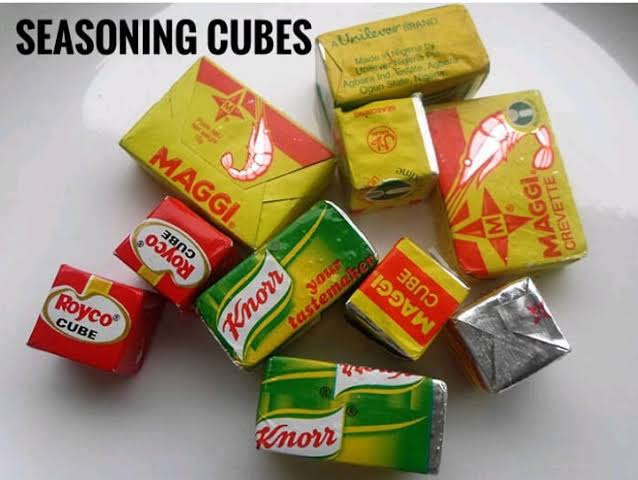
Today's Nigerian seasoning cube shelf spans two long established multinational names, a strong homegrown challenger and a wide field of budget focused entrants. Nigeria's seasoning market parades cube seasoning brands such as Maggi from the staple of Nestle Foods; Knorr and Royco, from the staple of Unilever, Onga cube from Promasidor, Doyin cubes from Doyin Group of companies, among others.
Maggi has built its identity around sheer variety and reach, since the brand has the most variants, up to ten, of all bouillon cubes in Nigeria, including Chicken, Crayfish, Onion Epice, Naija Pot, Star, Mutton, Kari, Safsafal, Nokoss and Golden Beef, giving it more flexibility across regional taste preferences than most rivals. Knorr has instead leaned on a premium positioning built around taste perception, with more customers believing that Knorr has a milder, less salty taste than Maggi, and consumer opinion across board showing that approximately 56 percent of people think Maggi has high salt, iodine and sodium content, a perception that continues to shape brand loyalty regardless of how accurate it may be in practice.
Onga has carved out its own lane by leaning into affordability and Nigerian first branding, and according to one market director, Onga is now positioned as Nigeria's foremost seasoning brand, with the company continuing to expand its range through soy based chunks and regionally tailored cube flavours. Beyond these three, a long tail of brands including Royco, Doyin, Tasty Cubes, Mamador, Prime, Supply cubes and Devon King's continue to compete for shelf space, often on price rather than heritage, with pack sizes ranging from single loose cubes sold for a few naira to multi cube packs designed for households that cook in bulk.
Why Health Concerns and Authenticity Now Shape the Market
Perhaps no issue has followed Nigeria's seasoning cube category more persistently than concerns over monosodium glutamate, popularly known as MSG, and the broader question of product safety. In Nigeria, NAFDAC allows the use of MSG in seasoning cubes such as Maggi, Knorr, and Ajinomoto, meaning the ingredient itself is not banned, but consumer anxiety around its long term health effects has remained a recurring theme in public discussion regardless of regulatory approval.
That anxiety occasionally spills into full blown misinformation, which NAFDAC has had to publicly correct. The agency was forced to disown a viral audio recording alleging that it had shut down a noodle manufacturing facility and imposed a ban on tinned tomatoes and Maggi seasoning cubes, with the regulator stating clearly that there is no ban on tinned tomatoes or Maggi seasoning cubes in Nigeria. NAFDAC's own investigation into related concerns found reassuring results, confirming that ethylene oxide or its derivative was not present in any instant noodles or seasonings produced in Nigeria, and that mycotoxin levels and heavy metals were within internationally acceptable limits.
Beyond misinformation, genuine enforcement concerns persist around bulk and unregulated additives entering the food chain. NAFDAC recently closed a warehouse in Suleja, Niger State, after uncovering large quantities of monosodium glutamate sold illegally in bulk, since the sale of MSG in bulk form has been banned due to its associated health hazards, with only regulated quantities permitted for controlled food processing. More broadly, NAFDAC has revealed that cosmetics, food, and beverages account for more than 50 per cent of counterfeit products circulating in Nigeria, underscoring that packaged food categories including seasoning cubes remain firmly within the regulator's ongoing enforcement focus.
What Nigerian Consumers Consider Before Choosing a Seasoning Cube Brand
Price Per Cube and Pack Size
For most households, the deciding factor remains how far a single cube stretches relative to its cost, particularly since seasoning cubes are bought so frequently that even small price differences compound significantly over a month of cooking.
Taste and Saltiness Perception
Flavour intensity remains central to brand loyalty, with long running consumer debate over which brand delivers a milder or saltier result continuing to shape household preference between Knorr and Maggi in particular.
Fortification and Nutritional Value
Health conscious buyers increasingly weigh nutritional claims alongside taste, since major brands like Maggi have been reformulated with added iron to address common nutritional deficiencies in West African diets, a positioning that has become part of the product's broader value proposition beyond flavour alone.
Authenticity and Regulatory Trust
Given periodic misinformation and genuine enforcement actions around counterfeit food products, an increasing number of consumers now check NAFDAC registration numbers before buying, particularly amid regulator warnings urging consumers to buy only from trusted sources while verifying product registration details.
The Rise of Informed Seasoning Cube Buyers
Nigerian households, increasingly conscious of both price and health concerns, are researching more carefully before choosing a seasoning cube brand. Common searches include:
Knorr vs Maggi taste and salt comparison
Is MSG in seasoning cubes safe
Cheapest seasoning cube prices in Nigeria
Onga vs Knorr vs Maggi comparison
Is my seasoning cube NAFDAC registered
Seasoning cube price list 2026
This growing research culture, amplified by social media discussion and word of mouth among home cooks, continues to shape which brands earn repeat household trust.
Challenges Facing Nigeria's Seasoning Cube Industry
Consumer health perception remains a persistent challenge for manufacturers, since public anxiety around MSG and sodium content continues to circulate widely, sometimes fuelled by misinformation that regulators must actively correct even when the underlying products meet approved safety standards.
Counterfeiting and unregulated bulk repackaging add a further layer of risk for both consumers and legitimate manufacturers, particularly given that prolonged intake of unregulated repackaged additives could lead to severe organ damage and contribute to chronic health conditions, according to NAFDAC enforcement officials.
Currency and input cost exposure also shapes pricing across the category, since seasoning cube manufacturing relies on a mix of imported and locally sourced inputs whose costs remain sensitive to naira depreciation, a pressure shared broadly across Nigeria's packaged food sector.
Market Outlook for 2026 and Beyond
Nigeria's broader spices and seasonings market is projected to continue expanding steadily, with one assessment placing the market at USD 213.3 million in 2025, projected to reach USD 345.87 million by 2034, growing at a CAGR of 5.55 percent from 2026 to 2034. A separate industry research house offers an even higher growth estimate, projecting the Nigeria Spices and Seasonings Market to grow at a compound annual growth rate of 7.4 percent during the forecast period from 2026 to 2032, driven partly by an increasing demand for clean label seasonings without MSG.
Within the wider condiments category that includes seasoning cubes, growth is expected to remain resilient even amid broader economic pressure, since seasoning powders, stock cubes, tomato pastes and purées in Nigerian cooking are deeply tied to stews, soups, rice dishes and large scale social meals, giving the category resilience even when inflation limits spending elsewhere. Affordability continues to shape how that growth plays out at the shelf level, with smaller sachets, lower cost powders and accessible formats helping households manage daily budgets while preserving flavour intensity.
Conclusion
Nigeria's seasoning cube market in 2026 remains anchored by one of the country's oldest and most emotionally resonant brand rivalries, even as Onga and a growing field of local challengers continue to press for greater share through affordability and regional flavour innovation. With health perception, counterfeiting risk and currency pressure all shaping the competitive landscape, the brands best positioned for continued household loyalty will likely be those that can pair recognisable taste with visible, verifiable safety credentials, not heritage or price advantage alone.
About this Report
The Flipbz Seasoning Cube Brands in Nigeria (2026) Market Report is an independent editorial publication prepared using publicly available information from NAFDAC, industry research platforms and market intelligence sources, together with independent market analysis by Flipbz. It is intended to provide market insight and does not constitute purchasing advice.
Please register to comment.
With these components in place, your business...
SolidBase Builders Limited is a professionall...
PrimeStone Construction Nigeria Ltd is a well...
CrestRock Engineering Services Ltd is a scala...
Here is an optimized version of your Blade te...
Discover promising partnership opportunities in various industries.
Pitch Your Startup | Find Partners
.jpg)


.jpg)

Comments