
Written By: Flipbz.org
Nigeria's snack aisle is not one market, it is several markets wearing the same label, sausage rolls sold through traffic windows, cream crackers packed for school lunchboxes, biscuits stacked in kiosks, and a rising wave of chin chin and plantain chips being repackaged for supermarket shelves instead of roadside nylon bags. This report, built on publicly available retail data, market intelligence and independent Flipbz analysis, examines the brands, pricing tiers and shifting consumer psychology defining how Nigerians snack in 2026, a year in which economic pressure forced both manufacturers and buyers to rethink what a snack is even allowed to cost.
A Market Rebuilding Itself After Two Punishing Years
Nigeria's snack industry spent 2024 absorbing a currency shock that changed almost everything about how the category is priced and packaged. Industry tracking confirms the scale of that disruption, noting that in 2024, savoury snacks experienced a decline in volume sales despite strong value growth, driven by a sharp rise in average unit prices, almost 50%, following a significant depreciation of the local currency, a shock that raised production costs and weakened consumer spending power. The sweet biscuit and snack bar segment tells an almost identical story, since the volume decline in 2024 was caused by an inflationary economic environment that weakened consumer spending power, with the average unit price rising by almost 80%, driven largely by the depreciation of the local currency impacting production costs.
By 2025, the category began stabilising rather than shrinking further, with the challenging economic environment providing an opportunity for local players to innovate and market their products creatively, with a focus on cost efficiency and affordability, notably other savoury snacks emerging as one of the strongest performers, driven by innovative packaging and the creative diversification of traditional Nigerian snacks such as chin chin. Manufacturers responded to squeezed budgets the same way across nearly every segment, since to mitigate the increase in average pack prices, manufacturers reduced pack sizes, resulting in lower consumption volumes, the now familiar shrinkflation pattern Nigerian shoppers have learned to spot on sight.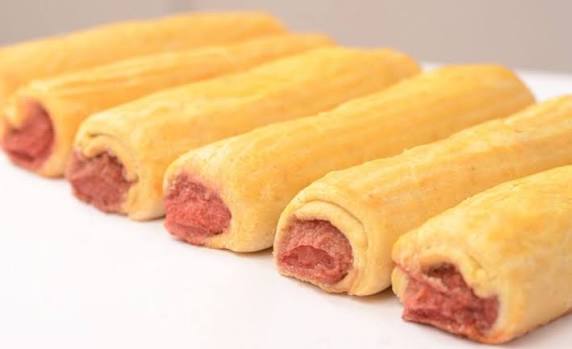
The Brands on Nigerian Shelves Today
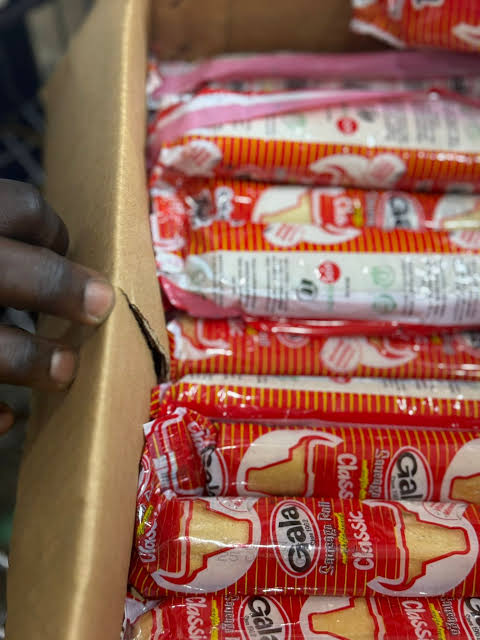
No snack brand carries more cultural weight in Nigeria than the humble sausage roll, and one name still defines the entire category despite decades of rivals trying to dethrone it. Sausage roll made its entry into the Nigerian market with Gala, the first brand from the stables of UAC foods, in 1962, and since then it has become the generic name for sausage roll in the country. Competition intensified steadily over the following decades, since between 2015 and 2023, Nigeria's sausage roll market grew increasingly competitive, with Rite Foods' Rite Sausage Roll and Bigi Sausage Roll gaining market share, alongside Superbite from Chi Foods and Yum Yum Sausage from Food Concepts Pioneer. Even loyal Gala eaters felt the squeeze of economic pressure directly, since public frustration boiled over when Nigerians' deep attachment to Gala as a cultural icon tied to its former N50 price collided with UAC Foods introducing a new variation at a retail price of N500.
The biscuit and cracker segment runs on an entirely different set of names, led for years by two companies that built Nigeria's modern biscuit industry from opposite starting points. OK Foods Nigeria Ltd is expected to retain its overall leadership in snacks in 2025, supported by a strong portfolio across sweet biscuits, savoury biscuits, gum, and sugar confectionery, with key brands including Pure Bliss, All Sports Wafer, Chic Choc, OK Coaster, and Energro Eggrich, a position largely driven by its leading share in sweet biscuits, the largest segment within snacks in Nigeria. Beloxxi occupies a different lane entirely within crackers specifically, having grown from a trading company into a manufacturing powerhouse, since by 2002 the company had become the market leader as well as the single largest importer of cream cracker biscuits into Nigeria, before the ban on importation of biscuits in March 2003 by the Federal Government pushed it to design and build a large, modern biscuit manufacturing plant. Its crackers now travel far beyond Nigerian borders, reportedly served onboard flights with Lufthansa, KLM, British Airways, Emirates, Etihad, Ethiopian, Kenyan and South African Airways.
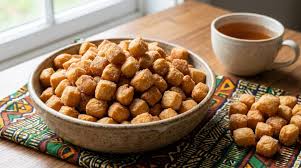
Beyond these giants, Nigeria's snack shelf carries a genuinely broad field of traditional favourites now being formalised into packaged brands, since in African markets, locally produced snacks such as chin chin, plantain chips, and biltong enjoy strong cultural relevance. Newer entrants are actively professionalising this space, with companies like Jidex Foods producing high quality Chin Chin, Potato Chips, Plantain Chips, Popcorn, Cookies, and Peanuts under international food safety and NAFDAC standards, while a Ogun State based counterpart has recently entered with plans to build a recognizable Nigerian snack brand that prioritises quality, consistency and customer satisfaction.
Why Size, Not Just Price, Now Decides Which Snack Wins
Nigeria's snack pricing battles have never really been about brand loyalty in the way premium categories work, they have been about how much snack a fixed budget can still buy. That dynamic was true even before recent inflation, since observers long noted that the product category gets value from millions of Nigerians who budget N100 for a mid-day snack-meal, N50 for sausage roll and N50 for bottle water, a market about wallet share that thrives on low price and big sizes, where what matters is for the sausage roll to fill their stomachs on the way home from work, meaning price matters and not the brand. That single insight still explains most purchasing behaviour across the entire savoury snack aisle today.
Manufacturers have repeatedly used size, not just price, as their main competitive lever. Gala itself leaned into this directly at one point, since United Africa Company introduced a bigger package of the product into the Nigerian market, twice the size of the regular sausage roll, selling for twice the price of the former. But that same strategy created real reputational risk when executed poorly, since consumers grew frustrated after noticing a reduction in the sausage roll's size while maintaining the same packaging, leading to dissatisfaction among loyal customers who felt they were getting less value for their money. Rivals capitalised directly on that gap, since the market saw the emergence of competitors offering larger or more flavorful alternatives, challenging Gala's dominance, with consumers exploring these new options leading to a dip in Gala's market share.
Facing that pressure, Gala's parent company chose restoration over reinvention as its 2025 comeback strategy, since UAC Foods took a bold step to revive the classic Gala experience, and unlike past iterations such as Gala Mega, the new product carries no special branding, instead meeting consumer demand for a return to tradition, offering a larger roll with more beef, without any gimmicks.
What Nigerian Consumers Consider Before Choosing a Snack Brand
Fill Factor Over Flavour
For the largest share of daily snack buyers, whether a product actually satisfies hunger on a commute or work break outweighs taste preference, echoing the long standing reality that for many target consumers, filling their stomachs while travelling matters more than which brand sits in their hand.
Size to Price Ratio
Nigerian buyers have become unusually sensitive to portion size relative to cost, a habit shaped directly by years of watching manufacturers quietly shrink products while keeping prices and packaging unchanged, making size comparisons a near automatic part of every snack purchase now.
Trust Built Through Decades on the Street
Legacy status still carries real weight in this category, since a brand's long standing presence, like a sausage roll that has anchored Nigerian snacking for 62 years, continues to earn purchase consideration even when cheaper or larger rivals sit right beside it on the same tray.
Health Perception in Traditional Snacks
A newer, more health conscious layer of buyers is beginning to reconsider traditional options entirely, recognising that plantain chips are a low-sugar, potassium-rich alternative to conventional potato crisps, a framing that is quietly repositioning old roadside snacks as smarter choices rather than downgrades.
NAFDAC Certification and Packaging Quality
Buyers increasingly favour visibly certified, properly packaged products over loose or informally wrapped alternatives, a shift reflected in newer entrants marketing themselves explicitly around hygienic production standards and consistent quality rather than price alone.
The Rise of Informed Snack Buyers
Nigerian consumers, especially younger urban shoppers, are comparing snack options with growing awareness of value and ingredients. Common searches now include:
Gala vs Bigi vs Rite sausage roll comparison
Beloxxi vs Yale biscuits which is better
Cheapest sausage roll prices Nigeria 2026
Chin chin and plantain chips wholesale prices
Healthiest traditional Nigerian snacks
Best packaged Nigerian snacks for export
This growing research culture, fuelled by social media nostalgia posts, price comparison threads and small business snack vendors building online followings, continues to shape which brands hold trust in a market where price sensitivity runs unusually deep.
Challenges Facing Nigeria's Snack Industry
Currency exposure remains the industry's most disruptive force, since raw materials, packaging film and in some cases flavouring imports feed directly into production costs, meaning naira depreciation continues to force the same size reductions and price hikes that reshaped the category through 2024 and 2025.
Informality still limits how far traditional snacks can scale, since much of Nigeria's most culturally significant snack production remains outside formal retail infrastructure, with most of Nigeria's snack makers remaining informal, undercapitalised, and disconnected from the infrastructure that could help them scale, missing links like packaging, shelf life extension, food safety standards, and brand storytelling preventing a local favourite from becoming a global export.
Brand trust erosion is a real and recurring risk in this category specifically, since shrinkflation controversies have shown how quickly loyal customers notice reduced portions, meaning any manufacturer tempted to quietly cut size rather than transparently raise price risks the same backlash Gala itself experienced.
Market Outlook for 2026 and Beyond
Nigeria's snack industry is positioned for genuinely strong long term growth despite its recent turbulence, with earlier projections estimating the market expected to reach US$11.48 billion by 2028, growing at a CAGR of 12.58% from 2023 to 2028. Within that broader expansion, plantain chips specifically sit inside a global category also expanding steadily, since the plantain chip market grew from USD 524.78 million in 2024 to USD 552.43 million in 2025, expected to maintain momentum with a CAGR of 5.37%, achieving a value of USD 718.59 million by 2030.
The most promising growth path forward may lie less in Western style packaged snacks and more in formalising what Nigerians already love eating. Industry observers increasingly frame traditional snacks as an underused economic opportunity, since local snacks are agriculture in edible form, with every stick of kuli kuli connecting back to groundnut farmers in northern Nigeria, every pack of plantain chips sustaining growers in Ondo and Edo, and every coconut ball keeping coastal economies alive. Encouragingly, real examples of that transformation are already emerging, since Nutzy, once a small Nigerian peanut butter producer, has scaled its operations and distribution nationwide, proving that local nuts and snacks can compete with global brands, while Pally Agro has invested in plantain chip production with modern packaging, now selling in major retail chains across West Africa.
Conclusion
Nigeria's snack market in 2026 is not one battle, it is several running side by side, Gala's cultural dominance against a crowded field of sausage roll rivals, OK Foods and Beloxxi's grip on biscuits and crackers, and a rising generation of formalised chin chin and plantain chip brands trying to turn roadside favourites into supermarket staples. What ties every one of these fights together is the same unforgiving arithmetic Nigerian buyers have always applied to this category, how much snack, filling how much hunger, for how little money. The brands that win from here will be the ones that can hold that size to price promise honestly, without quietly shrinking the very thing that earned them loyalty in the first place.
About this Report
The Flipbz Nigerian Snack Brands in Nigeria (2026) Market Report is an independent editorial publication prepared using publicly available information from Euromonitor International, industry research platforms and market intelligence sources, together with independent market analysis by Flipbz. It is intended to provide market insight and does not constitute purchasing advice.

Please register to comment.
With these components in place, your business...
SolidBase Builders Limited is a professionall...
PrimeStone Construction Nigeria Ltd is a well...
CrestRock Engineering Services Ltd is a scala...
Open the Listing model file located in the ap...
Discover promising partnership opportunities in various industries.
Pitch Your Startup | Find Partners

.jpg)



.jpg)


Comments