
.jpg "Paint Brands in Nigeria (2026): Flipbz Market Report on Construction Demand, Product Quality and Market Competition")
Written By: Flipbz.org
Nigeria's paint industry sits at the intersection of two powerful forces: a construction sector that keeps expanding despite economic headwinds, and a cost structure so heavily tied to imported chemicals that even modest currency swings ripple straight into the price of a bucket of paint. Add to this a growing regulatory push against lead contamination, and 2026 is shaping up as a year where product safety and local sourcing matter as much to manufacturers as brand heritage or shelf presence.
The Flipbz Paint Brands in Nigeria (2026) Market Report draws on publicly available data from the Standards Organisation of Nigeria (SON), the National Bureau of Statistics (NBS), the National Environmental Standards and Regulations Enforcement Agency (NESREA) and industry research platforms, combined with Flipbz's own market analysis. The report does not rank or promote individual brands but examines the forces shaping pricing, safety and competition across Nigeria's paint and coatings sector.
Construction Demand Is the Engine Behind Paint Sales
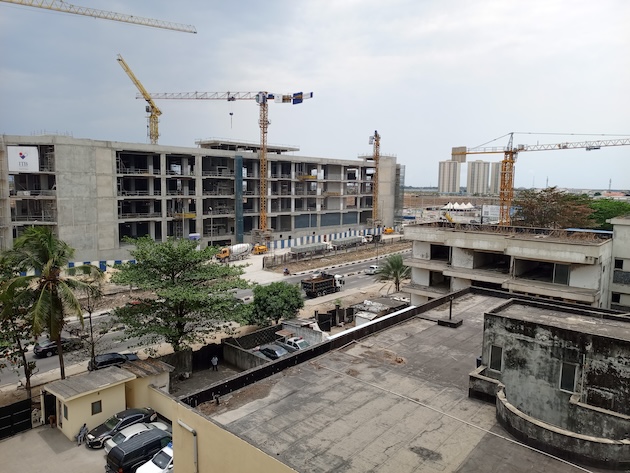
Nigeria's paint industry cannot be understood in isolation from the construction sector it serves, since decorative and architectural coatings depend almost entirely on building activity for demand. That underlying demand remains strong. According to the National Bureau of Statistics, the construction industry's value add rose by 6.4 per cent year-on-year in the first quarter of 2026 and has recorded average growth of 5.8 per cent over the last eight quarters, with GlobalData projecting the industry to expand by 4.1 per cent in real terms across 2026 as a whole.
Residential construction specifically continues to anchor this demand. Nigeria's severe housing deficit, estimated at over 20 million units and growing with each year of urban population expansion, creates a structural pipeline of residential construction that renovation activity alone cannot satisfy. That deficit is not a static figure either; separate estimates place the housing shortfall as high as 14.9 million units at the end of 2025, with state governments like Lagos announcing plans to deliver thousands of new units in response.
This has translated into real growth for the coatings market itself. Nigeria's paint and coatings market is projected to grow at a compound annual growth rate of between 3.7 and 7.2 per cent through the early 2030s, with the broader protective coatings segment, covering marine, industrial and infrastructure applications, expected to grow by over 4 per cent annually through 2029, outpacing the general construction sector's own growth rate.
The Brands Nigerians Recognise
Nigeria's paint market is led by a small group of long-established manufacturers, most of them decades old and still central to how Nigerians think about quality paint. Berger Paints Nigeria, formerly known as British Paints (W.A.) Limited, holds the distinction of being the first paint manufacturing company in the country to be listed on the Nigerian Stock Exchange, in 1973, and now operates over twenty-five depots across the federation from its Ikeja headquarters. Dulux, distributed in Nigeria through CAP Plc, has built its reputation around a wide colour range, offering more than 120 colour schemes distributed nationwide through dedicated colour centres established in 2015.
CAP Plc itself sits among the market's largest players by scale. In 2021, CAP Plc merged with Portland Paints and Products Nigeria, becoming the country's largest paint company by market capitalisation, a position it has held onto under the CAP Plc name. Meyer Plc rounds out the trio of dominant listed manufacturers, with all three, Berger, CAP and Meyer, competing on extensive brand heritage and consumer trust built over decades, alongside wide product portfolios spanning decorative, automotive and industrial coatings.
Beyond this top tier, a wider field of regional and budget-focused brands competes vigorously, often focusing on specific geographic strongholds or competing primarily on price. Names like Finecoat have become popular specifically for budget-friendly residential painting, while numerous smaller regional and local manufacturers contribute meaningfully to overall market volume without matching the top-tier brands' national distribution reach.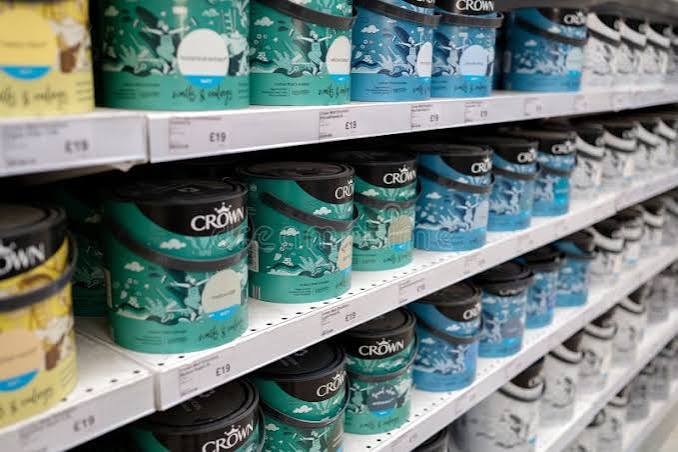
What Nigerian Buyers Consider Before Choosing a Paint Brand
Total Project Cost, Not Just Bucket Price
For most Nigerian buyers, paint is budgeted as part of a larger renovation or construction cost rather than a standalone purchase. The average cost for quality paint, covering both interior and exterior work, for a typical 3-bedroom flat currently ranges from ₦250,000 to ₦600,000, excluding labour costs, a spread wide enough that many buyers compare brands carefully before committing to a full project.
Durability and Weather Resistance
Because Nigeria's climate ranges from intense humidity to harsh dry-season heat, durability is a major purchase driver, particularly for exterior work. Premium paints are favoured for their durability, high coverage and weather resistance, typically for luxury residential and corporate buildings, while more budget-conscious buyers look for the best ratio of quality to price given the same climate demands.
Safety and Lead Content
Awareness of lead contamination risk has grown significantly among regulators and health advocates, even if consumer awareness still lags behind. UNICEF estimates suggest that a significant share of Nigerian children are affected by lead poisoning, and the National Environmental Standards and Regulations Enforcement Agency signed and gazetted lead paint regulation, making it enforceable law in Nigeria since March 2024. The Standards Organisation of Nigeria has adopted global standards prohibiting the production and importation of paint products with lead concentration beyond 90 parts per million, though enforcement and public awareness remain uneven across smaller, informal manufacturers.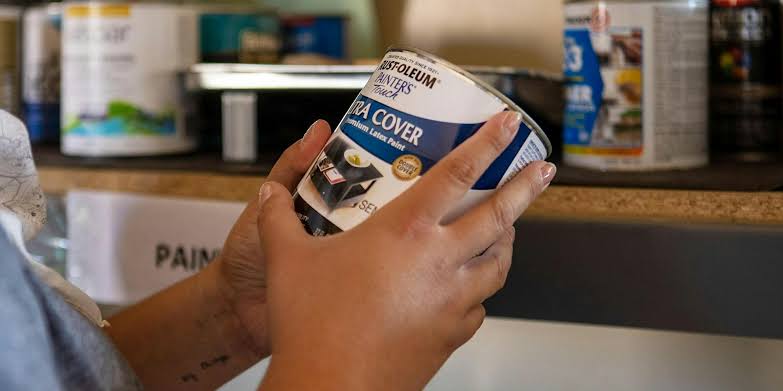
Regional Distribution and Logistics Costs
Where a buyer lives in Nigeria genuinely affects what they pay. Transportation costs from manufacturing plants concentrated in the Southwest, largely Lagos and Ogun State, to Northern and Eastern Nigeria can add meaningfully to the price per bucket, making regional availability and dealer proximity a real factor in brand choice outside the major southern cities.
The Rise of Informed Paint Buyers
Nigerian homeowners and contractors, particularly those managing renovation budgets carefully, increasingly research before buying. Common searches include:
Best paint brand for exterior walls in Nigeria
Dulux vs Berger paint price comparison
Cheapest paint brand for painting a 3 bedroom flat
Is my paint lead free
Best weather resistant paint in Nigeria
Paint price list 2026
This growing research culture reflects a market where cost planning and, increasingly, safety awareness are shaping purchase decisions alongside colour range and brand reputation.
Challenges Facing Nigeria's Paint Industry
Import dependence on key raw materials remains the industry's most persistent cost pressure. The industry's reliance on imported inputs such as titanium dioxide, resins and pigments has left paint makers vulnerable to foreign exchange volatility, a vulnerability that showed up starkly in 2024 when Nigeria's paint makers reported a 45 per cent rise in production costs, with the combined cost of production for Berger Paints, CAP Plc and Meyer Plc hitting N44.2 billion, representing 88 per cent of their combined revenue that year.
Manufacturers are responding by shifting toward local sourcing where possible. Industry leaders have described a strategy of promoting local sourcing by exploring and expanding the use of locally available raw materials, including calcium carbonate, kaolin and limestone, specifically to reduce foreign exchange exposure and supply chain disruptions.
Lead contamination enforcement remains a work in progress despite recent legal gains. Environmental groups have raised concern that a small group of importers continue to dominate the country's lead chromate market, with the ten largest importers bringing in more than 2,000 metric tonnes of lead chromates valued at over N5 billion between 2020 and 2025, underscoring how much work remains to fully eliminate lead-based inputs from Nigeria's paint supply chain despite the 2024 regulation.
Market Outlook for 2026 and Beyond
Nigeria's paint and coatings market is expected to keep growing in step with the broader construction sector, even as manufacturers work to insulate themselves from currency-driven cost shocks. Continued government investment in housing and infrastructure, including major projects like the Lagos-Calabar Coastal Highway and large-scale state housing schemes, is expected to sustain demand for both decorative and protective coatings well into the next decade.
At the same time, growing regulatory attention to lead content and product safety is likely to reshape the competitive landscape gradually, favouring manufacturers who can demonstrate compliance and transparent labelling over informal producers who cannot absorb the cost of reformulation.
Conclusion
Nigeria's paint industry in 2026 reflects the broader story of the country's building sector, resilient underlying demand shaped by a genuine housing shortage, but persistently squeezed by import dependence and currency exposure. Established names like Berger, Dulux and CAP Plc continue to lead through brand heritage, distribution reach and product range, while smaller regional brands compete largely on price. For the industry as a whole, the defining challenge over the next few years will be balancing the push toward local raw material sourcing and lead-free compliance with the reality that many of the chemicals paint depends on still have to come from abroad.
About this Report
The Flipbz Paint Brands in Nigeria (2026) Market Report is an independent editorial publication prepared using publicly available information from the Standards Organisation of Nigeria (SON), the National Bureau of Statistics (NBS), the National Environmental Standards and Regulations Enforcement Agency (NESREA) and industry research platforms, together with independent market analysis by Flipbz. It is intended to provide market insight and does not constitute purchasing or safety advice.

Please register to comment.
With these components in place, your business...
SolidBase Builders Limited is a professionall...
PrimeStone Construction Nigeria Ltd is a well...
CrestRock Engineering Services Ltd is a scala...
Here is an optimized version of your Blade te...
Discover promising partnership opportunities in various industries.
Pitch Your Startup | Find Partners
.jpg)
.jpg)
.jpg)
.jpg)


Comments