
.jpg "Cooking Oil Brands in Nigeria (2026): Flipbz Market Report on Household Demand, Pricing and Consumer Preferences")
Written By: Flipbz.org
Cooking oil sits at the centre of one of Nigeria's oldest agricultural contradictions. The country was once the world's leading palm oil producer, yet today it spends hundreds of millions of dollars every year importing the same commodity to meet household demand. That gap between historic capacity and present-day reliance on imports has made cooking oil one of the most watched categories in Nigeria's food inflation story in 2026, with price swings that ripple directly into the cost of preparing a basic family meal.
The Flipbz Cooking Oil Brands in Nigeria (2026) Market Report draws on publicly available data from the National Bureau of Statistics (NBS), NAFDAC, the Council of Palm Oil Producing Countries (CPOPC) and industry research platforms, combined with Flipbz's own market analysis. The report does not rank or promote individual brands but examines the forces shaping pricing, supply and consumer trust in Nigeria's cooking oil market.
A Nation That Grows Less Than It Eats
Nigeria's cooking oil story cannot be separated from its palm oil story, since palm oil remains the dominant base for most locally produced vegetable oils sold in the country. Nigeria's palm oil production has increased from 1.28 million tonnes in 2020 to 1.57 million tonnes in 2025, according to CPOPC data. Yet even that growth has not kept pace with appetite. Over the same period, domestic consumption has risen from 2.45 to 2.61 million tonnes, creating a supply gap that continues to be met through imports.
That gap carries a real cost to the country. Nigeria spends an estimated $500 million to $600 million annually on crude palm oil imports because domestic production cannot keep pace with consumption, even as its top listed producers post record profits. Presco Plc, the country's largest listed oil palm producer, reported a record N178.6 billion profit before tax for the 2025 financial year, representing a 57.3 per cent increase over the previous year, while Okomu Oil Palm Plc posted N87.3 billion in pre-tax profit, up 63.6 per cent year-on-year.
The historical irony runs deep. Nigeria once accounted for more than 40 per cent of global palm oil output in the early 1960s, producing around 669,000 tonnes compared with Malaysia's 95,000 tonnes at the time. Today, Indonesia has emerged as the world's largest producer and exporter, shipping over 32 million tonnes in 2025, while Nigeria now trails several newer producers, including Thailand, Colombia and Guatemala, despite being the crop's historic home.
The Brands on Nigerian Kitchen Shelves
Nigeria's cooking oil market spans a wide spectrum, from decades-old imported names now manufactured locally to newer entrants riding on the back of larger food conglomerates.
Kings, whose original name is Devon King's Cooking Oil, has been on the Nigerian market for over 50 years and is a product of PZ Wilmar Limited, a joint venture between PZ Cussons and Wilmar International. Its manufacturer has emphasised that the oil is now produced in Nigeria, a shift the brand credits with improving freshness compared to earlier decades when imported stock could sit for extended periods before reaching Nigerian shelves. Mamador, produced by the same PZ Wilmar stable, has positioned itself around health credentials, with its cooking oil produced and packaged locally in a refinery described as ISO, NAFDAC and CODEX-certified, and marketed with an endorsement from the Nigerian Heart Foundation and the Nutrition Society of Nigeria.
Power Oil, owned by Dufil Prima Foods Plc, the same company behind Indomie noodles, has leveraged its parent company's already massive distribution network built for noodles to push into the edible oil category, marketed as triple-filtered sunflower oil low in saturated fat. Golden Penny, under Flour Mills of Nigeria, has similarly used its existing food distribution muscle to establish shelf presence, competing alongside smaller regional names like Sunola Oil, produced by Sunseed Nigeria, and Grand Pure Soya.
What ties nearly all of these established brands together is a shared manufacturing shift, moving from imported finished product to local refining and packaging, a transition each brand has marketed as a guarantee of freshness and quality control.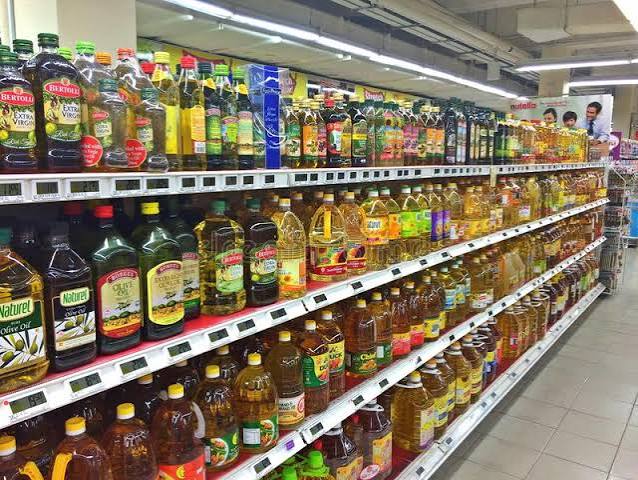
What Nigerian Consumers Consider Before Buying Cooking Oil
Authenticity and Safety
Fears about counterfeit and substandard oil have grown sharply in recent years. NAFDAC issued a public alert warning that adulterated and unregulated edible oils, whose sources, production processes, and safety standards remain unknown, are being smuggled into Nigeria and openly circulating under different brand names across major cities including Onitsha, Aba, Lagos and Kano. The regulator noted that these products typically have no identifiable manufacturer identity or NAFDAC registration numbers, making label verification an increasingly important habit for careful buyers.
Price Per Litre, Not Just Bottle Price
Cooking oil has become one of the most closely watched line items in household budgets. Nigeria's food inflation rate climbed to 17.52 per cent in June 2026, marking the fifth consecutive monthly increase, with edible oil recording the strongest upward pricing momentum among six tracked food categories that month. Because oil is used in nearly every cooked meal, families increasingly compare price per litre across pack sizes rather than simply grabbing the most familiar bottle.
Health Positioning
Brands that emphasise cholesterol-free formulations, vitamin fortification or heart-health endorsements have gained visible traction, particularly among urban, middle-income buyers who have become more label-conscious about fat content and processing methods.
Packaging and Tamper-Evidence
Given ongoing concerns about oil being decanted or handled through informal channels, manufacturers have leaned into tamper-proof packaging as a trust signal, since current practices of edible oil production in parts of Nigeria still involve bulk oil being decanted into conventional packs, a process that increases the risk of unsanitary handling.
The Rise of Informed Cooking Oil Buyers
Nigerian households, particularly those managing tighter monthly budgets amid rising food costs, are increasingly researching before they buy. Common searches include:
Best cooking oil brand in Nigeria
Cooking oil prices in Nigeria today
Is my cooking oil original or fake
Healthiest cooking oil for frying
Cheapest vegetable oil brands in Nigeria
Difference between palm oil and vegetable oil
This growing research culture reflects a market where price sensitivity and safety concerns now shape purchasing decisions as much as brand loyalty or advertising ever did.
Challenges Facing Nigeria's Cooking Oil Industry
Import dependence remains the industry's most structural weakness. Over 80 per cent of Nigeria's palm oil comes from smallholder farmers using outdated methods, leading to low yields and fragmented value chains, a gap that large-scale plantation investment has only begun to close.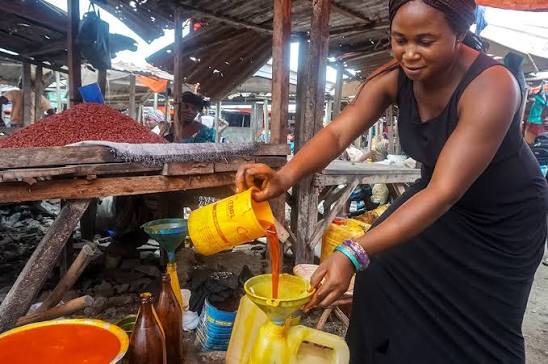
Rising input costs are compounding the pressure. Cooking gas prices have surged by 178 per cent since 2020, while petrol has risen by 541 per cent over the same period, driving up the logistics and processing costs that eventually show up in retail oil prices. Regulatory vigilance against counterfeit products is also intensifying, but enforcement remains difficult given how widely adulterated oils have flooded markets across the country under unfamiliar brand names.
Market Outlook for 2026 and Beyond
Despite these pressures, Nigeria's vegetable oils market is projected to grow at a Compound Annual Growth Rate of 4.8 per cent from 2025 to 2031, driven by rising health awareness, shifting consumer preferences toward oils like olive and sunflower, and the country's growing role as a regional supply and re-export hub. Nigeria's fast-growing population and expanding urban middle class continue to significantly increase overall consumption, even as affordability concerns persist for lower-income households.
Continued investment from major producers, alongside renewed international cooperation through bodies like the CPOPC aimed at boosting domestic production and improving food security, suggests the supply gap could gradually narrow, though few analysts expect Nigeria to fully close the divide between production and consumption in the near term.
Conclusion
Nigeria's cooking oil market tells a story of a country still working to reconcile its agricultural history with its present-day economic reality. Established brands like Mamador, Kings, Power Oil and Golden Penny continue to dominate shelf space by leaning on local manufacturing and health positioning, while smallholder-driven production and counterfeit products remain the sector's most persistent challenges. For consumers, the decisive factors increasingly go beyond taste and brand familiarity to questions of authenticity, price stability and trust in what is actually inside the bottle. For producers, closing Nigeria's long-standing supply gap remains both the industry's biggest challenge and its clearest growth opportunity.
About this Report
The Flipbz Cooking Oil Brands in Nigeria (2026) Market Report is an independent editorial publication prepared using publicly available information from the National Bureau of Statistics (NBS), NAFDAC, the Council of Palm Oil Producing Countries (CPOPC) and industry research platforms, together with independent market analysis by Flipbz. It is intended to provide market insight and does not constitute health or purchasing advice.
Please register to comment.
With these components in place, your business...
SolidBase Builders Limited is a professionall...
PrimeStone Construction Nigeria Ltd is a well...
CrestRock Engineering Services Ltd is a scala...
Here is an optimized version of your Blade te...
Discover promising partnership opportunities in various industries.
Pitch Your Startup | Find Partners
.jpg)





Comments