
.jpg "Nigeria’s EV Ambitions Face a Major Test as Charging Infrastructure Falls Behind")
Written By: Flipbz.org
Nigeria approved tax waivers for nearly 4,000 electric vehicles in H1 2026 and is pushing local EV assembly through companies like Saglev, MAX, and Spiro, but a national grid that supplies a fraction of the power the country needs is forcing the entire EV ecosystem, from charging stations to battery-swap hubs, to lean on the same diesel and petrol generators it was meant to replace.
Nigeria's government has spent the past two years stacking tax breaks, duty waivers, and local assembly incentives on top of each other to jump-start an electric vehicle market that barely existed a decade ago. On paper, the numbers now moving through customs suggest the strategy is working. In practice, every electric vehicle that clears that process still has to be charged somewhere, and Nigeria's electricity grid was never built with that job in mind.
What Happened
The clearest sign of momentum came in mid-August 2026, when government data reviewed by Reuters showed the scale of the country's new incentive push. Nigeria approved tax waivers for nearly 4,000 electric vehicles (EVs) during H1 2026, the first tranche under a new government programme meant to accelerate EV adoption through incentives and local assembly. The approvals were not a standalone gesture, since the approvals represented the first batch processed under a new government initiative designed to encourage the adoption of cleaner vehicles through tax incentives and local vehicle assembly programmes.
That tranche builds on incentives that have been layered in gradually since 2024. Since 2024, the country has exempted EVs from value-added tax, and earlier this year it cut EV import duties from 5% to zero. Nigeria has since gone further, with new fiscal measures announced this month. Nigeria has introduced new fiscal incentives for electric vehicle imports as part of its Presidential Gas for Growth Initiative, and the Nigeria Customs Service says eligible vehicles and other products will be exempt from both import duty and value added tax. The scheme has real boundaries, though, since importers must obtain an exemption certificate, while hybrids and electric vehicles worth $100,000 or more remain outside the scheme, and the exemptions apply to pure electric vehicles as well as extended-range electric vehicles (EREVs) with a minimum electric-only range of 200 kilometres.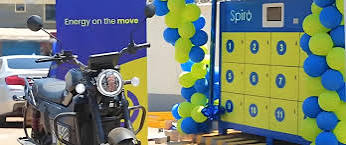
Despite the policy push, EVs remain a rounding error on Nigerian roads today. Official data on the current number of electric vehicles on Nigerian roads is unavailable, but dealers cited by Reuters estimated that EVs account for less than one per cent of the country's vehicle fleet, translating to only tens of thousands of vehicles. The government's ambitions for where that number needs to go are dramatically higher, since Nigeria is aiming for 60% of its national [fleet] to be comprised of EVs by 2050, and it is backing this ambition with substantive policy incentives.
The Infrastructure Problem
The core obstacle standing between today's numbers and that 2050 target is electricity, not vehicles. The economics of operating EVs remain closely tied to Nigeria's troubled power sector, with a 4,000-megawatt grid serving more than 200 million people, one of the lowest levels of per-capita power availability among major economies. Even that figure overstates what's typically available, since even when the grid operates, total generation typically hovers between 4,000 and 5,000 megawatts, far below the estimated 30,000 megawatts required to adequately serve the country. Nigeria's regulator has published even more granular numbers confirming the gap between installed and usable capacity, since the Nigerian Electricity Regulatory Commission reported that in April 2026, Nigeria had 13,625 megawatts (MW) of installed grid-connected generation capacity, but only about 4,286 MW was available for dispatch on average during the month.
Public charging infrastructure has not kept pace with even the modest EV volumes already on the road. Nigeria had about 48 public EV charging stations as of late 2025, compared with more than 500 in South Africa, and the government's own long-range planning reflects how early-stage the buildout still is, since the [Energy Transition] brief noted that the energy transition plan also projected about 60 charging stations by 2030, highlighting both the industry's infancy and the infrastructure challenges to scaling it.
The result is a strange irony at the heart of Nigeria's electrification push: much of the infrastructure meant to displace fossil fuels is itself running on fossil fuels. Both the charging infrastructure gaps and the weak power grid have pushed the entire EV ecosystem toward the same backup generators households already rely on, with charging stations, dealerships and battery-swapping operators running on diesel and petrol generators whenever grid power fails, and many EV owners charging at home through portable cables plugged into household outlets rather than relying on public infrastructure at all. That reliance on generators is not a fringe behavior in the wider economy either, since it is estimated that Nigerian businesses and households spend an estimated $23 billion annually on diesel and petrol to self-generate power across about 22 million generators.
How the Market Is Adapting
Rather than waiting for the grid to catch up, Nigeria's EV companies and consumers are engineering around it in three distinct ways.
Battery swapping.
Two-wheelers have emerged as the segment best suited to Nigeria's power reality. Nigeria has more than 15 million motorcycles on its roads, and electrifying them cuts operating costs substantially against their gasoline-powered equivalents, and two- and three-wheelers also lend themselves naturally to battery swap technology, something that local start-ups MAX and Spiro are betting will solve electrification challenges in Nigeria more meaningfully than traditional charging infrastructure. The mechanics are straightforward and fast: mobility companies such as MAX and Spiro are investing in battery-swapping networks, allowing riders to exchange depleted batteries for fully charged ones within minutes, and unlike conventional charging, which can keep a commercial vehicle idle for hours, battery swapping allows riders to return to the road almost immediately.
Both companies have scaled meaningfully and raised fresh capital in 2026. Spiro raised $50 million in February 2026 from Afreximbank, Nithio, and the Africa Go Green Fund, and MAX secured $24 million in January 2026 from Equitane, Novastar, and Triple Jump. MAX has reportedly reached a notable milestone at home, since Spiro has raised over $230 million since 2022 and MAX has hit profitability in Nigeria. Spiro's footprint spans well beyond Nigeria, too, since Spiro maintains operations across Kenya, Uganda, Rwanda, Nigeria, Benin and Togo, with more than 80,000 electric motorcycles deployed and over 2,500 swap stations, and cumulative swaps have exceeded 30 million, supporting more than one billion kilometres of travel. Even the swap model is not friction-free, since Spiro admits to battery supply imbalances, with stations sometimes running out of power during peak hours because demand outstrips their charging capacity.
Local assembly and generator-based charging.
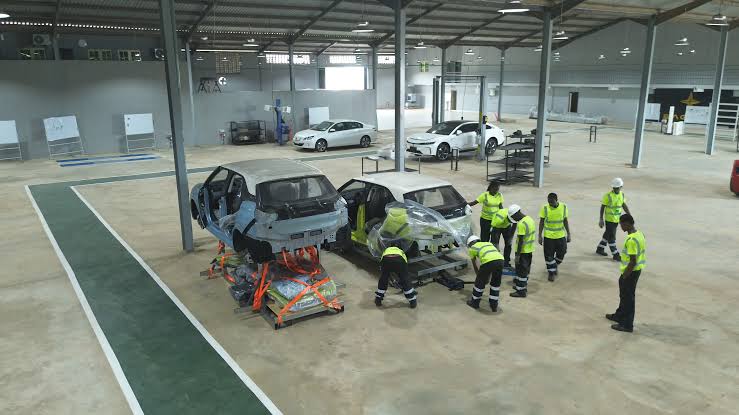
For four-wheelers, Saglev has positioned itself as Nigeria's homegrown answer to import dependency. SAGLEV Electromobility operates an electric vehicle assembly plant in Imota, Lagos, producing passenger and commercial EVs for the Nigerian market, and the NADDC-approved facility supports Semi Knocked Down (SKD) and Completely Knocked Down (CKD) assembly across passenger, logistics, and mass transit segments. Its scale ambitions are notable, since the Imota plant has a capacity of 2,500 units annually on a single shift, expandable to 10,000 units. The company is a joint venture rather than a pure startup, since Saglev is a joint venture between Nigeria's Stallion Group, a major auto distributor, and Chinese automaker Sokon Motor.
Saglev's CEO has made an unusual argument for why the power grid's weakness need not be disqualifying, pointing instead to the ubiquity of generators as a workaround. SAGLEV is in discussions with major data-centre operators who collectively have up to 20 megawatts of excess power, with CEO Sam Faleye arguing, "The grid won't carry Nigeria's EV revolution. Private power will." He has made the same point publicly on multiple occasions regarding home charging, stating plainly that "if you have a 20 kVA generator, you can charge an EV." The economics he cites are stark: a petrol-powered Corolla burns between ₦30,000 ($57.69) and ₦40,000 ($76.92) worth of fuel daily for busy drivers, while an EV costs about ₦6,000 ($11.54) to fully charge. Saglev is also cultivating financing relationships with banks that were skeptical of EVs until recently, since commercial banks have begun approaching SAGLEV proactively, with one bank already signing an MOU to finance EV purchases while five others are in advanced discussions, prompting Faleye to note that "two years ago, banks didn't even want to talk about EVs."
Extended-range EVs and Chinese brands.
For consumers unwilling to bet entirely on charging infrastructure, hybrid-style range-extended vehicles have become a pragmatic middle ground. Extended-range EVs, which combine battery power with a small fuel-powered range extender, have driven a doubling in sales this year by helping drivers overcome charging constraints. Chinese manufacturers have moved to meet that demand directly, since Chinese brands such as BYD and Geely [are] expanding their presence with hybrid and electric models that industry executives say are better suited to Nigerian conditions, and locally, Tim Motors, Geely's Nigerian partner, said new-energy vehicles currently account for about two per cent of its sales.
Why It Matters
The stakes extend well beyond a single vehicle category, because Nigeria's underlying power problem imposes a cost on the entire economy that EV adoption is unlikely to escape on its own. The World Bank puts the broader economic loss from unreliable electricity at $26 billion to $29 billion per year, and the African Development Bank's African Economic Outlook 2026 estimates outages cost firms 3 per cent of annual sales, with 70.7 per cent of Nigerian businesses forced to own or share generators. Grid instability isn't a background risk either, it's a recurring, front-page event, since Nigeria's electricity grid collapsed in January 2026, plunging Africa's most populous nation into darkness for the first time in 2026 and reviving questions about the country's chronically unstable power infrastructure, and separately, Nigeria's electricity generation dropped to 3,940.53 megawatts in March 2026, leading to a shutdown of several power plants, which the Nigerian Independent System Operator attributed to a persistent gas supply crisis.
There is at least an official narrative that the grid picture is improving structurally. Nigeria's power minister argued this year that industrial users, at least, are close to a turning point, since the Presidential Power Initiative, in partnership with Siemens, is upgrading transmission infrastructure to reliably deliver up to 7,000 megawatts of power to industry. Whether that translates into meaningfully more reliable power for the residential charging most EV owners currently depend on remains an open question.
Industry Context
Nigeria is not alone in betting on local EV assembly and battery-swap models as a way to route around weak grids, and it is emerging as a regional leader in that approach. Kenya and Nigeria, two of Africa's largest economies, are leading the push for local EV assembly as countries seek to cut fuel costs, reduce emissions and build domestic manufacturing capacity. Within Nigeria specifically, the private sector's improvisation around grid limitations is increasingly viewed as the real engine of adoption, since a strong and entrepreneurial private sector is galvanizing Nigeria's EV ecosystem and innovating around financing, infrastructure, grid limitations, and other local constraints. The use cases proving most viable so far are commercial rather than personal, since electrifying use cases like last-mile deliveries and ridehailing pose high EV utilization rates and faster payback periods, particularly for the country's large informal economy.
Legislators are also trying to lock in domestic manufacturing requirements before the market scales further. In November 2025, the proposed 'Electric Vehicle Transition and Green Mobility Bill, 2025' passed its second reading in the Nigerian Senate, and under the proposal, foreign companies entering Nigeria's electric vehicle sector would have to cooperate with licensed local assemblers and establish assembly plants within three years, sourcing at least 30 per cent of their components locally by 2030.
What Flipbz Thinks
Flipbz sees Nigeria's EV story bifurcating along exactly the lines the power grid dictates: two- and three-wheelers, where battery swapping neatly sidesteps grid dependency and companies like MAX and Spiro have already proven commercial viability, look like the genuine near-term growth story, while passenger EVs remain constrained by a charging reality that even optimistic assemblers like Saglev are answering with generators and off-grid private power rather than grid improvements. The tax waivers and duty exemptions are real and meaningful policy support, but they solve the vehicle-cost side of the equation without touching the more fundamental problem, that Nigeria's 4,000-megawatt grid was never sized for a 200-million-person economy, let alone one layering EV charging demand on top. The rise of extended-range EVs as a bridge technology is the most telling market signal here: Nigerian consumers and automakers alike are hedging against grid unreliability rather than betting fully against it.
What Regulators & Industry Watchers Should Track
Regulators and investors should watch whether the roughly 4,000 EVs approved for tax waivers in H1 2026 translate into a comparable or larger tranche in H2, which would confirm the incentive programme is building sustained momentum rather than processing a one-time backlog. Industry watchers should also track whether Saglev's charging infrastructure plans, private power negotiations with data centre operators, and bank financing partnerships materialize at the scale promised, since those elements will determine whether passenger EV adoption can follow the same trajectory that battery-swapped motorcycles have already achieved.
The Bottom Line
Nigeria's tax waivers, duty exemptions, and local assembly push have created genuine momentum for electric vehicles, but the country's electricity grid remains the binding constraint on how far and how fast that momentum can travel. Whether Nigeria's EV ambitions scale into the 60 percent fleet share the government has targeted for 2050 will depend less on how many more vehicles receive tax breaks and more on whether battery-swap networks, private power arrangements, and grid investment can collectively outrun a national electricity supply that, for now, still leaves most of the country in the dark for hours at a time.

Please register to comment.
With these components in place, your business...
SolidBase Builders Limited is a professionall...
PrimeStone Construction Nigeria Ltd is a well...
CrestRock Engineering Services Ltd is a scala...
AGRO COMPANY
Discover promising partnership opportunities in various industries.
Pitch Your Startup | Find Partners


.jpg)
.jpg)
.jpg)



Comments