
Written By: Flipbz.org
AXA Mansard grew profit after tax 14% to ₦7.8 billion in the first half of 2026 and confirmed its capital position meets Nigeria's new recapitalisation threshold, offering an early read on how the country's newly reformed insurance sector is performing after a year long industry wide capital overhaul.
Nigeria's insurance industry has spent much of 2026 under a regulatory microscope, as insurers scrambled to meet sharply higher capital thresholds before a hard deadline. Against that backdrop, AXA Mansard Insurance Plc has delivered one of the sector's clearest signals yet that the reform era can coexist with genuine profit growth, reporting stronger earnings, expanding premiums, and a capital base regulators have already signed off on.
What Happened
AXA Mansard's headline number for the first six months of 2026 was a 14 percent rise in profit after tax to ₦7.8 billion, alongside confirmation that its capital position has met the new minimum requirements introduced by regulators. AXA Mansard Insurance Plc sustained its growth momentum in the first half of 2026, posting a 14 per cent increase in profit after tax to ₦7.8 billion while reaffirming that it has met the new minimum capital requirements under the Nigerian Insurance Industry Reform Act (NIIRA) 2025.
That profit growth came despite a real currency headwind. Despite recording a foreign exchange loss of ₦2.9 billion during the period, the company's underlying earnings remained resilient, and excluding the foreign exchange impact, profit after tax would have increased by 54 per cent to ₦10.7 billion, highlighting significant improvements in underwriting performance and investment income. Chief Financial Officer Ngozi Ola Israel put the underlying story in her own words: "We delivered strong profit after tax of ₦7.8 billion, reflecting a 14 per cent year on year increase and a much stronger growth in the underlying earnings trajectory. Excluding foreign exchange impacts, profit after tax would have grown by 54 per cent.
The topline growth was broad and came from genuine business expansion rather than one off items. The company's unaudited financial results showed that insurance revenue rose by 19 per cent to ₦96.5 billion from ₦81.2 billion recorded in the corresponding period of 2025, while Gross Written Premium (GWP) increased by 17 per cent to ₦134.9 billion, reflecting strong business growth across its Property and Casualty, Life and Health businesses. Health insurance was the standout performer within that mix, with health insurance remaining the fastest growing business line, with premiums rising by 32 per cent to ₦60.6 billion, followed by Life and Savings, which expanded by 21 per cent to ₦20.4 billion. Property and Casualty, the company's largest legacy line, grew more modestly, as the Life and Savings business followed with a 21 percent increase to N20.4 billion, while Property and Casualty premiums grew by three percent to N54 billion.
CEO Kunle Ahmed tied the numbers directly into the sector's reform moment, with results that reflected the resilience of the insurer despite Nigeria's challenging operating environment, in a period where Nigeria's insurance industry begins operating under the recapitalisation framework introduced by the NIIRA 2025, which is expected to produce stronger and better capitalised insurers capable of underwriting large ticket risks in sectors such as oil and gas, aviation, marine and infrastructure.
Why It Matters
AXA Mansard's numbers land at a genuinely pivotal moment for the industry it operates in. Under NIIRA 2025, non life insurers are required to maintain a minimum capital base of N15 billion, life insurers N10 billion, composite insurers N25 billion, and reinsurers N35 billion. That is a dramatic jump from the industry's prior capital regime, and compliance was not optional: the exercise marked the end of a 12 month compliance period granted to operators following the enactment of the new insurance law signed by President Bola Tinubu on July 31, 2025.
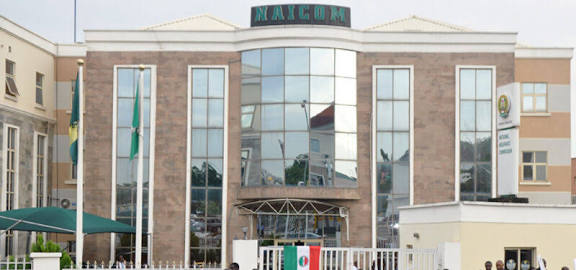
By mid August 2026, the exercise had effectively concluded. The latest confirmation brought the total number of compliant operators to 48 insurance companies and two reinsurance companies, effectively marking the successful conclusion of the industry's recapitalisation exercise. NAICOM did not simply take companies at their word either, since the Commission noted that rather than relying solely on declarations of compliance, it subjected companies that met the thresholds to regulatory checks before confirming their final status. For AXA Mansard, being able to combine profit growth with confirmed compliance places it among the insurers regulators view as having cleared the bar cleanly, rather than those still working through remediation.
Industry Context
The scale of what Nigeria's insurers have just gone through only becomes clear alongside the banking sector's own recent experience. The insurance recapitalisation exercise comes months after Nigeria's banking sector completed its own recapitalisation programme, which raised about N4.66 trillion from 33 banks over a 24 month period. Insurers were given a tighter, 12 month window to hit comparable structural targets, which explains why so many companies were still being verified in the exercise's final weeks, with NAICOM disclosing that eight insurers who had filed compliance evidence right at the deadline needed extra review time before final confirmation.
The reform push exists because Nigeria's insurance market remains strikingly shallow relative to its economy. Nigeria is Africa's most populous country, home to over 200 million people, yet it remains one of the least insured large economies on the continent, with insurance penetration standing at a troubling 0.4 percent of GDP, far behind South Africa's 11.3 percent, Namibia's 7.4 percent, Morocco's 2.1 percent and Kenya's 1.2 percent. Growth in premiums has not always translated into deeper coverage either, since the expansion has been heavily skewed toward corporate non life policies such as oil and gas, aviation and marine insurance, while the real economy of households, MSMEs, farmers and informal workers remains largely uninsured. Even so, industry wide premium growth has been strong at the top line, with Gross Premium Written climbing to N2.3 trillion, representing a 36 percent quarter on quarter increase and a 47.3 percent year on year jump in the fourth quarter of 2025 alone. Some industry voices see the reform itself as the lever that finally narrows the coverage gap, arguing that with the enforcement of compulsory insurances under the Nigerian Insurance Industry Reform Act (NIIRA) 2025, both penetration and density are likely to improve.
What Flipbz Thinks
Flipbz sees AXA Mansard's H1 2026 print as a useful test case for what a "good" outcome looks like coming out of Nigeria's insurance recapitalisation cycle: real premium growth across health, life, and property lines, a capital base regulators have already verified, and profit growth that held up even after absorbing a meaningful naira driven FX loss. The gap between the reported 14 percent profit growth and the 54 percent underlying growth excluding FX is the number worth tracking most closely across the sector this year, since it captures how much of every insurer's headline profit is currently being eaten by currency volatility rather than genuine underwriting weakness. With health insurance premiums growing fastest within AXA Mansard's book, the company also looks reasonably well positioned relative to the industry's broader challenge of extending coverage beyond corporate oil and gas, marine, and aviation risk into products ordinary households actually buy.
What Insurers & Policyholders Should Watch
Insurers and analysts should watch whether the roughly 48 companies confirmed as compliant with NIIRA 2025 can sustain profit growth once recapitalisation related costs and consolidation pressure work through the sector, particularly for smaller operators that may have raised capital under less favourable terms than AXA Mansard. Policyholders and consumer advocates should watch whether the newly capitalised, presumably more resilient insurance sector translates into faster claims payment and expanded product availability for households and small businesses, the segment that reform advocates say has been left behind by an industry historically built around large corporate risk.
The Bottom Line
AXA Mansard's H1 2026 results show that it is possible to grow profit meaningfully even in a year defined by regulatory upheaval and currency volatility, and its confirmed compliance with NIIRA 2025's new capital thresholds puts it ahead of where much of the industry stood just months ago. Whether this translates into the deeper, broader insurance market Nigeria's regulators and reform advocates are chasing will depend less on any single insurer's earnings and more on whether the newly recapitalised sector as a whole starts converting stronger balance sheets into coverage for the millions of Nigerian households and businesses still operating without any insurance protection at all.
Please register to comment.
With these components in place, your business...
SolidBase Builders Limited is a professionall...
PrimeStone Construction Nigeria Ltd is a well...
CrestRock Engineering Services Ltd is a scala...
Here is an optimized version of your Blade te...
Discover promising partnership opportunities in various industries.
Pitch Your Startup | Find Partners
.jpg)
.jpg)
.jpg)

.jpg)

Comments