
Written By: Flipbz.org
Aradel Holdings is attracting attention for its continued investment across upstream production, processing infrastructure, and energy related assets, reflecting growing confidence in the role of indigenous operators in Nigeria's oil and gas sector.
Few Nigerian energy companies have delivered a growth story as dramatic as Aradel Holdings over the past year. What began as a modest indigenous operator built around a single marginal field has become the largest oil and gas company on the Nigerian Exchange by market capitalisation, and its 2026 results suggest that transformation is only accelerating as the company pushes deeper into upstream production, gas processing, and refining expansion.
What Happened
Aradel's growth trajectory has been staggering in scale. In the first half of 2026, the company reported gross revenue of N2.49 trillion, representing an extraordinary 577 per cent increase from N368.08 billion recorded in the corresponding period of 2025, driven largely by a sharp increase in crude oil and gas production, stronger realised energy prices and the contribution of its enlarged asset portfolio. That translated into a pre tax profit of N752.71 billion, a 293 percent year on year increase from N191.31 billion recorded in the same period of 2025, as higher crude oil production and expanded operations lifted revenue to a record level.
The production numbers behind those earnings are just as striking. Average production rose by an exceptional 523 per cent to 139.5 thousand barrels of oil equivalent per day, compared with 22.4 kboepd recorded a year earlier, while average crude oil production climbed by 258 per cent to 55.6 thousand barrels per day. Gas output grew even more dramatically over the same period, climbing 1,121 percent to 503.2 million standard cubic feet per day from 41.2 million cubic feet per day a year earlier, gains the company attributed to improved pipeline availability and sustained customer demand. Management has stayed confident that this pace can hold, with the company reaffirming its full year production guidance of between 110,000 and 140,000 barrels of oil equivalent per day.
Much of that expanded scale traces back to acquisitions completed in late 2025 rather than organic growth alone. Aradel's first half performance builds on an already outstanding 2025 financial year, during which pre tax profit rose 163.6 percent to N835 billion from N316.8 billion in 2024, a performance supported by stronger operating earnings and non recurring gains associated with the company's ND Western and Renaissance transactions, which significantly expanded its production base. Company disclosures have made clear that 2026 is meant to be the year those transactions translate into recurring operating performance, with planned efficiency measures, including further well optimisation, expanded gas well capacity and refinery uptime improvements, intended to translate the balance sheet gains from its late 2025 acquisitions into higher output and recurring earnings.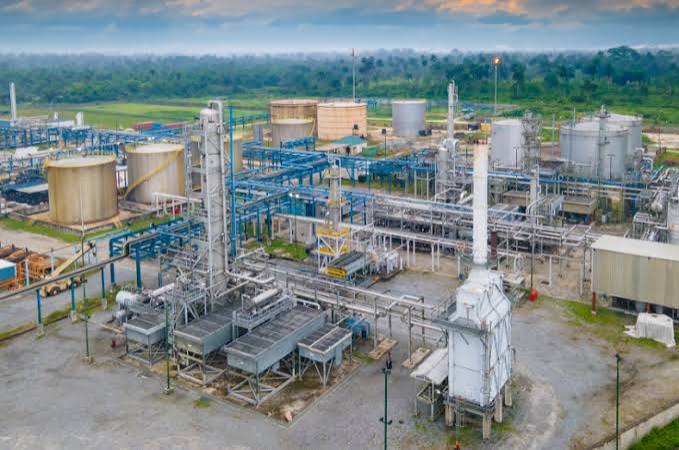
The midstream and downstream side of Aradel's business is where its next major expansion is taking shape. The company is preparing to begin gasoline production at its modular refinery in 2027, following the removal of Nigeria's fuel subsidies and improved market conditions that have made domestic petrol refining more commercially viable. The refinery, which currently produces kerosene, diesel, gas oil and naphtha, sits alongside plans for further growth, as the company is also examining a potential expansion of the refinery, crude supply arrangements and export logistics, with engineering studies expected to determine the final scope of the project over the coming year. Aviation fuel has emerged as a particular area of interest, with the company assessing opportunities to increase aviation fuel production, with Europe emerging as a potential export market.
Regulatory attention has followed that midstream buildout closely. In January 2026, the chief executive of the Nigerian Midstream and Downstream Petroleum Regulatory Authority inspected Aradel's integrated Ogbele facility, a visit that included the 11,000 barrel per day refinery and a 100 million standard cubic feet per day gas processing plant, infrastructure the regulator described as world class, urging other Nigerian companies to emulate it. During that visit, regulator Saidu Mohammed stated plainly that "the midstream is where Nigeria's growth lies," while Aradel's own leadership tied the company's gas strategy directly to national industrial policy, with CEO Adegbite Falade emphasising the company's commitment to supplying gas for power generation, industrial use and liquefied natural gas exports.
Why It Matters
Aradel's rapid scaling matters because it represents one of the clearest examples yet of an indigenous Nigerian operator successfully absorbing major asset acquisitions and converting them into sustained production and earnings growth, rather than a one time accounting boost. The market has responded accordingly. Aradel Holdings shares have delivered an exceptional 127.9 percent year to date return, rising from N670 at the close of 2025, making it one of the Nigerian Exchange's strongest performing large cap energy stocks, a signal of growing investor confidence in the company's transformed earnings capacity, stronger cash generation and expanded upstream portfolio.
Industry Context
Aradel's results sit within a broader recovery across Nigeria's listed oil and gas sector in 2026. Nigeria's listed oil and gas companies delivered a robust performance in the first half of the year, reinforcing investor confidence in the sector as improved operational efficiency, stronger domestic energy demand and ongoing industry reforms combined to lift revenues and profitability across the value chain, with results underscoring the gradual transformation of Nigeria's energy industry following liberalisation of the downstream petroleum market, increased local refining capacity, stronger upstream investments and improved pricing dynamics. Aradel's push into gasoline production also fits a broader pattern among Nigeria's modular refiners, positioned as complementary players alongside larger facilities such as Dangote's refinery, as independent operators seek to capture more value from domestic crude and meet local and export demand.
What Flipbz Thinks
Flipbz views Aradel's 2026 trajectory as one of the more compelling proof points for the thesis that indigenous Nigerian energy companies can successfully scale through acquisition rather than remaining permanently constrained to small legacy fields. The integration of the ND Western and Renaissance assets appears to be delivering real operational results rather than just balance sheet inflation, evidenced by production gains that have persisted into core operating performance in 2026 rather than fading as one time transaction effects. The company's parallel push into gasoline and aviation fuel production at its modular refinery is the more interesting long term story, since it would mark Aradel's transition from a primarily upstream and gas focused operator toward a genuinely integrated energy company capturing value across the full petroleum value chain, provided the 2027 gasoline production timeline holds and the refinery expansion studies translate into committed capital.
What Investors Should Watch
Investors should track whether Aradel's full year production guidance of 110,000 to 140,000 barrels of oil equivalent per day holds through the second half of 2026, since that range will determine whether the company's extraordinary first half growth rate is sustainable or partly reflects a low base effect from the prior year. The refinery's 2027 gasoline production timeline and the outcome of Aradel's ongoing engineering studies on refinery and export capacity expansion are worth watching closely as well, since they will clarify how much additional capital the company intends to commit to its downstream ambitions.
The Bottom Line

Aradel Holdings has moved from a mid sized indigenous producer to Nigeria's largest listed oil and gas company by market capitalisation in the span of little more than a year, powered by aggressive upstream acquisitions and a midstream and downstream strategy that is only beginning to take full shape. Whether the company can sustain this pace of growth while executing on its gasoline production and refinery expansion plans will determine if Aradel becomes a lasting template for indigenous energy scaling in Nigeria, or simply a high water mark driven by an unusually favourable acquisition cycle.
Please register to comment.
With these components in place, your business...
SolidBase Builders Limited is a professionall...
PrimeStone Construction Nigeria Ltd is a well...
CrestRock Engineering Services Ltd is a scala...
Open the Listing model file located in the ap...
Discover promising partnership opportunities in various industries.
Pitch Your Startup | Find Partners
.jpg)
.jpg)

.jpg)
.jpg)
Comments