
Written By: Flipbz.org
Through its sponsorship of the Enactus Nigeria Innovation Challenge, its record 2025 financial results, and a widening set of sustainability commitments, Julius Berger is positioning itself as more than a builder of roads and bridges, betting that talent development and low carbon construction will define its next chapter in Nigeria.
For more than six decades, Julius Berger's public identity in Nigeria has been built almost entirely around concrete, steel, and the roads, bridges, and federal projects that carry its name. In 2026, the company is working to add a second identity alongside that one, positioning itself as a sponsor of youth innovation, a participant in the country's sustainable construction debate, and a firm willing to publish hard numbers on its environmental footprint. The clearest evidence of that shift arrived this month, when a university team's construction-safety robot won a competition bearing Julius Berger's own name.
What Happened
On August 13, 2026, at the Civic Centre in Victoria Island, Lagos, Nigeria's most prominent student entrepreneurship competition crowned its 2026 champions. The Federal University of Technology, Owerri (FUTO) and Ahmadu Bello University, Zaria (ABU) have emerged champions of the 2026 Enactus Nigeria National Competition and will represent Nigeria at the Enactus World Cup in Brazil later this year. FUTO's win was especially notable for Julius Berger, since the university recorded a double victory, winning the Enactus Early Stage Final with its biofuel project and the Julius Berger Innovation Challenge with ALTAR, a robot designed to detect structural and construction failures.
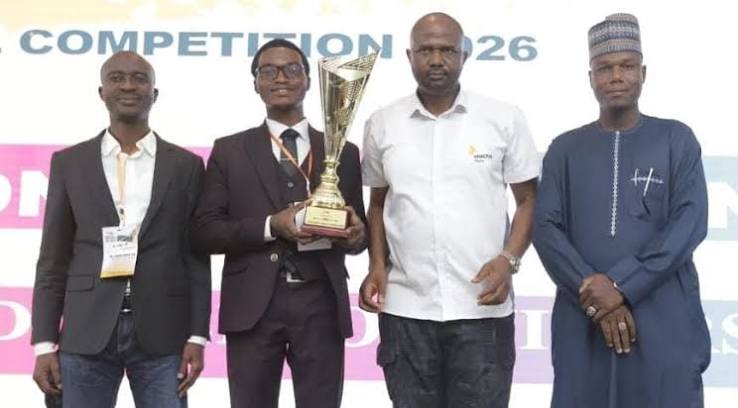
The company's presence at the event went beyond simply lending its name to a prize category. Speaking at the finals, Shakira Mustapha, Risk and Sustainability Officer at Julius Berger, explained that her company believes in the importance of collaboration among stakeholders in shaping the future of Nigerians. Julius Berger's involvement in the sponsorship reflects a broader partnership, as the company, in partnership with Enactus Nigeria, is supporting youth innovation and sustainable development by creating opportunities for students to develop practical solutions to real world challenges, and the winning projects themselves were judged on how implementable they were, since the projects were evaluated based on their relevance, innovation in proposing solutions, scalability, profitability potential, and sustainability.
The competition Julius Berger has attached its name to is not a small or new platform. Enactus Nigeria has empowered more than 20,000 tertiary institution students over the past 25 years with entrepreneurial, leadership and innovation skills aimed at helping them develop solutions to social and economic challenges. The organisation's broader mission centers on experiential learning, since under the programme, students work in multidisciplinary teams to identify problems in their communities, develop interventions and implement projects aimed at creating social or economic value. Winning teams do not simply collect a trophy either, since the Federal University of Technology, Owerri (FUTO) and Ahmadu Bello University, Zaria (ABU) have emerged champions of the 2026 Enactus Nigeria National Competition and will represent Nigeria at the Enactus World Cup in Brazil later this year.
The Enactus sponsorship is not an isolated gesture. Weeks earlier, Julius Berger placed itself squarely inside Nigeria's sustainable construction conversation at another industry gathering, since Julius Berger Nigeria Plc reaffirmed its commitment to sustainable urban development and environmentally responsible construction through its participation in the Future Cities Summit 2026, organised by the Green Building Council Nigeria in Lagos. The company sent senior representation to debate the practical constraints on greener building methods, since the Regional Manager at Julius Berger, Engr. Thomas Christl, was one of the panellists during the plenary session titled Materials, Methods, and Margins: Low Carbon Construction Constraints and Opportunities. Christl's diagnosis of the industry's real bottleneck was notably candid: the challenge is not the availability of technical expertise but ensuring that research findings and emerging innovations are effectively communicated across the construction value chain. He also named the blunt economic barrier holding back wider adoption, since Christl, participating as a panellist in the plenary session titled "Materials, Methods, and Margins: Low Carbon Construction Constraints and Opportunities," identified the high upfront investment required for low-carbon construction as one of the major barriers to wider adoption.
Why It Matters
None of this innovation positioning is happening in a vacuum, and it is backed by a balance sheet strong enough to fund it. Julius Berger's 2025 fiscal year was its strongest on record by several measures, since the company reported revenue of approximately ₦759.9 billion for the year ended December 31, 2025, representing a 34.1 per cent increase from the previous year, while Profit Before Tax rose by 38.5 per cent to ₦41 billion, and Profit After Tax increased to ₦30.2 billion. Credit agencies took notice too, since during the period under review, Julius Berger received improved credit ratings from two agencies, with Agusto & Co upgrading the company's rating from A- to A with a Stable Outlook, while DataPro assigned an A rating with a Positive Outlook.
That profitability is now translating into measurable spending on sustainability and community programs. Alongside its 2025 results, the company disclosed that it invested about ₦837.9 million in community development initiatives during the year, a figure that appeared in Julius Berger's newly published sustainability disclosures alongside other operational metrics: the company directed 71% of its procurement spend, ₦179.8 billion, to local Nigerian suppliers, invested ₦837.9 million in community initiatives, and saw solar energy consumption jump 707.7% year on year, while core construction material consumption dropped 23.9% through better planning. The company's safety record over that same period was also striking, with zero environmental fines or fatalities across 27.9 million work hours for the fifteenth consecutive year.
Julius Berger is also getting ahead of reporting requirements most Nigerian firms have not yet adopted. The company has committed to among the first Nigerian firms to voluntarily adopt the ISSB's IFRS S1 & S2 ESG reporting standards, with a full report due in 2027, and reaffirmed that timeline at its most recent investor forum, where it disclosed plans to publish its first report compliant with IFRS S1 and IFRS S2 by 2027.
Industry Context
For a construction industry that has historically competed on price, project delivery speed, and government relationships, Julius Berger's pivot toward publicly discussing low carbon materials, ESG reporting standards, and youth innovation sponsorships is a departure from the norm. The Future Cities Summit itself illustrated how nascent this conversation still is industry-wide, since panelists agreed that the panel discussion highlighted the critical role of partnerships among government agencies, academia, financial institutions, and private-sector organizations in overcoming the financial, technical, and regulatory challenges associated with low-carbon construction, and that such collaboration is vital to accelerating Nigeria's transition toward more sustainable, resource-efficient, and resilient urban centres. Julius Berger has also called for the kind of standard-setting collaboration that low carbon construction in Nigeria will need to scale, since the company's Regional Manager further called for stronger collaboration among academic institutions, construction companies, material manufacturers, and regulators to establish clear standards and regulatory frameworks that support the adoption of recycled concrete in Nigeria.
The company's talent development push extends beyond university competitions into direct vocational training as well, with a program aimed at younger, non-university-track Nigerians. That initiative is explicitly framed around building capacity for the industries Julius Berger itself operates in, since by training young Nigerians in key building trades and renewable energy technologies, the program contributes to building a skilled workforce capable of supporting Nigeria's growing construction and energy industries, with training options spanning trades selected participants will receive professional training in specialized technical areas that support the construction and renewable energy sectors, with training options including Masonry Level 1, Carpentry Level 1 and Solar installation skills.
What Flipbz Thinks
Flipbz sees Julius Berger's Enactus sponsorship as a low-cost, high-visibility way for the company to associate itself with the kind of practical, homegrown engineering innovation — like a student-built robot that detects structural failures — that reinforces its core construction credibility rather than distracting from it. Pairing that sponsorship with genuine boardroom-level commitments, from early ISSB adoption to a documented jump in solar energy use and a meaningful cut in material waste, suggests this is less a one-off public relations moment and more a deliberate long-term positioning exercise ahead of the company's first full ESG disclosure in 2027. The open acknowledgment from its own regional manager that Nigeria's low carbon construction bottleneck is communication and cost, not technical know-how, is also a notably honest admission from a market leader, and one worth watching to see whether Julius Berger backs it with capital rather than panel appearances alone.
What Industry Watchers Should Track
Analysts and competitors should watch whether Julius Berger's ₦837.9 million community investment and its Enactus sponsorship expand into deeper, funded partnerships with winning student teams like FUTO's ALTAR project, since Enactus Nigeria's own leadership has framed its national competition as a pipeline for corporate investment, noting that the competition would also provide an opportunity to identify promising student innovations that could attract investment, scaling and commercialisation. Stakeholders should also track the company's progress toward its 2027 ISSB-aligned sustainability report, which will be the first real test of how much of this innovation and sustainability messaging translates into audited, comparable disclosure.
The Bottom Line
Julius Berger enters the second half of 2026 with a rare combination for a Nigerian construction firm: record financial results, upgraded credit ratings, and a growing set of public commitments to innovation, sustainability, and youth talent development. Whether that combination reshapes how the company is perceived beyond its traditional identity as a builder of federal infrastructure will depend on whether commitments like the Enactus Innovation Challenge, the Future Cities Summit participation, and the 2027 ESG reporting deadline produce visible, sustained follow-through rather than a single strong year of announcements.
Please register to comment.
With these components in place, your business...
SolidBase Builders Limited is a professionall...
PrimeStone Construction Nigeria Ltd is a well...
CrestRock Engineering Services Ltd is a scala...
Here is an oppotunity to buy a money machine,...
Discover promising partnership opportunities in various industries.
Pitch Your Startup | Find Partners
.jpg)
.jpg)
.jpg)
.jpg)


Comments