
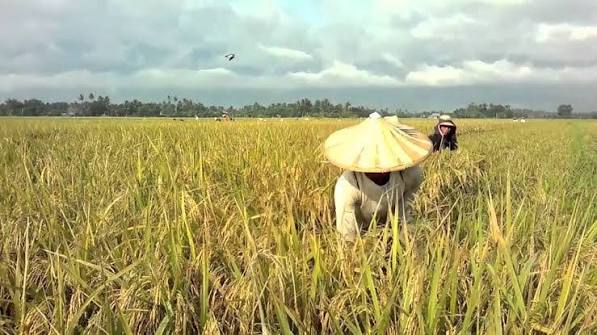
Written By: Flipbz.org
Few foods carry as much political weight in Nigeria as a bag of rice. For over a decade, government after government has promised self sufficiency, poured billions into loan schemes, closed borders and banned imports, all in pursuit of a simple goal, a Nigeria that grows and mills enough rice to feed itself. Yet in 2026, that goal remains stubbornly out of reach. Millions of tonnes still cross the border in disguised bags or through unofficial channels, paddy prices have crashed hard enough to push farmers out of the fields, and household budgets are being squeezed by a staple whose price has swung more violently than almost any other food item in the country. This report examines the brands Nigerians actually buy, the policy forces reshaping what lands on shelves, and why the price of a single bag of rice has become one of the clearest signals of Nigeria's broader economic health.
The Flipbz Nigerian Rice Brands (2026) Market Report draws on publicly available information from the National Bureau of Statistics, USDA Foreign Agricultural Service reports, industry associations and market intelligence sources, combined with Flipbz's own market analysis. The report does not rank or promote individual brands but examines the pricing, policy and consumer behaviour forces shaping Nigeria's rice market.
A Staple Caught Between Ambition and Reality
Nigeria's rice story is fundamentally a story of a gap that refuses to close. Government data frames the shortfall plainly, since the current production of rice in Nigeria stands at 7.0 million metric tonnes with a consumption demand of 10.5 million metric tonnes which creates a deficit gap of 2.5 million metric tonnes. Other tracking sources place the numbers slightly differently but tell the same story, noting that rice production in Nigeria slowed to 5.23 million metric tonnes in 2024, down from 5.61 million metric tonnes in 2023 and 5.41 million metric tonnes in 2022, while consumption has surpassed seven million metric tonnes annually over the past five years, with rice consumption reaching approximately 7.6 million metric tonnes in 2024. That shortfall inevitably shows up at the ports, since this shortfall between local production and demand has led to increased imports, with importation surging to 2.4 million metric tonnes in 2024 from 1.89 million in 2023.
Looking ahead, the gap is projected to widen rather than close. Forecasts for the coming marketing year show that amid a significant gap between Nigeria's domestic rice production and consumption, the country is forecast to produce around 5.2 million tons of milled rice from 8.3 million tons of rough rice in the 2026/27 marketing year, while domestic consumption is projected at 9 million tons, leaving an import requirement of around 3.5 million tons. Production itself has actually been sliding, since the USDA Foreign Agricultural Service projects Nigeria's rice production for marketing year 2026/27 at 8.3 million metric tonnes, down 6 percent from the 8.8 million tonnes projected for the previous year, attributed to reduced planted area, insecurity in some producing regions, and rising input costs.
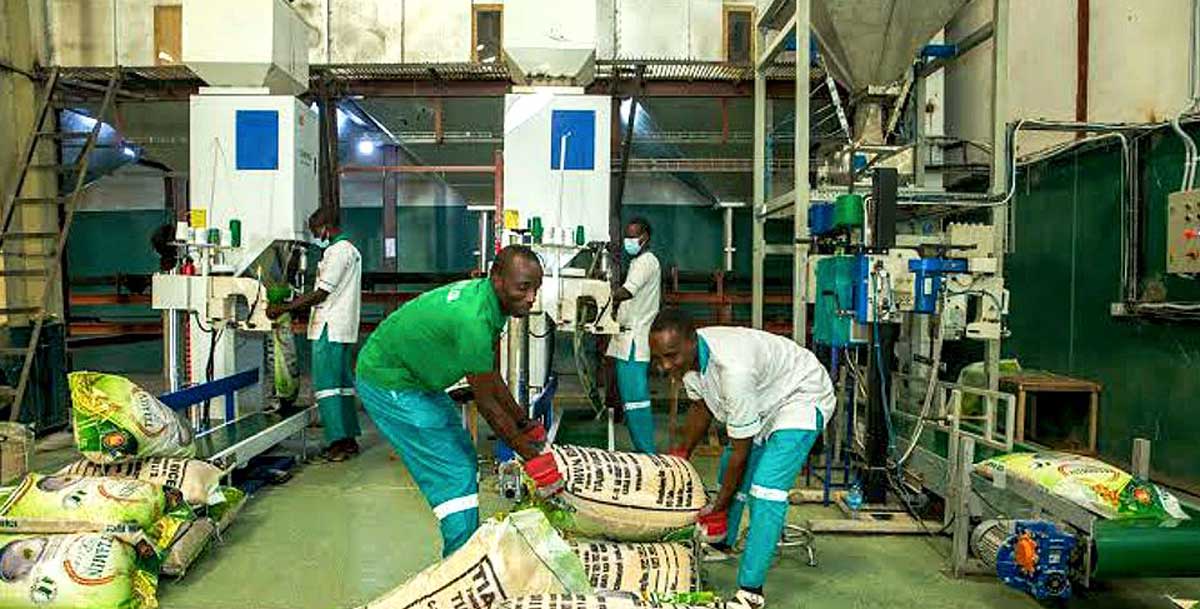
The Brands Nigerians Actually Buy
Nigeria's rice shelf is dominated by a handful of names that have become household words in their own right, alongside a beloved regional variety that predates all of them. Among locally produced brands, one name is consistently described as the most trusted, since Mama's Pride is a very popular local Nigerian rice brand in the country that is a product of OLAM Nigeria Limited, and without even thinking much, many Nigerians see this local rice brand as the best and most popular in the country today by a mile. Its appeal rests on both quality and reach, since apart from being affordable, Mama's Pride rice is very nutritious and non sticky when cooked, well packaged, very neat, and devoid of any sand and stones, backed by a producer with genuine scale, since Olam has a wide and growing network of farmers, suppliers, wholesalers, local buying agents and customers, with these networks encompassing approximately 500,000 farmers.
Mama Gold sits alongside it as one of the most recognised names on Nigerian shelves, described as a popular brand of rice in Nigeria for very good reasons, a superior quality Thai parboiled rice that contains very little starch content, which many Nigerians call special rice for this reason, as it is easy to cook without having to spend too much time parboiling all over again. Alongside these two, the wider shelf includes several other well known names, since brands like Mama Gold, Stallion, Caprice, Rice Master and Royal Stallion still exist in the market today, with Caprice in particular noted as one brand you're likely to see everywhere you look in the country, standing tall alongside Mama Gold and Stallion as one of the most popular rice brands, and one of the cheapest for some time.
No brand carries more cultural weight, however, than Ofada, Nigeria's most celebrated indigenous variety. It is arguably the most popular local rice brand in the country, loved by all, available at a premium in good restaurants, characterised by short grains with brown stripes and mostly planted in Ogun State without the use of any chemicals. Its appeal goes beyond taste, since Ofada rice has so many health benefits when compared to foreign rice, being rich in higher amounts of vitamins and minerals, as well as fibre for good digestion, a quality echoed elsewhere describing it as a short to medium grain, brownish straw colour rice with occasional red specks, known for its distinctly earthy, nutty aroma and flavour, with the name coming from the Ogun town where this variety originated. Even so, local rice's biggest quality complaint has persisted for years, since it often contained stones, still does, and remained uncompetitive in quality and quantity compared to imports.
Beyond the mass market leaders, a smaller premium segment has emerged from private agribusiness investment, since Cosrice Premium Rice is a long grain, premium quality local rice brand produced by Coscharis farms in Anambra State.
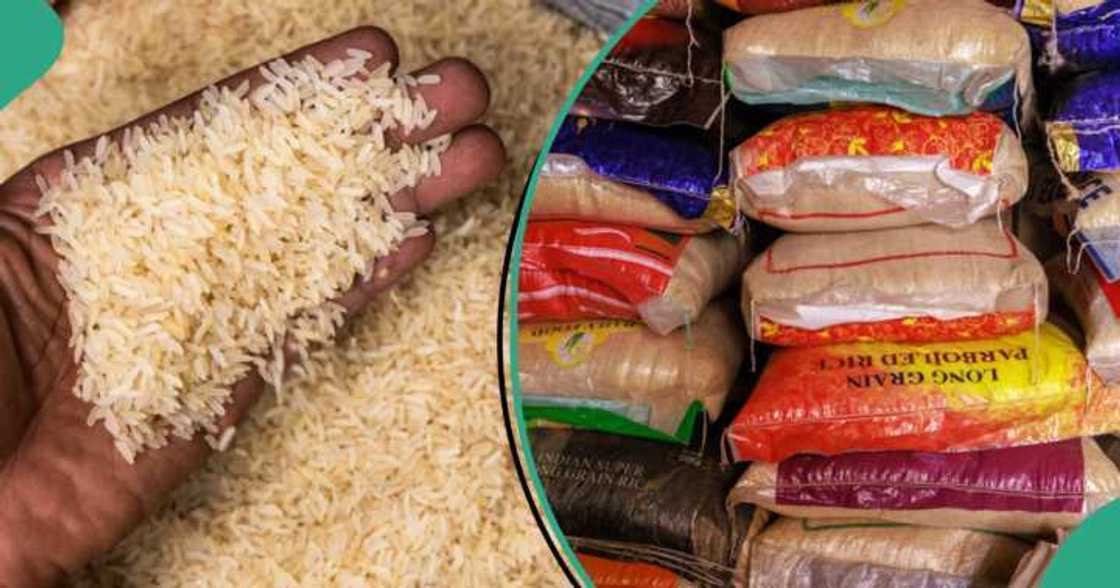
A Price History Written in Wild Swings
If one number captures the volatility of Nigeria's food economy, it is the price of a 50kg bag of rice, which has moved so violently in recent years that it has become a kind of informal inflation index for ordinary households. Longer term tracking shows just how far prices have travelled, since rice prices in Nigeria have roughly tripled since 2022, from ₦18,000 to ₦28,000 per 50kg bag to ₦45,000 to ₦95,000 depending on brand in April 2026. The most dramatic single month swing came in early 2026, when official data showed the average price of 50kg local rice, short grains, rose by 20.5 percent in March 2026 to ₦112,000 from ₦92,946 in February 2026, while the price of 50kg foreign rice grew by 3.06 percent to ₦133,975 in March from ₦110,589 in February. Independent market surveys around the same period painted a somewhat calmer picture at street level, since recent findings by Vanguard showed that the price of 50kg local rice short grain averages ₦60,000, at the backdrop of recent price increases, a reminder of how sharply official averages and everyday market prices can diverge.
By late summer 2026, prices had eased meaningfully from those highs. Recent tracking shows that the median price of a 50kg bag of Nigerian rice stood at about ₦55,000 at the end of August 2026, unchanged from the level recorded in early June, with a reasonable September 2026 benchmark of ₦55,000 to ₦75,000 for many 50kg bags, while premium brands and particular markets can push prices significantly higher. Regional differences remain stark, since a survey of Nigeria's geopolitical zones found the price of rice ranging between ₦53,000 and ₦82,000 depending on location, transportation costs, supply chain efficiency and regional demand, with Abuja representing the North Central zone as the most affordable market at between ₦53,000 and ₦55,500, while by May 2026, prices in some North Eastern markets had risen significantly, with 50kg bags trading within the ₦80,000 to ₦90,000 range due to supply disruptions, higher distribution costs, and broader inflationary pressures.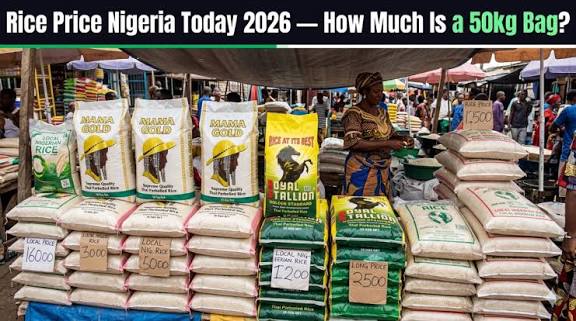
When Farmers Lose, Everyone Feels It Eventually
Behind every retail price swing sits a farming economy under real strain, and 2026 has exposed just how fragile that base has become. A dramatic collapse in what farmers earn for their harvest has already begun reshaping planting decisions, since Nigerian rice farmers are scaling back their plans for the 2026 planting season as paddy price slumps, high production costs, and a struggling milling industry squeeze their margins, with the price of a ton of paddy slumping 51 percent to ₦350,800 from a peak of ₦720,000 in 2025, weighed down by a surge in cheap imports and smuggling. The effect on the ground has been severe in Nigeria's rice heartland, since less than 30 percent of the over 500,000 rice farmers in Kebbi cultivated the grain in the 2026 dry season that just ended, a decline attributed to low prices, high production costs and worsening insecurity in some growing regions.
Millers, meanwhile, argue that policy shifts are compounding the pain rather than easing it. The Rice Millers Association of Nigeria has pushed back hard against recent tariff changes, warning that following reduction on import duty on rice and other commodities by the Tinubu led administration, the move will kill the local rice industry if not reversed, with the association's national president describing the underlying cost disadvantage bluntly, noting that local operators face a severe disadvantage because we generate everything ourselves, while foreign competitors get these at little or no cost, making competition extremely difficult. That imbalance is already showing up on shop shelves, since a recent market survey found that more foreign parboiled varieties were on traders' shelves than local brands, with imports from Thailand alone reaching 60,735 metric tons in the first five months of 2025, the country's highest rice imports from Thailand since 2016, when the country commenced its rice revolution initiative.
The Policy Tug of War Behind Every Bag
Nigeria's rice market cannot be understood without its long, tangled history of border closures, import bans and reversals, each shift rippling directly into shelf prices. The current restriction traces back nearly a decade, since a full ban on all rice imports into the country was first introduced in July 2015 with the aim to promote self sufficiency in rice, reinforced through the Central Bank's own foreign exchange restrictions, since in 2015, under President Muhammadu Buhari, the Central Bank of Nigeria restricted access to foreign exchange for 43 categories of imports to promote local production and preserve foreign reserves. Alongside the ban came a major financing push, since the Central Bank launched the Anchor Borrowers' Programme, an initiative aimed at transforming Nigeria's agricultural sector and increasing local rice output, a scheme that by one estimate had disbursed about $527.6 million to farmers across the country within its first few years.
Results, however, have been mixed at best. One assessment concluded plainly that these measures failed to strengthen Nigerian agriculture, as local producers struggled to meet national food demand due to insufficient government support, inadequate infrastructure, and poor agricultural inputs. More recently, policy has swung back toward openness, since the Central Bank of Nigeria lifted foreign exchange restrictions on rice importers and 42 other items that had been introduced in 2016, even as officials insist the core restriction on land border imports remains intact, since customs clarified that the extant policy on rice still remains the same, importation through the land border is still restricted.
Looking further ahead, Nigeria's official strategy is now anchored in a formal long term plan, since the Second National Rice Development Strategy, NRDS II, running 2020 to 2030, sets capacity building objectives along the entire value chain, from production to processing and marketing, with a focus on cutting the rice import bill and improving the quality of local rice. Whether that plan can outpace rising demand remains an open question, since joint OECD FAO projections show that rice consumption growth in Africa will remain among the fastest in the world over the coming decade, driven notably by large urban markets in Nigeria and Ghana.
What Nigerian Consumers Actually Weigh Before Buying Rice
Stone Free Quality Over Brand Loyalty
Buyers repeatedly cite cleanliness as a decisive factor, since local rice's long standing reputation for containing stones and debris has pushed many households toward brands specifically marketed as sand and stone free, regardless of price.
Price Per Bag Against Household Budget
With prices swinging by tens of thousands of naira within a single year, most households now shop by whatever bag fits their budget that week rather than committing permanently to one brand.
Local Versus Imported for Different Occasions
A clear pattern has emerged around use case, since for everyday household cooking, quality local brands offer excellent value at a meaningful discount below comparable imported brands, while for large events and ceremonies where perfectly uniform grains matter, many experienced caterers still prefer premium imported rice, making local rice the daily choice and imported rice the occasion choice.
Regional Availability and Distance From Source
Because transport cost feeds directly into shelf price, buyers closer to production states like Kebbi, Niger and Benue, or to import hubs like Lagos, consistently pay less than those in more distant regions, making location as important as brand in the final price paid.
The Rise of Informed Rice Buyers
Nigerian households, increasingly squeezed by food inflation, are comparing options more carefully before buying rice. Common searches include:
Mama Gold versus Mama's Pride price comparison
Cheapest 50kg bag of rice in Nigeria today
Local rice versus foreign rice which is better
Ofada rice prices in Lagos 2026
Rice price by state Nigeria 2026
Stone free rice brands in Nigeria
This growing research culture, amplified by market survey posts and food price tracker blogs, continues to shape which brands earn trust as prices keep shifting.
Challenges Facing Nigeria's Rice Industry
Collapsing farmer incentives sit at the heart of the industry's near term troubles, since the sharp fall in paddy prices described earlier has already discouraged planting even as national demand keeps climbing, threatening to widen the production gap further rather than close it.
Idle milling capacity compounds the problem, since a related investigation into the sector found that over 60 percent of rice mills sit idle, even as new investment continues, with one newly commissioned facility in Kano illustrating the industry's uneven progress, since a new rice mill with a production capacity of 400 tons per day has been commissioned in Kano State, gradually expanding its processing capacity since commercial production began in 2024, after initially operating at a capacity of 80 tons per day.
Policy inconsistency remains a persistent headache for both farmers and millers, since successive administrations have shifted between full bans, land border restrictions, duty free windows and foreign exchange access changes within just a few years, making long term investment planning genuinely difficult for anyone in the value chain.
Insecurity in producing regions continues to shrink the land actually under cultivation, a factor cited repeatedly alongside high input costs as a direct driver of falling national output.
Market Outlook for 2026 and Beyond
Nigeria's rice market enters the second half of 2026 with prices moderating from their early year peaks but structural questions still unresolved. Regional analysis suggests global supply conditions could work in Nigeria's favour if managed well, since the fall in world production in 2026/27 acts as a twin signal, likely to raise the marginal cost of imports while improving the relative profitability of domestic investment in production and processing. Whether Nigeria capitalises on that opening will depend heavily on resolving the tension currently playing out between millers demanding tariff protection and a government leaning toward import flexibility to keep consumer prices manageable.
For now, the most likely path is one of continued volatility rather than a decisive resolution in either direction, an import bill still measured in millions of tonnes, a paddy price crisis pushing farmers out of fields even as consumption keeps climbing, and a policy environment that keeps changing course faster than the industry can adjust.
Conclusion
Nigeria's rice market in 2026 remains defined less by which brand consumers prefer and more by the giant unresolved question sitting underneath the entire category, why a country with this much farmland, this much political will, and this much capital already spent still cannot grow enough rice to feed itself. Mama's Pride and Mama Gold's dominance of the local mass market, Ofada's enduring cultural pull, and foreign parboiled rice's stubborn return to shelves despite years of restriction all point to the same underlying truth, that until paddy farming becomes reliably profitable and milling capacity is fully used, Nigeria's rice story will keep swinging between ambition and import dependency rather than settling into genuine self sufficiency.
About this Report
The Flipbz Nigerian Rice Brands (2026) Market Report is an independent editorial publication prepared using publicly available information from the National Bureau of Statistics, USDA Foreign Agricultural Service reports, industry associations and market intelligence sources, together with independent market analysis by Flipbz. It is intended to provide market insight and does not constitute purchasing advice.

Please register to comment.
With these components in place, your business...
SolidBase Builders Limited is a professionall...
PrimeStone Construction Nigeria Ltd is a well...
CrestRock Engineering Services Ltd is a scala...
Open the Listing model file located in the ap...
Discover promising partnership opportunities in various industries.
Pitch Your Startup | Find Partners
.jpg)


.jpg)




Comments