
.jpeg "Young Africans Question Foreign Aid Dependence")
Written By: Flipbz.org
Recent Survey Reveals Growing Support For Self-Reliance And Locally Driven Development
A sweeping new survey of young Africans shows a generation growing openly impatient with dependency on foreign donors, with a quarter saying the collapse of USAID funding could ultimately push their governments to solve problems on their own.
The findings come from the 2026 edition of the African Youth Survey, a biennial study launched in 2020 by the Ichikowitz Family Foundation and conducted by PSB Insights to give governments, business, civil society and the media a rigorous understanding of the views of Africa's rising generation. Released this week, the survey interviewed nearly 5,000 people across 16 of the continent's 54 countries and found a quarter of young Africans believe aid cuts by the US could have a positive impact, saying that losing foreign money will force leaders to confront and solve their own challenges. In Ghana and Nigeria, close to half of respondents aged 18 to 24, 41% and 40% respectively, expressed that same optimism, with Liberia not far behind at 37%.
The generational shift is not one sided or free of anxiety, however. Nearly half of African youth, 46%, still believe the closure of USAID would have a damaging impact on their countries, with healthcare services and disease prevention seen as the areas most affected, while a further 11% remained uncertain about the overall impact. That split mirrors a broader recalibration in how young Africans view foreign powers generally. Overall US influence has risen from 74% in 2024 to 81%, edging ahead of China at 79%, with survey organizers describing a generation increasingly pragmatic, impatient with dependency, and judging foreign powers less by rhetoric and more by tangible delivery on jobs, investment, technology and security.
Ivor Ichikowitz, the South African founder whose family foundation commissioned the report, framed the findings as a message directed as much at African leaders as at Washington or Beijing. He said the survey shows youth are concerned about governments overly influenced by foreign powers, adding that "African governments need to take agency and responsibility for their own reality."
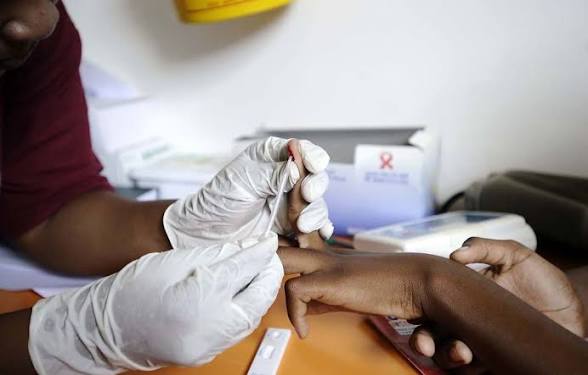
The sentiment did not emerge in a vacuum. The Trump administration announced in early 2025 that it was eliminating more than 90% of USAID's foreign contracts and $60 billion in overall US assistance around the world, a decision that hit health programs particularly hard. Reproductive health funding fell by 92%, maternal and child health by 89%, and HIV and AIDS support, previously USAID's second largest sector after macroeconomic stability, dropped by 69%, leaving researchers and clinicians across the continent scrambling to adjust. Other major donors followed a similar path, with Britain, France and Germany also slashing aid budgets, including a UK announcement that its aid budget would fall from 0.5% of gross national income to 0.3% by 2027, its lowest share since records began.
That funding retreat has forced a reckoning that predates this year's survey by months. In Lagos, researchers described the aftermath as nothing short of shocking, with billions in disease control funding vanishing overnight, clinical trials abruptly halted, and hundreds of local collaborators sent home. Salim Abdool Karim, who runs South Africa's Centre for the AIDS Programme of Research, called the withdrawal a wake up call that African nations cannot rely on other countries to fund the things that we need to do. That view lines up closely with broader public opinion data gathered before the cuts even took full effect: an Afrobarometer survey of 34 African countries found that 65% of respondents wanted their governments to finance development with their own resources, rather than with external loans.
Economists frame the moment as consistent with warnings issued decades ago by advocates of African self reliance. Zambian born economist Dambisa Moyo, author of Dead Aid, has long argued that the aid dependency model keeps Africa in what she calls "a perpetual childlike state," warning that when donor budgets shrink or geopolitical priorities shift, African countries are left exposed. Malawi illustrates that exposure starkly, since development partners have historically funded close to 40% of its national budget, leaving the country acutely vulnerable to funding swings decided thousands of miles away.
Why this shift in youth sentiment matters extends well beyond survey statistics. Africa has the youngest population in the world, with 70% of sub Saharan Africa under the age of 30 and a median age of just 19 years and six months, meaning the attitudes captured in this survey will shape the continent's politics and policy for decades. By 2030, Africa will be home to more than 40% of the world's youth, giving this generation's growing impatience with dependency outsized weight in future elections, protests, and policy debates across the continent.
Attention now turns to whether African governments translate that youth sentiment into concrete fiscal reform rather than rhetoric alone. Analysts point to domestic resource mobilization, closing an estimated $88.6 billion lost annually to illicit financial flows and improving tax collection, as concrete levers governments could pull without depending on any donor workshop or capacity building retreat. Some governments are already responding: Nigeria, which received over $440 million from USAID's health funding in 2024, has increased its own domestic health spending by $200 million to help offset the shortfall. Whether that kind of response spreads across the continent, or whether donor retrenchment simply deepens hardship faster than governments can adapt, will determine if this year's survey marks a genuine turning point in Africa's relationship with foreign aid.

Please register to comment.
With these components in place, your business...
SolidBase Builders Limited is a professionall...
PrimeStone Construction Nigeria Ltd is a well...
CrestRock Engineering Services Ltd is a scala...
Here is an optimized version of your Blade te...
Discover promising partnership opportunities in various industries.
Pitch Your Startup | Find Partners
.jpg)




.jpeg)



Comments