
.jpeg "Seplat Energy's Gas Expansion Plans Highlight Nigeria's Growing Domestic Energy Opportunity")
Written By: Flipbz.org
Seplat Energy is pushing ahead with a cluster of gas infrastructure projects across its Nigerian portfolio, positioning natural gas as the centerpiece of the company's growth strategy just as it prepares to showcase that ambition to global investors at African Energy Week in Cape Town this October.
The centerpiece of that push came online at the start of the year. In January 2026, the company successfully commissioned the highly anticipated Assa North-Ohaji South, or ANOH, Gas Plant, a facility designed to produce up to 300 million standard cubic feet a day. The plant, developed as a joint venture between Seplat and the Nigerian Gas Infrastructure Company, began supplying gas to the Indorama Petrochemical Plant following the completion of an 11 kilometre pipeline and clearance by the Nigerian Upstream Petroleum Regulatory Commission. Since first gas, wet gas production has been stabilizing, delivering 40 to 52 million standard cubic feet per day of processed gas directly from the plant to Indorama, the company said in a statement.
Beyond ANOH, Seplat is expanding its gas value chain through the Sapele Gas Plant, where upgrades are increasing processing capacity from 60 to 90 million cubic feet per day while reducing flaring and enabling LPG recovery. A separate offshore project is also advancing on schedule. The Oso-BRT Phase 1 project remains on track for completion in the third quarter of 2026 and is expected to double offshore gas sales capacity to approximately 240 million standard cubic feet per day, expansion work the company says will support broader domestic energy access initiatives alongside increased LPG production.
These projects sit inside a far larger capital programme unveiled at the company's Capital Markets Day last September. Under its 2026 to 2030 roadmap, Seplat has committed to deploying up to $3 billion in capital expenditure, largely directed at unlocking value from the ExxonMobil assets and driving production growth, with the company expecting to grow its working interest production from about 134,000 barrels of oil equivalent per day in mid-2025 to over 200,000 boepd by 2030. Gas monetisation will account for around 20 percent of that outlay, as the company accelerates projects such as the ANOH Gas Plant and the development of the Yoho gas field for liquefied natural gas exports, while roughly 70 percent of spending is directed toward oil monetisation projects including new wells and offshore infrastructure expansion.
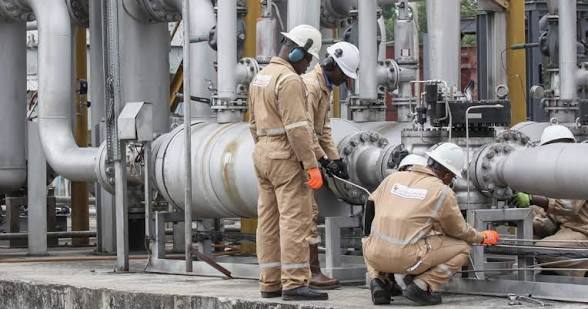
Seplat's operations sit within a resource base the company describes as vastly underexploited. Nigeria has over 200 trillion cubic feet of proven gas reserves, among the top 10 globally, and Seplat has positioned itself as a leading supplier of processed gas to the domestic market, operating the Oben and Sapele Gas Processing Plants with combined capacity exceeding 300 million standard cubic feet per day, supplying approximately 30 percent of gas fired power generation in country. The company frames this work as part of Nigeria's Decade of Gas strategy, with investments spanning compressed natural gas for transport, liquefied petroleum gas for clean cooking, and electrification pilots in underserved communities.
Financial markets have responded positively to the company's execution so far. Seplat reported a robust first quarter in 2026, generating revenue of $840.7 million and reducing net debt by 21 percent quarter on quarter to $531.6 million, supported by disciplined capital allocation, strong commodity prices and an effective risk management strategy. Management has stressed that the wider investment drive will not require new equity, with the multi billion dollar programme fully funded from operating cash flows, and the company expecting to generate between $5 billion and $6 billion in operating cash flow from 2026 to 2030, supporting cumulative dividends of at least $1 billion over the same period.
Why this matters extends well beyond Seplat's own balance sheet. Analysts note the company is prioritizing domestic gas supply over pure export models, which directly supports industrial manufacturing capabilities within the country, while the broader shift underscores a profound change taking hold across Africa's hydrocarbon sector as international supermajors divest from onshore assets and indigenous champions like Seplat fill the vacuum. Executives have framed the moment in similarly ambitious terms, with one Seplat leader arguing that Nigeria stands at an inflection point where it must use gas to power its population, industrialize, and capture global export value.
Attention now turns to whether Seplat can execute on its expanded pipeline of projects while sustaining the balance sheet discipline investors have rewarded so far. The company plans to restore and redevelop hundreds of previously underutilized wells while adding between 50 and 70 new wells by 2030, creating substantial opportunities for production growth, local content development and supply chain participation, alongside sanctioning up to three new gas projects as part of its broader capital plan. With African Energy Week now on the horizon in October, Seplat's presentation to investors in Cape Town is likely to serve as a key marker of whether the company's domestic gas ambitions are translating into the kind of investor confidence needed to fund its next phase of growth.

Please register to comment.
With these components in place, your business...
SolidBase Builders Limited is a professionall...
PrimeStone Construction Nigeria Ltd is a well...
CrestRock Engineering Services Ltd is a scala...
Here is an oppotunity to buy a money machine,...
Discover promising partnership opportunities in various industries.
Pitch Your Startup | Find Partners
.jpeg)

.jpeg)



Comments