
Written By: Flipbz.org
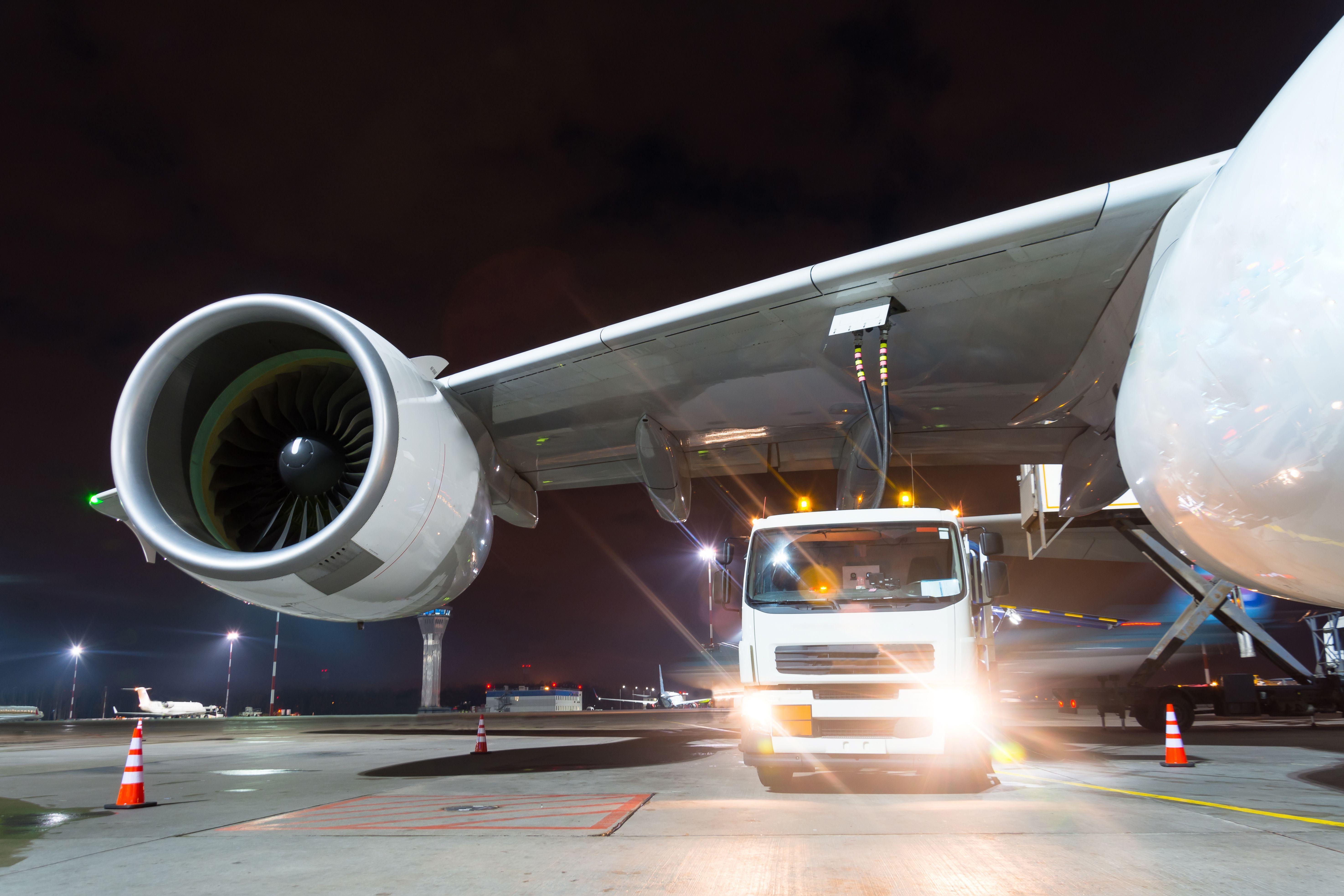
Rising aviation fuel costs, maintenance expenses, and foreign exchange pressures are creating renewed challenges for Nigerian airlines, with industry operators warning that ticket prices and route profitability could come under additional strain.
Nigeria's domestic airlines are reportedly navigating one of the most difficult operating environments in recent memory, as a dramatic spike in aviation fuel prices earlier this year continues to reverberate through ticket prices, flight schedules, and airline balance sheets. Months after the crisis first erupted, industry operators say the underlying cost pressures, though partially eased by government intervention, have not disappeared, leaving carriers to grapple with a structurally more expensive operating environment heading into the second half of 2026.
What Happened
According to the Airline Operators of Nigeria (AON), the price of Jet A1 fuel climbed from roughly N900 per litre in February 2026 to as high as N3,300 per litre by mid April, an increase the association described in a formal letter as "astronomical and unsustainable." AON noted that the spike appeared disconnected from global trends, pointing out that international crude oil prices had risen by only about 30 percent within the same period.
The financial impact on individual carriers was stark. Akwa Ibom state owned airline, Ibom Air, said the cost of fueling its aircraft tripled between January and April, from an average of N2.1 million per flight in January to N7.6 million in April, representing what the airline described as an "unprecedented crisis" in an April 27 statement. Air Peace founder Allen Onyema, speaking separately, said fuel expenses that previously stood at about N3 million per flight had risen to between N12 million and N13 million, forcing carriers to depend heavily on borrowed funds at interest rates he put between 29 and 33 percent.
At the height of the crisis, AON warned that airlines across the country could suspend operations entirely from April 20, disclosing that one carrier had already grounded all operations since March 13 due to rising fuel costs. In response, several airlines moved to protect margins by raising fares. By late May, ticket pricing checks showed major operators, including Air Peace, Ibom Air, and United Nigeria Airlines, had raised base fares for one way domestic tickets above N200,000, with United Nigeria Airlines setting its minimum fare at N200,000 and Air Peace adjusting fares to roughly N211,600 on comparable routes.
Official data has since confirmed the broader fare impact. National Bureau of Statistics figures showed the average Nigerian airfare rose to N157,355.87 in April 2026, representing a year on year increase of 20.82 percent, with the South South region recording the highest average fare and the North East the lowest.
The federal government eventually stepped in with relief measures. The Nigerian Midstream and Downstream Petroleum Regulatory Authority set indicative price ranges for jet fuel of N1,760 to N1,988 per litre in Lagos and N1,809 to N2,037 per litre in Abuja, based on benchmarks from mid April, though the government later reversed its price cap decision, stating that aviation fuel prices should be set by market forces under its deregulated fuel policy. President Bola Tinubu subsequently approved a 30 percent relief on airlines' outstanding debts to aviation agencies and directed fuel marketers, airlines, and regulators to agree on a "fair" fuel price. Dangote Petroleum Refinery also moved to ease pressure directly, reducing the price of Jet A1 to N1,650 per litre from N1,750 per litre in a move the company said was aimed at supporting airline operations and ensuring stable fuel supply.
Why It Matters
For Nigerian travelers, the practical consequence of this cost crisis has been a sharp and sudden rise in the price of flying domestically. Fare increases of this scale, pushing base tickets on routes such as Lagos to Owerri from roughly N150,000 to over N200,000, place air travel further out of reach for many middle income Nigerians who had come to rely on flights for business and family travel, particularly on routes where road alternatives are impractical.
The disruption extends beyond ticket prices. Reports indicated that Air Peace reduced its Abuja to London flight frequency, while Rano Air announced the temporary suspension of some flight operations during the height of the crisis, illustrating how fuel costs translated directly into reduced connectivity for passengers. Industry stakeholders have also noted that some carriers responded by grounding larger, fuel heavy jets in favor of smaller, more fuel efficient regional aircraft, a shift that can affect route capacity and availability during peak travel periods.
Industry Context
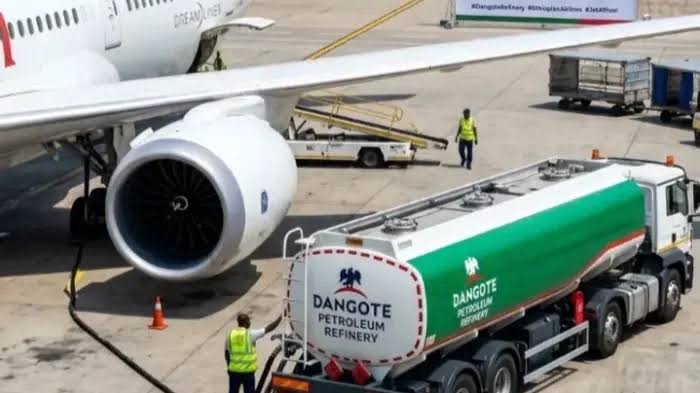
The fuel price spike did not occur in isolation. According to industry reporting, the surge coincided with a 2026 Middle East conflict that broke out in late February and led to the closure of the Strait of Hormuz, an event that rattled global energy markets and disrupted fuel supply chains across Africa, Asia, and Europe. Domestically, the Dangote Refinery, which many had hoped would insulate Nigeria from these external shocks, also faced a shortfall of domestic crude supply, experiencing a deficit of nearly 79.53 million barrels against its requirements between October 2025 and March 2026, forcing it to import crude from other producers.
The proportion of airline costs now consumed by fuel has become a central concern for operators. Industry stakeholders have described aviation fuel cost as now accounting for over 40 percent of airline operating expenses, with some executives, including Ibom Air's leadership, indicating the figure has climbed even higher in certain cases. This compares to a historical norm where fuel typically represented a smaller share of total operating costs for airlines globally, underscoring how disproportionately Nigerian carriers have been affected relative to international peers.
Beyond fuel, operators have pointed to compounding pressures. The Centre for the Promotion of Private Enterprise warned that airlines remain trapped in what it described as a hostile operating environment driven by excessive charges and rising costs, while currency depreciation has made dollar denominated expenses, including aircraft leasing, maintenance, and parts, increasingly expensive to service in naira terms.
What Flipbz Thinks
Flipbz sees Nigeria's aviation cost crisis as a case study in how quickly external shocks can expose the fragility of an industry already operating on thin margins. While government intervention, including debt relief and refinery pricing adjustments, provided important short term stabilization, the structural issues underlying the crisis, currency exposure, reliance on imported and domestically refined fuel supply chains still vulnerable to global disruption, and limited hedging capacity among Nigerian carriers, remain largely unresolved. Airlines that diversify fleet composition toward more fuel efficient aircraft, and that build stronger relationships with domestic refining sources, may be better positioned to absorb the next inevitable price shock than those relying solely on fare increases to bridge the gap.
What Consumers & Investors Should Watch
Travelers should watch for continued fare volatility on high demand domestic routes, particularly as airlines balance fuel cost recovery against passenger demand sensitivity. Industry watchers and investors should track whether the government's "fair fuel price" negotiations between marketers, airlines, and regulators produce a lasting framework, or whether pricing reverts to volatility once global crude markets shift again. The performance of Dangote Refinery's aviation fuel supply, given its own crude sourcing challenges earlier in the year, will also be a key indicator of whether Nigeria can reduce its exposure to the kind of price shocks that defined the first half of 2026.
The Bottom Line
Nigeria's aviation sector has weathered one of its most difficult cost shocks in years, but the underlying vulnerabilities, currency exposure, thin margins, and dependence on volatile fuel markets, remain firmly in place. Whether airlines emerge from this period with more resilient operating models, or simply wait for the next spike to repeat the same painful cycle, will shape not just carrier profitability but the everyday affordability of flying for millions of Nigerians who depend on air travel to connect a vast and difficult to traverse country.
Please register to comment.
With these components in place, your business...
SolidBase Builders Limited is a professionall...
PrimeStone Construction Nigeria Ltd is a well...
CrestRock Engineering Services Ltd is a scala...
Complete multi-currency online banking websit...
Discover promising partnership opportunities in various industries.
Pitch Your Startup | Find Partners


.jpeg)
.jpeg)






Comments