
.jpeg "Dangote Refinery’s Distribution Push Is Changing Nigeria’s Fuel Market")
Written By: Flipbz.org
As Dangote Refinery expands fuel distribution partnerships and pushes toward a doubled refining capacity, marketers, transport operators, and consumers are watching closely for what recent price volatility and supply disruptions signal about the future of Nigeria's fuel market.
Dangote Refinery is simultaneously Nigeria's biggest downstream success story and its most closely watched source of market anxiety. Fresh off a $2.5 billion capital raise aimed at more than doubling its refining capacity, the facility has also spent recent weeks navigating a turbulent stretch of dollar denominated pricing, brief loading suspensions, and rapid price swings that rattled marketers and consumers alike. Together, these developments illustrate a downstream market being fundamentally reshaped, for better and, at times, more uncertainly, by a single dominant player.
What Happened
Dangote Refinery said it has secured $2.5 billion in fresh funding, with the announcement describing it as a precursor to an initial public offering expected to open later this year. According to the company, Dangote plans to more than double the refining capacity of its Nigerian operations from 650,000 barrels per day to 1.4 million barrels per day, a move that would make it the largest refinery globally, surpassing India's Jamnagar facility. Company Vice President Devakumar Edwin said the expansion is expected to boost Nigeria's energy self sufficiency, eliminate the country's dependence on imported refined products, and strengthen its position as a regional export hub.
On the production side, the refinery has continued to scale operations. Channels Television reported that the refinery had increased its crude oil processing capacity to 700,000 barrels per day in a recent performance test, with supplies to partner stations such as MRS increasing sharply, an unusual influx of petrol tankers taking turns to deliver supplies to MRS stations in Lagos. Earlier in the year, Dangote disclosed that the refinery would supply between 60 and 65 million litres of Premium Motor Spirit daily to meet national demand, positioning the country for sustained fuel self sufficiency while exporting up to 20 million litres in surplus, under a structured offtake agreement concluded with selected marketers including MRS Oil Nigeria, NNPC Retail, TotalEnergies, Rainoil, Ardova, Conoil, and several others.
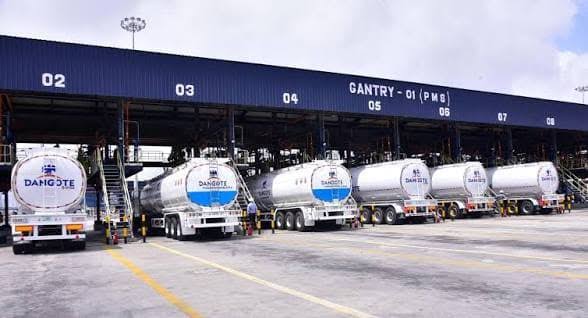
That expansion narrative, however, has been complicated by a turbulent few weeks in the distribution chain. In mid July, the refinery moved to dollar denominated pricing for petrol, diesel, and aviation fuel after struggling to obtain sufficient Nigerian crude through the federal government's naira for crude programme. Under the pricing template circulated to marketers, petrol was set at an ex depot price of $0.779 per litre, while diesel and aviation fuel were priced at $1.087 and $0.942 per litre respectively. Dangote Group explained that it was buying much of its crude oil in dollars but selling fuel in naira, and as the naira weakened, the refinery's sales revenue became insufficient to replace the dollars spent on crude, forcing the company to bear the exchange rate loss.
The shift triggered real disruption. Marketers reportedly halted loading at the refinery over the dollar sale policy, sparking fears of scarcity, while the Federal Government was urged to intervene. Reports at the time indicated marketers had been forced to source products from private depots at significantly higher prices, with the cheapest ex depot price at private depots in Lagos ranging between N1,200 and N1,220 per litre, excluding transportation costs. Dangote Group disputed characterizations of a full suspension, with a company spokesman dismissing reports as "fake news" and insisting the refinery had not stopped loading petroleum products.
By July 22, the refinery reverted to naira pricing, but not at its previous rate. According to reporting, Dangote set a new ex depot price of ₦1,215 per litre, a 13.02 percent jump from the prior ₦1,075 figure, a change the company linked directly to a sharp rally in global crude prices. IPMAN's National Publicity Secretary confirmed that marketers had resumed loading petrol and diesel at private depots after nearly a week of disruptions linked to the price adjustments. As of July 29, the Major Energies Marketers Association of Nigeria reported that Dangote Refinery retains its N1,215 per litre ex-depot petrol price, even as other depots pushed prices higher, with Port Harcourt recording the most expensive rates at between N1,334 and N1,340 per litre.
Why It Matters
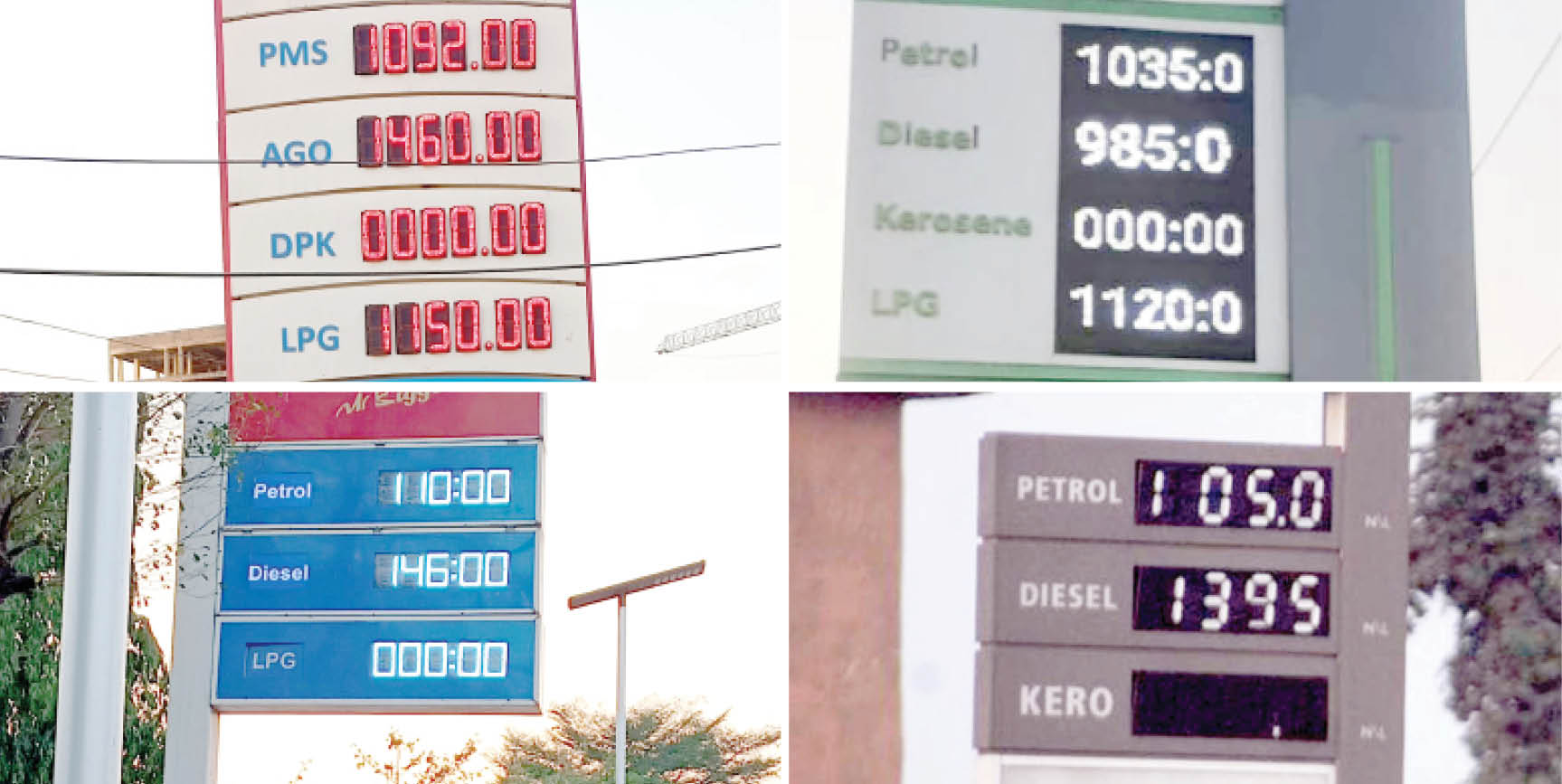
For ordinary Nigerians, this volatility is not an abstract corporate matter, it shows up directly at the pump and in transport fares. The rapid sequence of dollar pricing, loading disruptions, and subsequent price hikes demonstrates how sensitive the entire downstream chain remains to decisions made at a single refining facility, even one designed explicitly to reduce that kind of fragility. When independent marketers found themselves unable to operate efficiently paying in dollars while retailing in naira, the currency mismatch created chaos in supply planning and pricing at the pump, a dynamic that ultimately lands on consumers already managing tight household budgets.
At the same time, the underlying expansion story remains genuinely significant. A refinery capable of supplying the bulk of Nigeria's petrol domestically, while also exporting surplus volumes, represents a structural shift away from decades of import dependence. The NMDPRA reported that Dangote refinery supplied about 61.78 percent of the country's petrol in January 2026, a substantial share that underscores how central the facility has become to national fuel security, even amid its operational hiccups.
Industry Context
Dangote's dominance has not been without scrutiny. NMDPRA data indicated that between October 2024 and October 2025, the refinery planned to supply 35 million litres per day of petrol but averaged only 18.03 million litres per day, representing roughly 51.5 percent of its projection, a gap that has periodically fueled skepticism about the refinery's ability to meet its own public pledges. In response, Dangote has at times moved aggressively to close that gap, announcing plans in December 2025 to supply 1.5 billion litres of PMS to the Nigerian market that month, equivalent to 50 million litres per day, specifically to ensure uninterrupted nationwide fuel availability through the festive season.
The refinery's pricing behavior has also shown clear volatility in both directions. Dangote has cut prices multiple times over the past year, including a reduction to ₦815 per litre in April 2025, showing pricing has moved in both directions depending on crude costs and FX access. That pattern of cuts followed by sharp increases, most recently the jump to ₦1,215 per litre, illustrates a downstream market still finding its equilibrium as Nigeria transitions from import dependence to domestic refining.
What Flipbz Thinks
Flipbz views Dangote Refinery's expansion ambitions as transformative in scope, but its recent pricing turbulence as a reminder that scale alone does not guarantee stability. The refinery's structural importance to Nigeria's fuel security is undeniable, supplying the majority of domestic petrol demand while pursuing capacity that could make it the world's largest facility of its kind. Yet the July dollar pricing episode revealed a genuine vulnerability: as long as the refinery remains exposed to crude sourcing constraints and currency mismatches, its pricing decisions will continue to ripple unpredictably through marketers and, ultimately, consumers. The forthcoming IPO and expanded capital base may help insulate the company from some of these pressures, but Nigeria's downstream sector will likely remain sensitive to Dangote's decisions for years to come, simply because no comparable alternative currently exists at scale.
What Consumers & Investors Should Watch
Consumers and transport operators should watch for further ex depot price announcements from Dangote in the coming weeks, particularly given the refinery's stated sensitivity to global crude price movements and naira for crude supply availability. Investors, meanwhile, should track progress toward the planned IPO later this year, as well as how the $2.5 billion capital raise is deployed toward the 1.4 million barrel per day expansion target, since execution on that scale will determine whether Dangote can reduce the kind of supply volatility seen in July or whether such disruptions become a recurring feature of the transition.
The Bottom Line
Dangote Refinery is reshaping Nigeria's downstream market in ways few could have imagined a decade ago, moving the country from chronic fuel import dependence toward genuine self sufficiency and even export capacity. But the recent weeks of dollar pricing confusion and loading disruptions are a pointed reminder that scale and ambition alone cannot eliminate the currency and supply pressures underlying Nigeria's energy economy. Whether this expansion ultimately delivers the pricing stability Nigerians have long been promised, or simply concentrates market risk in a single dominant facility, will be one of the defining questions for the country's energy sector through the rest of 2026.

Please register to comment.
With these components in place, your business...
SolidBase Builders Limited is a professionall...
PrimeStone Construction Nigeria Ltd is a well...
CrestRock Engineering Services Ltd is a scala...
Here is an opportunity to buy an established...
Discover promising partnership opportunities in various industries.
Pitch Your Startup | Find Partners
.jpeg)
.jpeg)
.jpeg)




Comments