
Written By: Flipbz.org
Economists Renew Calls For Stronger Measures To Ease Household Cost Pressures
After a rare monthly dip in June, Nigeria's inflation trajectory is once again dividing economists, policymakers, and households, as the Central Bank weighs its next move against a backdrop of stubborn food prices and lingering global shocks.
Nigeria's inflation numbers have once again become the subject of intense national debate, as a modest month on month dip in June collides with persistently rising food prices, a Central Bank still holding its benchmark rate at multi year highs, and forecasters offering meaningfully different pictures of where the country's cost of living crisis goes from here. The result is a familiar but consequential argument: is Nigeria's inflation genuinely turning a corner, or is the recent slowdown simply a pause before renewed pressure returns.
What Happened
Nigeria's headline inflation rate came in at 15.91 percent in June, down from 15.93 percent in May, according to data released by the National Bureau of Statistics, marking the first drop in three months. On a monthly basis, the consumer price index rose by 1.66 percent in June, the least in five months, after a 1.75 percent advance in May, suggesting the pace of price increases, if not price levels themselves, is beginning to slow.
Beneath that modest headline improvement, however, the details tell a more complicated story. Food inflation, the largest component of the inflation basket, quickened for the fifth month to 17.52 percent in June from 16.96 percent in May, while prices also advanced faster for housing and utilities, rising to 11.19 percent from 9.79 percent. At the same time, some categories cooled meaningfully: transportation inflation eased to 15.62 percent from 17.09 percent in May, and restaurants and hotels inflation moderated to 23.63 percent from 24.04 percent. The core inflation rate, which strips out volatile agricultural and energy prices, eased to 15.92 percent from a four month high of 16.82 percent in May.
This mixed picture arrived just before a pivotal policy decision. The Central Bank of Nigeria fixed July 20 and 21 for its 306th Monetary Policy Committee meeting, tasked with deciding on interest rates against the backdrop of the June inflation print, with the apex bank having retained an interest rate of 26.60 percent at its prior meeting. That followed a broader pattern of caution: the Monetary Policy Committee held its benchmark rate at 26.5 percent through its May meeting, alongside a Cash Reserve Ratio of 45 percent for deposit money banks, even as the CBN expressed optimism that inflation would return to a downward path.
Forecasters, meanwhile, remain split on where the year lands. In its December 2025 Macroeconomic Outlook, the CBN projected that headline inflation would moderate to an estimated average of 12.94 percent in 2026, driven by declining food and petrol prices, a significant improvement from the 21.26 percent average recorded in 2025. Private sector economists have since revised those expectations upward. Afrinvest has revised its average inflation forecast for 2026 to 15.8 percent from 15.4 percent, reflecting lingering energy price shocks and expectations of modest naira depreciation toward N1,400 per dollar, while the IMF's own estimate places 2026 inflation closer to 16.0 percent.
Why It Matters
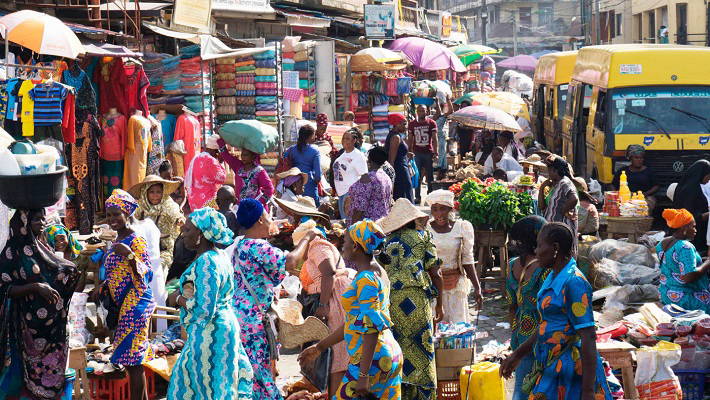
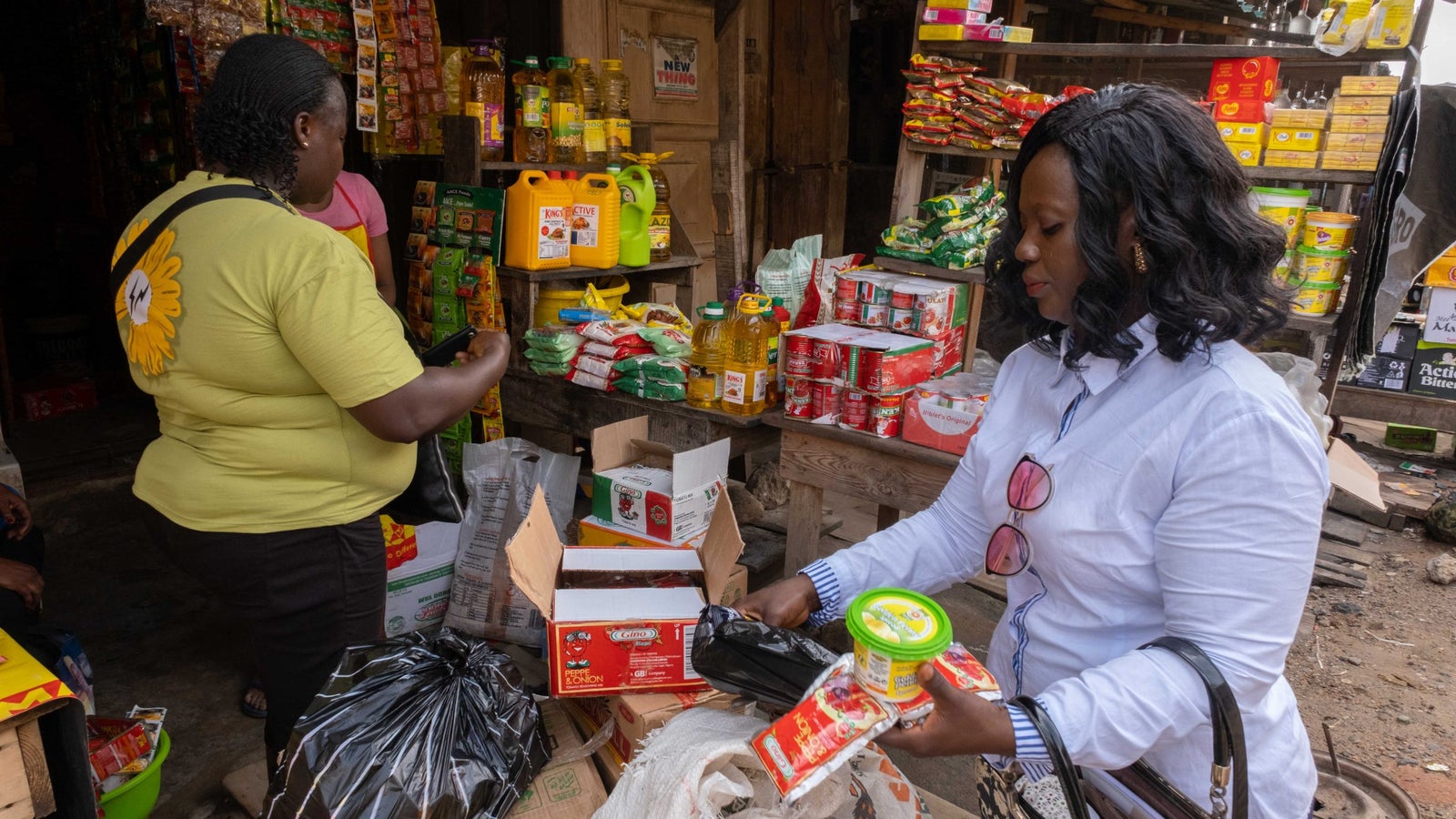
For millions of Nigerian households, this debate is not academic. Even as the headline rate edges downward on paper, food prices, which represent the largest share of household spending for most Nigerian families, continue to accelerate, meaning the practical experience of affordability has not improved in step with the official statistics. A modest 0.02 percentage point decline in the headline rate offers little comfort to a family watching grocery bills climb for a fifth consecutive month.
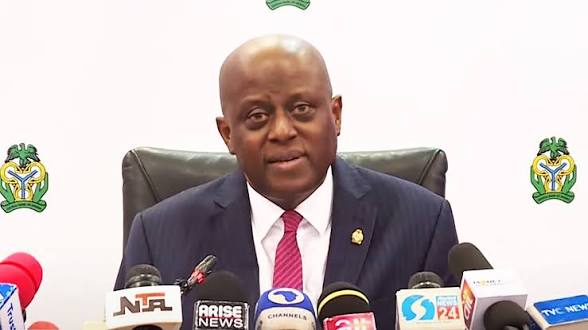
The stakes extend to monetary policy itself. CBN Governor Olayemi Cardoso has acknowledged that Nigeria's progress towards lower inflation had been slowed, though not reversed, by external shocks, particularly geopolitical tensions that have raised energy prices and disrupted global supply chains. That framing puts the central bank in a difficult position: cutting rates too early risks reigniting price pressures, while holding rates too long risks choking off the private sector investment the government is counting on to drive growth.
Industry Context
Nigeria's current inflation debate is inseparable from the country's landmark CPI rebasing, which the National Bureau of Statistics completed as part of a broader statistical overhaul. The updated CPI covers 934 product varieties classified into 13 divisions, with the weight reference period now set to 2023 and the price reference period, or base year, set to 2024, changes designed to ensure the index better reflects current consumption patterns after the old 2009 base period had grown badly outdated.
That rebasing produced a dramatically different starting point for 2025 comparisons. Nigeria's headline inflation had eased significantly through the year, dropping for the eighth consecutive month to 14.45 percent in November 2025, down from 16.05 percent in October, the lowest annual inflation rate in recent years at the time. The subsequent climb back above 15 percent through the first half of 2026, following a global energy shock tied to Middle East tensions, has fueled part of the current debate over whether the country's disinflation trend has genuinely stalled or is merely absorbing a temporary external disruption.
The broader monetary policy context matters too. Since Cardoso became CBN Governor in September 2023, the Monetary Policy Rate climbed sharply, rising by 400 basis points to 22.75 percent in February 2024 alone, before continuing upward as the bank pursued an aggressive inflation targeting strategy. That tightening cycle has since given way to a more cautious, data dependent stance, with the CBN's own economic team stating that an enduring output expansion is possible only in an environment of low and stable inflation, underscoring why the bank has resisted pressure to ease rates more aggressively despite slowing headline numbers.
What Flipbz Thinks
Flipbz sees the current gap between headline inflation and food inflation as the most important, and most overlooked, dimension of this debate. Policymakers and international observers tend to focus on the aggregate figure, but for the average Nigerian household, food inflation accelerating for five consecutive months matters far more than a marginal decline in the composite index. The divergence between CBN's more optimistic 2026 projections and private sector forecasts from firms like Afrinvest also deserves scrutiny. When the entity setting interest rates is meaningfully more bullish than independent economists tracking the same data, it raises legitimate questions about whether policy decisions are being calibrated to the CBN's own forecast or to the more cautious outlook shared by much of the private sector.
What Consumers & Investors Should Watch
Nigerian consumers should watch food inflation figures most closely in coming months, since that metric has now diverged from the headline trend for five straight months and carries the most direct impact on household budgets. Investors and analysts should track the outcome and messaging from the CBN's July Monetary Policy Committee meeting, along with any signs that the bank is shifting its rate stance in response to the June inflation dip, as well as how naira stability holds up against continued global energy price volatility linked to Middle East tensions.
The Bottom Line
Nigeria's inflation story in 2026 is really two stories at once, a headline number inching cautiously downward and a food basket that keeps climbing regardless. Until those two narratives converge, the debate over whether Nigeria has truly turned the corner on inflation will remain unresolved, no matter which direction next month's official print happens to move.
Please register to comment.
With these components in place, your business...
SolidBase Builders Limited is a professionall...
PrimeStone Construction Nigeria Ltd is a well...
CrestRock Engineering Services Ltd is a scala...
Open the Listing model file located in the ap...
Discover promising partnership opportunities in various industries.
Pitch Your Startup | Find Partners



.jpeg)
.jpeg)




Comments