
.jpeg "Kenya And Tanzania Renew Regional Trade Cooperation Talks")
Written By: Flipbz.org
East African Leaders Seek Faster Cross-Border Commerce And Stronger Economic Integration
Kenya and Tanzania have set a June 30, 2026 deadline to eliminate all remaining non-tariff barriers between the two countries, part of eight new cooperation agreements signed during a state visit aimed at converting years of incremental trade talks into a decisive breakthrough.
The commitments emerged from a two day state visit by Kenyan President William Ruto to Dar es Salaam, hosted by Tanzanian President Samia Suluhu Hassan at State House. Kenya and Tanzania have signed eight new cooperation agreements and set a June 30, 2026 deadline to eliminate all remaining non-tariff barriers between the two countries, in what amounts to the most substantive expansion of bilateral ties in years. The pacts, signed during the visit, span energy, railways, agriculture, maritime cooperation, standards harmonisation, and public service reform. The agreements were witnessed by both heads of state following high level bilateral talks and were framed by officials as a deliberate effort to translate years of diplomatic goodwill into measurable commercial results.
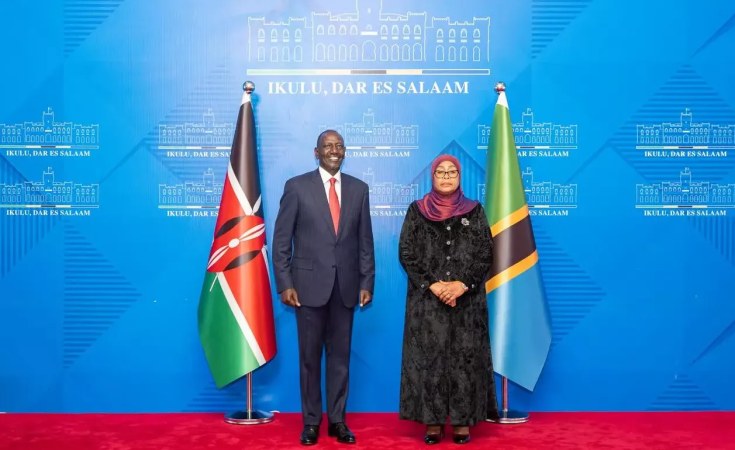
The scale of the trade relationship the two governments are trying to expand is already substantial. With bilateral trade reaching $860.3 million in 2025, accounting for nearly 40% of all intra-EAC commerce, both leaders acknowledged that the ceiling remains far higher, setting a new joint target of increasing annual bilateral trade to more than KSh130 billion, equivalent to approximately $1 billion. Ruto projected that the strengthened partnership and new agreements could unlock up to USD 500 million in additional cross border investment within the next three years, reflecting optimism about the region's economic trajectory if structural barriers continue to be dismantled.
Officials from both countries were candid about what has held trade back for years. The barriers have hit dairy, maize, eggs, steel, and confectionery shipments for years, with trucks often detained at border points over paperwork, standards, or ad hoc levies. President Samia said Tanzania would move to digitise customs and establish a 30 day dispute resolution window under the new Kenya Tanzania Business Council, while both governments also agreed to establish a committee that will continuously monitor non-tariff barriers in order to identify new challenges and ensure that there are no obstacles to bilateral trade going forward.
The renewed push builds on a longer, uneven history of resolving trade disputes between the two East African neighbours. Ties between Kenya and Tanzania, despite deep historical, cultural, and economic connections, have experienced periodic tensions over trade disagreements, aviation rights disputes, and competitive nationalism, with Tanzania's recent decision to restrict foreign service providers in certain sectors adding friction ahead of this year's talks. That pattern of resolving and then re litigating trade barriers stretches back years. Kenya and Tanzania resolved 23 restrictive regulations that had impeded trade between the two countries following a previous presidential visit in 2021, pushing the cumulative number of non-tariff barriers eliminated to 256 by that point, though new obstacles have continued to emerge since.
Infrastructure investment featured prominently among the eight agreements as a way of backing up the trade pledges with physical connectivity. The deals included the revival of the Voi-Mwatate-Taveta railway line, advancement of the Isinya-Singida power transmission corridor, and the creation of a joint technical committee to align product standards between the two countries' regulators. Both governments also commended progress on the Malindi-Bagamoyo Super Highway, which once complete will create a coastal corridor from Mombasa to Dar es Salaam, easing pressure on the northern route, alongside a separate boundary demarcation project on track to complete the remaining sections of the shared border by 2027.
Reaction from the private sector and regional trade bodies has been supportive but pointed. The East African Business Council, representing private sector federations from both countries, called for urgent action on non-tariff barriers, improved policy predictability, harmonised standards, and faster customs processes to enhance regional competitiveness, while also emphasising the need for stronger implementation of agreed reforms rather than simply new declarations. That note of caution echoed comments from Kenyan officials themselves, with one describing the resolution as a major breakthrough that will pave the way for seamless cross-border trade, while acknowledging that sustaining previous agreements has often proven harder than signing them.
The stakes extend well beyond Kenya and Tanzania's bilateral ledger. The commitment carries continental significance as the African Continental Free Trade Area pushes to build a single market across 54 countries, meaning progress or failure between East Africa's two largest economies is likely to be read as a bellwether for the wider integration project. Non-tariff barriers, including customs delays, regulatory inconsistencies, and administrative bottlenecks, have long been cited as key impediments to trade within the East African Community, and their removal is expected to significantly reduce the cost of doing business and accelerate the movement of goods and services across borders if the June deadline is actually met.
Attention now turns to whether both governments can hit the deadline they have set for themselves and sustain the political will behind it. The leaders said the Joint Commission for Cooperation, which has held four sessions since 2009, will convene for a fifth session later this year to track implementation of the new agreements, giving both sides a formal venue to measure progress against the pledges made in Dar es Salaam. Whether this round of cooperation produces lasting change, or simply becomes another entry in a long cycle of resolved and re emerging trade disputes between the two countries, will likely become clear as businesses on both sides of the border report whether shipments are actually moving faster.
Please register to comment.
With these components in place, your business...
SolidBase Builders Limited is a professionall...
PrimeStone Construction Nigeria Ltd is a well...
CrestRock Engineering Services Ltd is a scala...
Open the Listing model file located in the ap...
Discover promising partnership opportunities in various industries.
Pitch Your Startup | Find Partners




.jpeg)
.jpeg)


Comments