

Written By: Flipbz.org
Nigeria's solar inverter market is no longer a niche for the wealthy or the environmentally conscious. It has become a survival purchase for millions of households and businesses responding to a national grid that keeps collapsing, tariffs that keep climbing, and diesel generator costs that keep rising. What used to be considered a backup option is increasingly becoming a primary power source in many Nigerian homes and offices.
The Flipbz Solar Inverter Brands in Nigeria (2026) Market Report draws on publicly available data from the Nigerian Electricity Regulatory Commission (NERC), the Nigerian Independent System Operator (NISO), the Rural Electrification Agency (REA) and industry research firms, combined with Flipbz's own market analysis. The report does not rank or promote individual brands but examines the forces shaping demand, pricing and consumer trust in Nigeria's fast growing power backup sector.
A Grid That Keeps Failing Is Rewriting Nigeria's Power Habits
To understand why solar inverters have become essential rather than optional, it helps to look at what Nigerian households are actually escaping from. Nigeria's national grid collapsed twice within a single week in January 2026 alone, with generation crashing from levels above 3,900 megawatts to as low as 20 megawatts within minutes on one occasion. That was not an isolated event. Since 2010, Nigeria has recorded at least 222 partial and total grid collapses, with a dozen more added across 2024 and 2025 alone.
Even when the grid is technically running, it is running far below capacity. NERC data for April 2026 showed grid connected power plants operated at a Plant Availability Factor of just 31 per cent, meaning that despite an installed capacity of 13,625 megawatts, 69 per cent of the grid remained offline, largely due to gas supply constraints and maintenance failures. For context, all 23 power generation plants connected to the national grid lost output simultaneously during one of the January collapses, cutting supply to all 11 electricity distribution companies at once.
Layered on top of this unreliability is the cost of the power that does flow. Following NERC's April 2024 tariff order, Band A customers, who make up about 15 per cent of Nigeria's 12 million registered electricity customers but consume around 40 per cent of total electricity, saw their rate jump from N66 per kWh to N225 per kWh, a more than threefold increase. This combination, an unreliable grid paired with sharply higher tariffs for those who do get consistent supply, has pushed both households and businesses to treat solar inverter systems as essential infrastructure rather than emergency backup.
Nigeria's Solar Market Is Growing Faster Than Almost Any Other in Africa
The scale of the shift is now visible in national statistics. Nigeria added 803 megawatts of new solar capacity in 2025 alone, a 141 per cent year on year surge that helped push the country into position as Africa's second largest solar market after South Africa. Notably, off grid systems, the category that covers the household and business inverter setups most Nigerians are familiar with, accounted for roughly 96 per cent of that new capacity, as businesses and households moved away from diesel generators toward hybrid solar and battery solutions.
Government-backed rural electrification efforts are reinforcing this trend from another angle. The Rural Electrification Agency's Solar Power Naija initiative had installed over one million solar home systems by mid-2025, with a target of five million by 2026, extending basic power access to communities the national grid has never reliably reached.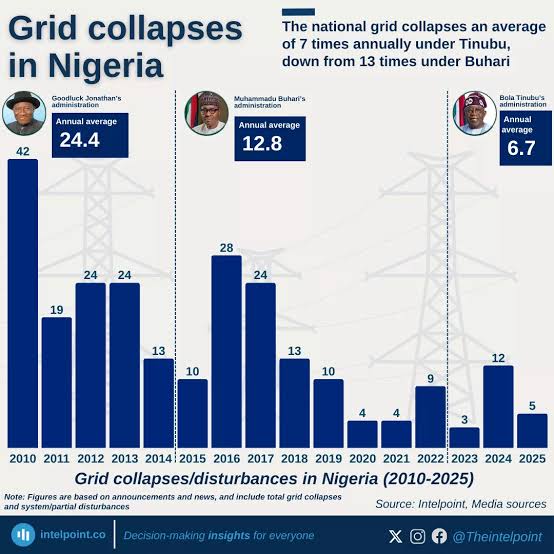
The Brands Nigerians Are Actually Buying
Unlike categories dominated by a single household name, Nigeria's inverter market is fragmented across price tiers, with different brands competing for different budgets and use cases.
At the premium end, Victron Energy has built a reputation for modular, mission critical systems favoured by businesses that cannot tolerate downtime, with its inverters designed so that if one component fails, only that part needs replacing rather than the entire unit. Victron's PowerAssist feature also allows the inverter to boost generator or grid power with battery power during peak loads, preventing generators from tripping under heavy demand.
In the mid-range hybrid segment, SRNE has gained significant traction in the Nigerian market, particularly among solar engineers and tech-savvy consumers, known for hybrid solar inverters with advanced MPPT technology that allow seamless switching between grid power, battery and solar input. Growatt and Sunsynk have also carved out strong positions among modern businesses and SMEs looking for smarter, app-monitored hybrid systems.
At the more accessible end of the market, Luminous has become a household name in Nigeria, and while the brand is famous for simple power inverters, its solar hybrid ranges are described as solid, rugged machines, in part because almost every technician in Nigeria knows how to install and fix a Luminous inverter. Felicity has similarly established itself as a household name in Nigeria's power backup sector, widely available in trade markets like Alaba, with many of its models using heavy transformers that are good at absorbing shocks from unstable Nigerian grid voltage. Other budget focused brands frequently mentioned by Nigerian buyers and distributors include Su-Kam, MUST, BlueGate, Microtek and Eastman, which compete primarily on price and availability rather than premium features.
What Nigerian Consumers Consider Before Buying an Inverter
Grid Tolerance and Durability
Because Nigeria's grid voltage fluctuates so unpredictably, buyers increasingly prioritise inverters designed specifically for countries with bad grids, ones that continue charging properly even when voltage is low or unstable, rather than models built for more stable Western power environments.
Total Cost, Not Just Sticker Price
Pricing in Nigeria's inverter market varies enormously by capacity and technology. Entry-level power inverters without a charger start around N85,000, while mid-range all-in-one solar inverter systems range from N350,000 to N1,400,000, and large-scale commercial grid-tie systems can reach N20,000,000. Because of this spread, buyers must also budget separately for solar charge controllers, priced between N45,000 and N150,000, and AC battery chargers, priced between N25,000 and N80,000, when a system does not come as a complete bundle. This has made total system cost, not just the inverter's price tag, the real factor shaping purchase decisions.
After-Sales Support and Local Serviceability
Nigerian buyers increasingly ask a practical question before purchasing: can this be repaired locally if it breaks? Brands with a wide technician base and established dealer networks tend to be favoured over technically superior but harder to service alternatives, particularly outside major cities.
Genuine Products Versus Counterfeits
Because a large share of affordable inverters are imported, sourcing experts advise Nigerian buyers to work with verified suppliers and factories to avoid counterfeit or substandard units entering the market through informal import channels, a concern that has grown alongside the category's rapid expansion.
The Rise of Informed Solar Buyers
Nigerian consumers researching power backup solutions are increasingly specific in what they search for online before buying, reflecting a more technically literate buyer base than in previous years. Common searches include:
Best solar inverter for home use in Nigeria
Inverter and battery prices in Nigeria
Difference between hybrid and pure sine wave inverter
Best inverter for small business in Nigeria
How many kVA inverter do I need for my home
Solar inverter brands that last long in Nigeria
This shift has pushed both manufacturers and local installers to provide clearer capacity guides, warranty terms and load calculators rather than relying purely on showroom sales pitches.
Challenges Facing Nigeria's Solar Inverter Industry
Import dependence remains one of the sector's biggest structural weaknesses. For over a decade, solar adoption has expanded rapidly, but most equipment has been imported, limiting the sector's contribution to domestic industrial growth, a gap the Rural Electrification Agency is now trying to close through local manufacturing partnerships.
There are early signs of progress on this front. Nigeria secured approximately $425 million in 2025 to establish eight renewable energy manufacturing plants, pushing local solar panel production capacity from 120 megawatts to roughly 300 megawatts, with an additional 3.7 gigawatts in the pipeline, and locally produced panels are already being exported from Lagos to Accra, Ghana. Still, inverters themselves, as opposed to panels, remain overwhelmingly imported, mostly from Chinese manufacturers, which keeps the category exposed to currency volatility.
Affordability also remains a genuine barrier for lower-income households. Only 22 per cent of energy-needy households can meet Tier 1 solar system payments without some form of subsidy, underscoring what analysts describe as a poverty premium that keeps full solar independence out of reach for many Nigerians even as demand grows.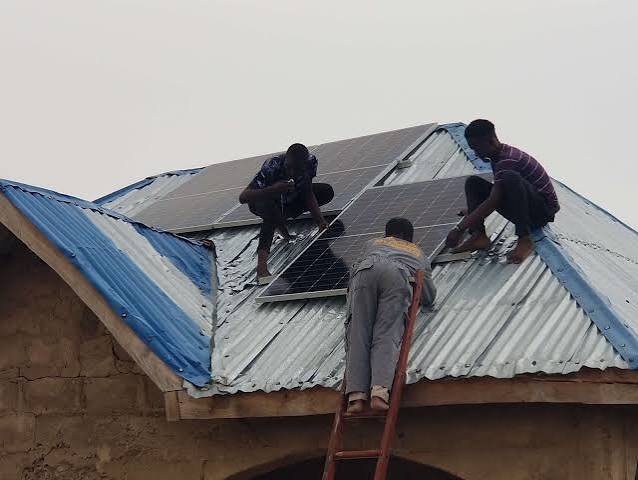
Market Outlook for 2026 and Beyond
Nigeria's renewable energy market, valued at 3.59 gigawatts in 2025, is projected to grow to 4.51 gigawatts in 2026 and reach 14.07 gigawatts by 2031, expanding at a compound annual growth rate of 25.58 per cent. Commercial and industrial demand specifically is expected to grow even faster, at a projected 30.1 per cent CAGR through 2031, as businesses increasingly adopt on-site solar to cut costs and avoid grid outages, with some achieving savings of 20 to 30 per cent compared with diesel self-generation.
Government-backed programmes are expected to accelerate this further. The World Bank-supported DARES programme alone targets electricity access for 17.5 million Nigerians, connecting over 2.5 million households and deploying 1,350 mini-grids, with an $83 million IFC-backed financing facility already secured in April 2026 to support developers under the scheme.
Conclusion
Nigeria's solar inverter market has grown from a discretionary purchase into something closer to essential household infrastructure, driven less by environmental preference than by the blunt economics of a national grid that fails repeatedly and a tariff system that punishes reliability. For established brands like Luminous and Felicity, continued dominance will depend on serviceability and trust built over years of technician familiarity. For premium and hybrid brands like Victron, SRNE and Growatt, growth will hinge on capturing Nigeria's expanding middle class and SME segment willing to pay more for smarter, longer-lasting systems. And for the industry as a whole, the biggest opportunity, and the biggest challenge, lies in whether local manufacturing can scale quickly enough to reduce Nigeria's continued dependence on imported inverter technology.
About this Report
The Flipbz Solar Inverter Brands in Nigeria (2026) Market Report is an independent editorial publication prepared using publicly available information from the Nigerian Electricity Regulatory Commission (NERC), the Nigerian Independent System Operator (NISO), the Rural Electrification Agency (REA) and industry research firms, together with independent market analysis by Flipbz. It is intended to provide market insight and does not constitute technical or purchasing advice.

Please register to comment.
With these components in place, your business...
SolidBase Builders Limited is a professionall...
PrimeStone Construction Nigeria Ltd is a well...
CrestRock Engineering Services Ltd is a scala...
Complete multi-currency online banking websit...
Discover promising partnership opportunities in various industries.
Pitch Your Startup | Find Partners
.jpg)



.jpg)

Comments