
.jpeg "African Ports Accelerate Cargo Clearance Modernisation Efforts")
Written By: Flipbz.org
Regional Authorities Push Faster Digital Processing To Reduce Delays And Boost Trade Efficiency
From Nigeria's push toward a fully electronic single window system to new automation partnerships at Lagos and Lekki ports, African maritime authorities are racing to cut clearance times and reduce the costly delays that have long plagued the continent's trade corridors.
Cargo clearance delays have long been one of the most persistent obstacles to trade efficiency across African ports, adding costs, encouraging corruption, and undermining regional competitiveness. Now, a wave of modernisation efforts, spanning Nigeria's push for a unified electronic clearance platform, automation upgrades at major terminals, and renewed government pressure to cut approval timelines, signals that port authorities across the continent are treating digitisation not as a long term aspiration but as an urgent operational necessity.
What Happened
Nigeria's federal government has intensified its push toward full digitisation of port operations, with officials confirming that the long delayed National Single Window project remains a central priority for reducing the country's notoriously slow cargo clearance times. The initiative is designed to consolidate the dozens of separate agency approvals currently required to clear goods through Nigerian ports into a single electronic platform, replacing a fragmented, paper heavy process that has historically forced importers to interact with multiple regulatory bodies sequentially rather than simultaneously.
At the operational level, Lagos, Nigeria's dominant port hub, has continued to see targeted automation investment. The Nigerian Ports Authority has worked with terminal operators to expand automated cargo tracking and electronic documentation systems at facilities including Apapa and Tin Can Island ports, part of a broader effort to reduce the physical bottlenecks that have historically caused vessels to spend extended periods waiting for berth space and cargo processing.
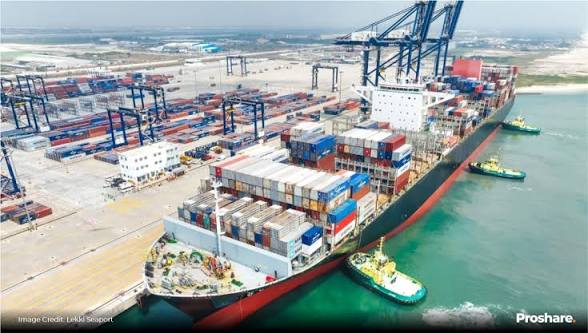
The privately developed Lekki Deep Sea Port, which began commercial operations in recent years, has positioned itself as a model for modern port infrastructure in West Africa, incorporating deeper berths capable of accommodating larger vessels alongside more streamlined, technology enabled clearance procedures designed from the outset to avoid the congestion problems that have historically plagued older facilities like Apapa.
Beyond Nigeria, other African ports have pursued parallel modernisation tracks. Kenya's Port of Mombasa and various West African facilities in Ghana, Togo, and Côte d'Ivoire have each advanced their own single window or electronic clearance initiatives in recent years, part of a broader continental pattern in which port authorities are competing to reduce dwell times and attract shipping lines seeking efficient, predictable turnaround.
Why It Matters
Cargo clearance delays carry direct economic consequences that extend well beyond the shipping industry itself. Prolonged clearance times increase demurrage and storage costs for importers, costs that are typically passed on to consumers through higher retail prices for imported goods, from food staples to industrial machinery and consumer electronics. For a country like Nigeria, which remains heavily reliant on imports for both raw materials and finished products, faster, more predictable clearance processes could meaningfully reduce the landed cost of goods across multiple sectors of the economy.
The stakes extend to broader competitiveness as well. Shipping lines and international traders increasingly factor port efficiency into their route planning and investment decisions, meaning ports that fail to modernise risk losing cargo volume to more efficient regional competitors, a dynamic that has already shaped competitive dynamics between West African ports as shippers weigh the relative costs and delays associated with different national gateways.
Industry Context
Africa's port modernisation push is occurring within a broader continental effort to improve trade facilitation under frameworks like the African Continental Free Trade Area, which depends heavily on efficient customs and clearance systems to deliver on its promise of expanded intra African commerce. Slow, inconsistent clearance procedures at national ports have long been cited by trade economists as one of the practical obstacles undermining the theoretical gains projected under AfCFTA, since reduced tariffs mean little if goods still face lengthy non tariff delays at the point of entry.
Nigeria's own experience illustrates why this modernisation drive has become urgent. The country's ports have historically ranked among the least efficient globally on various trade facilitation indices, with congestion at facilities like Apapa becoming so severe in past years that it produced kilometers long truck queues along access roads, disrupting broader urban traffic and logistics operations well beyond the port gates themselves. Industry stakeholders have repeatedly pointed to the multiplicity of regulatory agencies operating independently at Nigerian ports as a core structural driver of these delays, with importers historically required to obtain sequential approvals from customs, quarantine services, standards organizations, and other bodies rather than through a unified process.
The push toward digitisation also reflects lessons drawn from more advanced port systems elsewhere. Countries with mature single window systems, where all cross border regulatory requirements are submitted and processed through one integrated electronic platform, have generally achieved significantly faster average clearance times than ports still relying on fragmented, agency by agency approval chains, a gap African policymakers have increasingly cited as justification for accelerated digital investment.
What Flipbz Thinks
Flipbz sees the current wave of port modernisation efforts as long overdue infrastructure catch up rather than genuine innovation, but necessary nonetheless. Nigeria's National Single Window project, in particular, has been discussed in policy circles for years without full implementation, meaning the real test will be execution rather than ambition. Ports like Lekki, built with modern clearance processes from the ground up, offer a useful proof of concept for what efficient Nigerian port infrastructure can look like when not constrained by decades of legacy bureaucracy. Whether older, more congested facilities like Apapa can retrofit similar efficiency gains, rather than simply losing cargo volume to newer competitors, will likely determine whether this modernisation push produces system wide improvement or simply shifts existing inefficiencies to whichever port manages to digitise fastest.
What Consumers & Investors Should Watch
Importers and consumers should watch for tangible reductions in average cargo dwell times at major Nigerian ports as digitisation efforts progress, since faster clearance directly affects the landed cost of imported goods that eventually reach retail shelves. Investors and shipping industry stakeholders should track whether Nigeria's National Single Window project moves from policy discussion to full operational rollout, given the project's long history of delayed implementation, as well as how cargo volumes shift between older facilities like Apapa and newer, more efficiently designed ports like Lekki as the modernisation gap between them becomes more pronounced.
The Bottom Line
Africa's ports stand at a genuine inflection point, where the gap between digitally modernised facilities and legacy, paper dependent systems is becoming increasingly consequential for national competitiveness. Whether Nigeria and its regional peers can translate years of policy ambition into functioning, continent wide digital clearance systems will shape not just shipping efficiency, but the broader cost of goods and trade competitiveness that touches nearly every sector of the economy.
Please register to comment.
With these components in place, your business...
SolidBase Builders Limited is a professionall...
PrimeStone Construction Nigeria Ltd is a well...
CrestRock Engineering Services Ltd is a scala...
Open the Listing model file located in the ap...
Discover promising partnership opportunities in various industries.
Pitch Your Startup | Find Partners




.jpeg)
.jpeg)




Comments