
.jpeg "African Airlines Push For Lower Aviation Operating Costs")
Written By: Flipbz.org
Industry Stakeholders Warn Rising Expenses Continue To Pressure Regional Air TravelI
African carriers are intensifying pressure on governments to slash aviation taxes, fuel costs and navigation charges after a fresh round of industry data showed the continent's airlines paying significantly more than global peers to keep planes in the air, even as passenger demand outpaces the rest of the world.
The latest warnings came from the African Airlines Association at the IATA Focus Africa Conference 2026, where Secretary General Abdérahmane Berthé described Africa's aviation sector as standing at a defining moment, with encouraging progress recorded even as significant challenges persist. According to Berthé, taxes, charges, and fees across the continent are, on average, 15% higher than the global norm, despite the lower cost of living in many African markets. IATA's own data paints an even starker picture across specific cost categories, showing that African airlines pay 17 percent more than their global peers for fuel, 12 to 15 percent more in taxes, 10 percent more in air navigation charges, and between six percent and 10 percent more for insurance, maintenance and capital costs.
The financial toll of these structural costs shows up starkly in profitability figures. IATA projects that the aviation industry will earn a $41 billion net profit next year, with African airlines earning just $200 million, translating to profit of $7.90 per passenger globally compared to only $1.30 per passenger in Africa. The disparity is driven partly by unit costs, since Africa has the highest unit cost globally with an average cost of nearly $140 per available tonne kilometre, which is double the industry average globally. IATA Africa and Middle East Vice President Kamil Al Awadhi summarized the imbalance bluntly, noting that demand for air travel in Africa is rising faster than in many other parts of the world, but profitability is not keeping pace.
Regional bodies have begun responding with concrete, if uneven, policy action. The Economic Community of West African States has directed authorities to explore ways to reduce charges, with lower taxes and fees expected to take effect across member states in 2026. Progress on that directive has been slow, however, with Berthé pointing to delays in implementing a directive by West African heads of state to reduce aviation taxes and charges by 25% from January 2026, noting that only Côte d'Ivoire had recently announced reductions. He described the situation as a sovereignty constraint that urgently needs resolving, warning that decades of aviation liberalisation efforts, from the Yamoussoukro Declaration in 1988 to SAATM in 2018, had faltered because countries sign agreements but fail to comply.
Fuel costs, already a persistent burden, have been pushed even higher by a geopolitical shock this year. AFRAA disclosed that continental carriers were already paying roughly 17% more for fuel than the worldwide average before the recent conflict involving Iran, a structural premium driven by fragmented regional airspace, high airport taxes, and complex local supply chains. Berthé described the impact as dire and a major shock for AFRAA's members, explaining that fuel represents between 30% and 40% of airlines' operating costs, meaning any increase directly affects their balance sheets. He has since warned that if Africa wants a resilient aviation sector, it must secure its own fuel future, pointing to the continent's near total reliance on imported refined jet fuel as its central vulnerability.
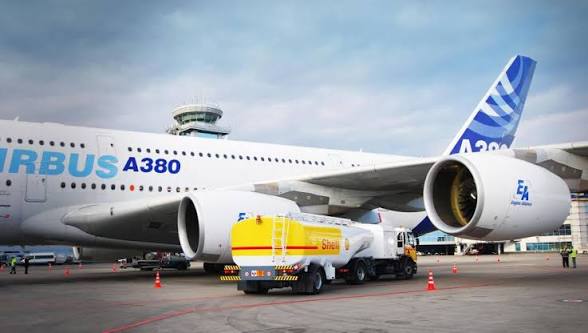
Airlines and their advocates are not simply asking for lower charges; they are also pursuing operational reforms designed to cut costs directly. AFRAA has pushed forward its Free Route Airspace project, already operational across West and Central Africa since October 2025, which enables airlines to plan and fly user preferred routes rather than follow fixed air corridors, reducing flight times, fuel burn, and carbon emissions. The association now aims to extend that system to East and Southern Africa by the end of 2026, with at least six major carriers, including Ethiopian Airlines, Kenya Airways, EgyptAir, RwandAir, ASKY Airlines and Royal Air Maroc, already operating user preferred routes between major cities and cumulatively saving fuel and emissions.
Market reaction has been muted in traditional financial terms, since most African carriers remain state owned or privately held rather than publicly traded, but the profitability squeeze is already reshaping airline decision making on the ground. Industry reporting has described airline boards forcing immediate defensive measures, including freezing network expansions, scrapping low yield flights, and fundamentally re evaluating route viability to absorb losses tied to the fuel shock. Despite the pressure, demand for air travel in Africa remains strong, with AFRAA projecting passenger growth of about 6% annually, outpacing many global markets, even as thin margins limit how much of that growth translates into airline profits.
The stakes extend well beyond airline balance sheets to the broader question of who can afford to fly at all. Berthé has noted that only 10 percent of African citizens can afford air transport, indicating significant potential for growth if costs come down, while emphasizing that airlines must improve cooperation through airline agreements, code sharing and partnerships alongside lowering their own operating costs. Analysts covering the sector note that the high charges create a self reinforcing cycle, in which elevated costs push up ticket prices, which suppress demand, which in turn constrains the growth that could otherwise spread costs across more passengers.
Attention now turns to whether governments follow through on the tax and charge reductions they have promised, and whether infrastructure investment keeps pace with reform efforts. A dozen African countries, including Kenya, Uganda, Tanzania, Rwanda and Ethiopia, have already committed about $25 billion to new airports and major upgrades in a bid to become regional aviation hubs and boost air connectivity. Whether that capital spending is matched by the tax harmonisation and charge reductions airlines have long demanded, or whether implementation stalls the way previous liberalisation efforts have, will likely determine if Africa's aviation sector can convert its passenger growth into the financial resilience the industry says it still lacks.
Please register to comment.
With these components in place, your business...
SolidBase Builders Limited is a professionall...
PrimeStone Construction Nigeria Ltd is a well...
CrestRock Engineering Services Ltd is a scala...
Here is an oppotunity to buy a money machine,...
Discover promising partnership opportunities in various industries.
Pitch Your Startup | Find Partners
.jpg)




.jpeg)




Comments