
.jpeg "Tony Elumelu’s Seplat Investment Surpasses $1 Billion in Value")
Written By: Flipbz.org
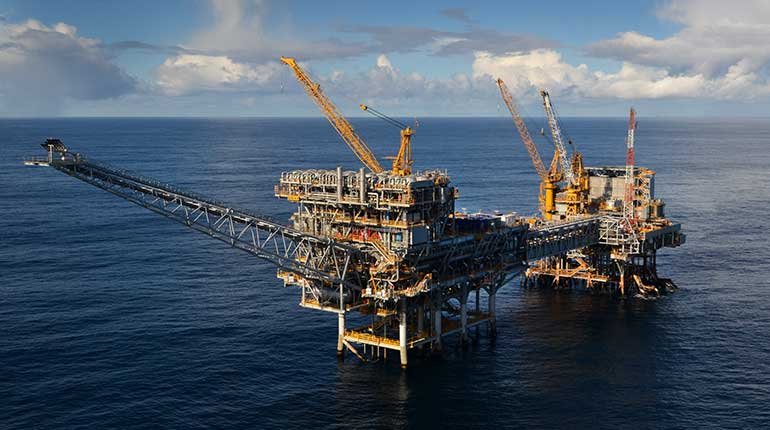
Tony Elumelu's $500 million bet on Seplat Energy has more than doubled to over $1 billion in under eight months, a rally that has made Seplat the first NGX-listed stock to cross N10,000 a share and cemented Nigeria's largest indigenous oil producer as a test case for homegrown energy ownership.
Eight months ago, Tony Elumelu's Heirs Energies made a $500 million bet on a Nigerian oil and gas company still digesting the largest acquisition in its history. That bet has since more than doubled in value, and the ripple effects are reshaping conversations about who owns, and who should own, Nigeria's energy assets.
What Happened
The deal that started this story closed quietly at the end of last year. Heirs Energies bought 120.4 million ordinary shares from Maurel & Prom at £3.05 per share, valuing the deal at $496 million, with the transaction reportedly closing on December 30, 2025 after market hours, as the French firm exited fully, ending a founding relationship that dated back more than a decade. The acquisition immediately made Elumelu's vehicle the dominant shareholder, since Heirs Energies bought a 20% stake in Seplat, becoming the largest shareholder in one of Nigeria's biggest oil producers, a deal financed in part by Heirs Energies securing a $750 million loan from the African Export-Import Bank the previous month.
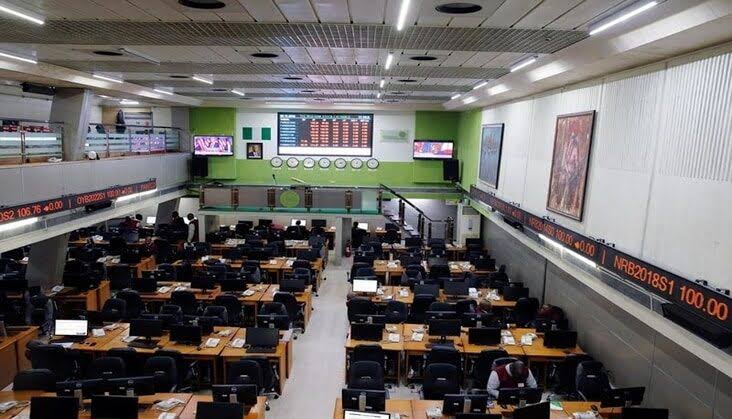
The value of that stake has since climbed dramatically alongside Seplat's share price. At Seplat's current share price of N11,200.60 on the NGX and £6.47 on the LSE, the stake is now valued at about $1 billion, more than double the value of the original investment in under eight months. The rally has been sustained rather than a brief spike, since the stock closed 2025 at N5,809 per share but moved above N9,000 by March 2026, and in April, it became the first company listed on the Nigerian Exchange to cross the N10,000-per-share mark, closing at N10,450 on April 14. Seplat's market capitalisation has climbed to $5.24 billion as a result.
Elumelu's role at the company has deepened alongside his financial stake. He joined the company's board in January 2026 and is expected to become chairman from January 1, 2027, a move announced alongside a broader leadership reshuffle in which Effiong Okon, a 35-year industry veteran and Seplat insider since 2018, becomes chief executive from 1 August 2026. Elumelu framed the original investment in explicitly nationalistic terms, describing it as reflecting "our belief in Africa's capacity to own, develop and manage its strategic resources," calling it "a long-term investment in Nigeria's and Africa's energy future."
Why It Matters
The rally has not been driven by sentiment alone. Seplat's 2025 results reflected the impact of the enlarged business following its acquisition of Mobil Producing Nigeria Unlimited, with revenue increasing by 144 per cent to $2.73 billion, while adjusted EBITDA rose 137 per cent to $1.28 billion, and operating cash flow jumped 276 per cent to $1.17 billion, while net debt fell by 25 per cent to $673.3 million. Production gains have underpinned that earnings growth, since the company's average production jumped to 131,506 boepd in 2025 from 52,947 boepd in 2024 following the first full year of offshore consolidation, and momentum has continued into 2026, with average working-interest output reaching 139,509 barrels of oil equivalent per day in the first half of 2026, up from 134,492 a year earlier.
Broader market dynamics have amplified the effect of Seplat's own performance. The uptrend has also benefited from Nigeria's reclassification by FTSE Russell from "Unclassified" to Frontier Market status, effective September 2026, with analysts projecting the upgrade could drive between $840 million and over $1 billion in foreign portfolio inflows into Nigerian equities, positioning Seplat as a prime beneficiary of that shift. Market watchers have coined a label for the combined effect of Elumelu's involvement and the FTSE reclassification, describing it as the "Elumelu effect" and pointing to the billionaire investor's track record of transforming companies such as United Bank for Africa (UBA) and Transcorp.
Industry Context
Elumelu's Seplat stake fits into a broader pattern of indigenous capital stepping into positions once dominated by international oil majors. Heirs Energies has been seeking to grow its portfolio since acquiring an oil block in July 2021 by buying stakes held by Shell, ENI, and Total, and Seplat's own history follows the same trajectory, having roughly doubled in size with its 2024 acquisition of Mobil Producing Nigeria from ExxonMobil, as international majors sell down their Nigerian assets. Analysts covering the leadership transition have framed it in exactly these terms, noting that the move signals that control of Nigeria's largest indigenous oil producer is passing to homegrown owners.
What Flipbz Thinks
Flipbz sees the doubling of Elumelu's Seplat stake as a genuinely rare convergence of three separate tailwinds, operational (the Mobil Producing Nigeria integration delivering real production and earnings growth), macro (Nigeria's FTSE frontier market upgrade drawing fresh foreign capital), and narrative (an influential local investor's board and eventual chairmanship role reassuring the market about long-term direction). The more interesting long-term question isn't the paper gain itself, since as reports have noted, the gain remains an unrealised profit unless the shares are sold, but whether Elumelu's transition into the chairmanship in 2027 can convert Seplat's expanded asset base into the kind of sustained governance and capital discipline that keeps foreign and local investors both engaged well beyond this rally.
What to Watch
Investors should watch how Seplat's share price responds once Nigeria's FTSE Frontier Market reclassification formally takes effect in September 2026, since that inflow window is widely seen as a near-term catalyst still ahead rather than already priced in. It's also worth tracking whether Elumelu's chairmanship, beginning January 2027, coincides with further consolidation of indigenous ownership across Nigeria's upstream oil and gas sector, following the same pattern already visible in Seplat's own asset history.
The Bottom Line
Elumelu's Seplat stake has become one of the clearest examples yet of Nigerian capital successfully stepping into a space once reserved for international oil majors, with the value of Heirs Holdings' investment turning out, so far, to be a major financial win. Whether that translates into a durable model for indigenous energy ownership across Nigeria, rather than a single well-timed bet on one company's post-acquisition rally, will depend on what Elumelu and Seplat's new leadership deliver once the current wave of investor enthusiasm settles.
Please register to comment.
With these components in place, your business...
SolidBase Builders Limited is a professionall...
PrimeStone Construction Nigeria Ltd is a well...
CrestRock Engineering Services Ltd is a scala...
Here is an optimized version of your Blade te...
Discover promising partnership opportunities in various industries.
Pitch Your Startup | Find Partners
.jpeg)
.jpg)

Comments