
.jpeg "Guinness Nigeria’s Profit Surge Signals a Stronger Brand Recovery")
Written By: Flipbz.org
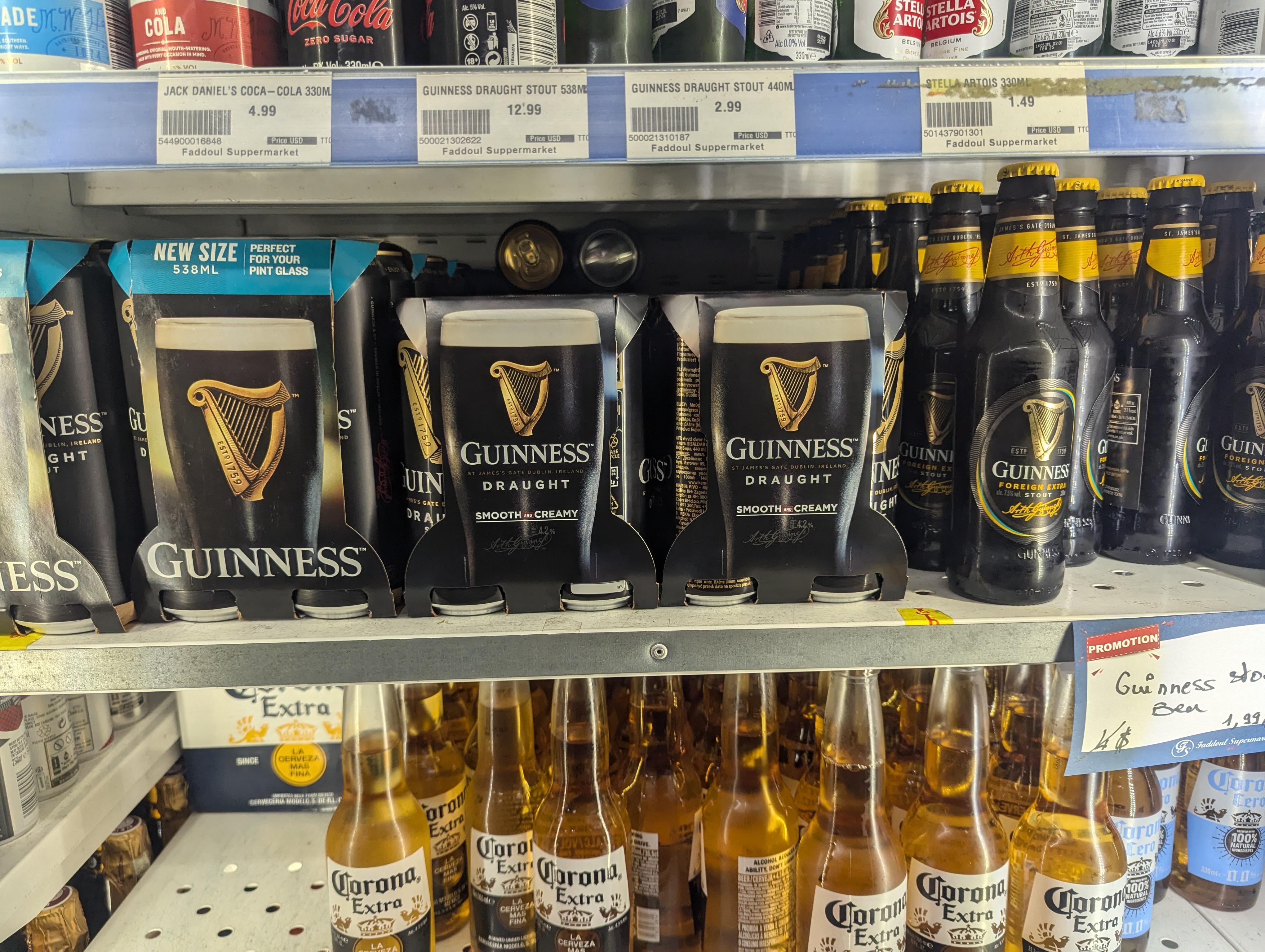
Guinness Nigeria's profit after tax jumped 53 percent to ₦25.3 billion for the year ended June 2026, capping a two-year turnaround under Tolaram ownership that has taken the brewer from a ₦54.8 billion loss to sustained profitability and a dramatically strengthened balance sheet.
Two years ago, Guinness Nigeria was one of the more troubled names in Nigeria's consumer goods sector, buried under foreign exchange losses and a ballooning annual deficit. Its full-year results for the period ended June 2026 tell a very different story: rising revenue, a much smaller debt load, and profit growth that has now held up across multiple consecutive quarters under new ownership.
What Happened
Guinness Nigeria's audited numbers for the twelve months to June 30, 2026 confirm that its recovery has become a multi-year trend rather than a single good year. Guinness Nigeria Plc reported a 53.3 percent increase in profit after tax to N25.30 billion for the year ended June 30, 2026, supported by revenue growth, improved operating efficiency and a substantial reduction in finance expenses. Revenue for the year climbed to N265.04 billion from N237 billion, an 11.8 percent increase, as the brewer sustained sales growth despite inflationary pressure on consumer spending.
The final quarter of the fiscal year was particularly strong. In Q2 (April–June) 2026, profit after tax jumped 57.3 per cent from N9.5 billion reported in Q2 2025, while profit before tax closed the quarter up 66.7 per cent from N13.55 billion. Revenue for that quarter alone rose to N142.27 billion, a 20 per cent increase from N118.66 billion reported in the corresponding period of 2025.
Beyond the headline profit figures, the company's balance sheet has visibly strengthened over the period. Shareholders' equity increased from N43.3 billion to N64.2 billion, while net debt declined substantially from approximately N37 billion to about N19 billion. That deleveraging directly boosted the bottom line, since net finance costs reduced significantly to N1.75 billion from N4.61 billion in the prior-year period in the final quarter alone. Management has been explicit that this financial repair, not one-off gains, is driving results, with the company stating it had made significant progress in strengthening its financial position while continuing to invest in the growth of the business. The board has rewarded shareholders accordingly, approving an additional interim dividend of N7.00 per ordinary share, representing a distribution of approximately N15.33 billion, on top of an earlier N2.00 per share payout.
Why It Matters
The scale of this reversal only becomes clear against where Guinness Nigeria stood before Tolaram took control. The company had recorded a loss of N54.8 billion in the 2024 financial year, reflecting mounting foreign exchange losses and operational strain, with pre-tax losses in fiscal 2024 driven largely by a total FX revaluation loss of N112.3 billion during the financial year, up 129% from the prior year. Diageo's decision to exit came against that backdrop, since Diageo announced Tolaram would acquire Diageo's 58.02% stake in Guinness Nigeria, with the drinks giant framing the move as establishing a new, more locally-driven model for the Nigerian business, while retaining ownership of the Guinness brand itself under a long-term licensing arrangement.
The turnaround since has been rapid and sustained rather than a slow grind. Within six months of the ownership change, the company posted its first quarterly pre-tax profit since September 2023, and CEO Girish Sharma has tied that recovery to four explicit priorities: bringing profitability back, enhancing production efficiency, building a strong team, and pursuing volume growth, improved reach and distribution. Investors have responded emphatically, since in the second half of 2025, Guinness Nigeria's share price surged from just over N100 in July to nearly N350 by December, representing an appreciation of more than 200 per cent, a move analysts have attributed to belief that the recovery is rooted in structural change rather than temporary relief.
Industry Context
Guinness Nigeria's recovery is part of a broader rebound across Nigeria's formal brewing sector after a brutal 2023–2024 stretch. Nigerians spent about N1.41 trillion on beer, malt and spirits in the first six months of 2026, according to combined results from Nigerian Breweries, International Breweries and Guinness Nigeria, which together account for roughly 90% of Nigeria's formal brewing industry. That growth has come from price adjustments and heavy marketing spend rather than a return to comfortable margins, since the three companies collectively spent more than N130.6 billion on marketing and advertising during the first half of the year alone, defending market share as inflation erodes consumer purchasing power.
The industry still faces real structural headwinds that could complicate Guinness Nigeria's momentum. Stakeholders in Nigeria's brewing ecosystem have intensified discussions around a proposed 2026 to 2028 excise duty framework, with industry data warning that the changes could significantly influence production costs, employment levels, and investment appetite across the value chain. Younger consumers are also shifting away from beer entirely, with brewers facing a longer-term structural challenge as younger Nigerians increasingly shift toward spirits, wine, ready-to-drink beverages and non-alcoholic alternatives, forcing companies like Guinness Nigeria to diversify their portfolios even while defending core beer volumes.
What Flipbz Thinks
Flipbz sees Guinness Nigeria's results as a genuine validation of Tolaram's operational playbook, deleveraging the balance sheet, cutting FX exposure, and reinvesting in local manufacturing and distribution, rather than a temporary reprieve from currency volatility. The steady quarter-on-quarter improvement, not just one strong period, is what separates this recovery from the industry's broader pattern of brewers swinging between crisis and rebound based on naira movements. The bigger test ahead is whether Guinness Nigeria can sustain double-digit profit growth once the benefit of falling finance costs normalizes, since that cushion has clearly been doing a lot of work in this year's numbers.
What to Watch
Investors should watch whether the pending 2026–2028 excise duty framework materially raises production costs, since PwC-backed industry analysis has warned the changes could put a significant share of brewing sector value at risk. It's also worth tracking whether Guinness Nigeria's volume growth keeps pace with its pricing-driven revenue gains, given that gross margin already slipped as input costs rose faster than sales.
The Bottom Line
Guinness Nigeria's swing from a ₦54.8 billion loss to sustained annual profitability marks one of the more convincing corporate turnarounds in Nigeria's consumer goods sector, but the excise reform debate and shifting drinking habits ensure the next phase of growth will be harder won than the debt-driven recovery of the past two years.
Please register to comment.
With these components in place, your business...
SolidBase Builders Limited is a professionall...
PrimeStone Construction Nigeria Ltd is a well...
CrestRock Engineering Services Ltd is a scala...
Open the Listing model file located in the ap...
Discover promising partnership opportunities in various industries.
Pitch Your Startup | Find Partners
.jpeg)

.jpg)




Comments