
.jpeg "NNPC Targets New Gas Infrastructure Expansion")
Written By: Flipbz.org
Energy Officials Push Broader Domestic Gas Supply And Industrial Distribution Improvements
Energy officials push broader domestic gas supply and industrial distribution improvements, unveiling a $60 billion investment roadmap even as regulators confirm the country is still falling well short of its own domestic delivery targets.
Nigeria's state oil company is betting big on gas as the next frontier of the country's energy transformation, unveiling a sweeping infrastructure roadmap that officials say could unlock more than $60 billion in fresh investment by the end of the decade. Yet even as NNPC Limited touts new pipelines, processing plants, and commercial partnerships, fresh regulatory data shows the country is still delivering only a fraction of the gas it has legally committed to supply domestic industries and power plants, exposing the gap between ambitious planning and on the ground execution that has long defined Nigeria's gas sector.
What Happened
NNPC Limited officially unveiled its Gas Master Plan 2026 on January 30 at the NNPC Towers in Abuja, in a ceremony attended by top government officials, industry executives, and sector stakeholders. According to the document, the plan sets targets to raise national gas production to 10 billion cubic feet per day by 2027 and 12 billion cubic feet per day by 2030, while catalysing over $60 billion in new investments across the gas value chain. Speaking at the unveiling, Minister of State for Petroleum Resources for Gas, Ekperikpe Ekpo, described the Gas Master Plan as a deliberate pivot from policy articulation to disciplined execution, anchored on commercial viability and integrated sector wide coordination.
NNPC Group Chief Executive Officer Bashir Bayo Ojulari framed the scale of the opportunity in stark terms, noting that with about 210 trillion cubic feet of proven gas reserves and an upside potential of up to 600 trillion cubic feet, Nigeria possesses one of the most consequential hydrocarbon basins in the world. The plan adopts a hub based development model, clustering gas assets based on defined criteria to optimise production and infrastructure, with the hub ranking exercise having identified 23 high potential hubs expected to drive the country's gas supply growth in the short to medium term.
The scale of investment required to realise these targets is considerable. Current gas transportation infrastructure in development plans could require as much as $22 billion, driven largely by the scale of new pipeline projects required to deepen domestic utilisation and expand export capacity. Under the plan, 30 priority gas projects are expected to be completed within the next three years, forming the backbone of Nigeria's near term gas expansion, while another 30 projects are projected to come onstream over the next decade.
Beyond the master plan itself, NNPC has continued to point to tangible infrastructure progress already delivered. The company completed key infrastructure projects, including the River Niger crossing on the Ajaokuta-Kaduna-Kano pipeline and final line welding in July 2025, while also commissioning the Assa North-Ohaji South gas plant and integrating it with the Obiafu-Obrikom-Oben pipeline, strengthening domestic gas supply. Gas supply reached 7.5 billion standard cubic feet per day by the end of 2025, supported by new commercial agreements with industrial users, including the Dangote Group.
Further reinforcing its planning ambitions, NNPC partnered with the Gas for Africa programme to unveil the Nigeria Gas and Power Infrastructure Map 2026 on July 7 in Abuja, during the 25th edition of the Nigeria Oil and Gas Energy Week, described as the first comprehensive update of the country's gas and power infrastructure mapping in more than a decade. The tool brings together the main assets across Nigeria's gas and power value chain, gas pipelines, processing plants, transmission networks, power plants, and LNG terminals, in a single reference document intended to support investment decisions and policy formulation.
Why It Matters
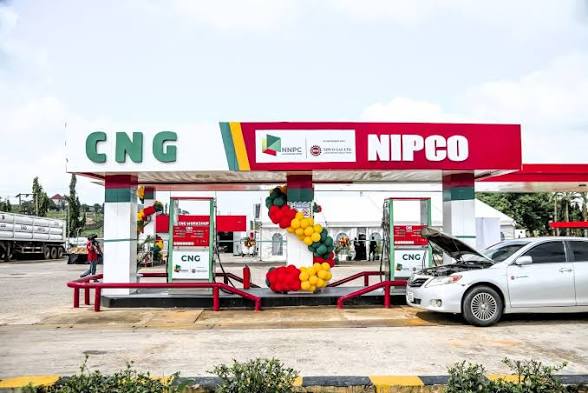
The push to expand gas infrastructure matters enormously for Nigeria's industrial base, power sector, and household energy costs. Domestic gas serves as feedstock for power generation, fertiliser production, and increasingly, compressed natural gas used in transportation, meaning reliable supply directly affects electricity availability, manufacturing costs, and the price of alternatives like LPG for cooking. Yet the gap between commitment and delivery remains stark. Nigeria's domestic gas suppliers delivered an average of 2.05 billion cubic feet of gas per day in the first half of 2026, achieving only about 65 percent of the country's Domestic Gas Delivery Obligation target, according to the Nigerian Upstream Petroleum Regulatory Commission.
That shortfall carries direct consequences. NUPRC Chief Executive Oritsemeyewa Eyesan disclosed that out of about 63 producing companies, only 27 were allocated Domestic Gas Delivery Obligation volumes, while only 23 of those allottees were actively supplying gas to domestic customers. As Eyesan put it, "the YTD June 2026 data, however, shows that a broader allocation base does not automatically translate into actual delivery," underscoring why the regulator has moved to introduce new compliance mechanisms rather than relying solely on existing obligations.
Industry Context
Nigeria's overall gas production has shown steady, if modest, growth even as domestic delivery lags. The country's natural gas production increased to 7.93 billion standard cubic feet per day in May 2026, a 0.63 percent year on year increase from 7.88 billion standard cubic feet per day recorded in the same period of 2025. Encouragingly, utilisation rates have improved meaningfully: Nigeria utilised about 92 percent of its natural gas output between January and April 2026, with total production during the period reaching 947.78 billion standard cubic feet, of which 872.69 billion standard cubic feet was utilised while 57.34 billion standard cubic feet was flared, reflecting continued progress toward the country's 2030 flare reduction target.
Domestic sales specifically have also ticked upward, with sales to the local market rising to 2.18 billion cubic feet per day in May, up from 2.03 billion cubic feet per day previously, representing 26.6 percent of total gas usage as demand from power generation and industrial users strengthened. This sits within a broader regulatory framework: the domestic gas supply obligation established under the Petroleum Industry Act 2021, alongside the Federal Government's Decade of Gas initiative, has placed strong emphasis on domestic gas utilisation, flare reduction, and value chain development, reinforcing the prioritisation of gas for power generation, industrial feedstock, and household energy substitution.
To address the persistent delivery gap, NUPRC has introduced a new regulatory tool. The regulator convened a stakeholders' workshop on a proposed Gas Swap Framework for the Domestic Gas Delivery Obligation, aimed at improving compliance, with officials describing it as a practical mechanism to help translate obligations into actual supply, make better use of existing assets, and build greater confidence in Nigeria's domestic gas market.
NNPC's own reporting suggests early implementation progress on the master plan itself. Industry sources indicate that more than half of the gas development targets set for 2026 have already been achieved, according to reporting on the plan's rollout, with the company having also established a dedicated Gas Master Plan Implementation Assurance Team responsible for monitoring progress, resolving operational bottlenecks and ensuring delivery across multiple projects.
What Flipbz Thinks
Flipbz sees a genuine tension at the heart of NNPC's gas ambitions: the Gas Master Plan 2026 represents one of the most coherent, well resourced infrastructure roadmaps Nigeria's gas sector has produced in years, yet regulatory data confirms the country is still delivering barely two thirds of its own domestic supply obligations today. That gap between planning documents and physical delivery has been a recurring feature of Nigeria's gas sector for over a decade, dating back to the original 2008 master plan that was hampered by infrastructure deficits, funding constraints, and execution gaps. The establishment of an Implementation Assurance Team and the introduction of the Gas Swap Framework suggest officials have learned from that history and are building in accountability mechanisms this time. Whether that translates into genuinely improved delivery rates, rather than simply better tracked shortfalls, will be the real measure of whether this plan succeeds where its predecessor stalled.
What Consumers & Investors Should Watch
Industrial gas users and power generation companies should watch closely for how quickly the new Gas Swap Framework moves from stakeholder consultation to binding regulatory mechanism, since that tool is specifically designed to close the delivery gap currently limiting supply to domestic customers. Investors should track progress on the 30 priority gas projects slated for completion within the next three years, along with whether the $22 billion pipeline investment requirement identified in the master plan begins attracting committed capital, as these will serve as the clearest early indicators of whether Nigeria can meet its stated 10 billion cubic feet per day production target by 2027.
The Bottom Line

Nigeria's gas sector stands at a genuine crossroads between ambitious long term planning and persistent short term delivery shortfalls. As Minister Ekpo himself acknowledged, Nigeria is fundamentally a gas nation, and the issue has never been resource availability, but effective translation into measurable outcomes for the economy and citizens. Whether the Gas Master Plan 2026 finally closes that translation gap, or simply becomes the latest well intentioned framework to underdeliver against its own targets, will shape not just NNPC's credibility but the reliability of power and industrial supply for millions of Nigerians in the years ahead.

Please register to comment.
With these components in place, your business...
SolidBase Builders Limited is a professionall...
PrimeStone Construction Nigeria Ltd is a well...
CrestRock Engineering Services Ltd is a scala...
AGRO COMPANY
Discover promising partnership opportunities in various industries.
Pitch Your Startup | Find Partners
.jpeg)
.jpeg)
.jpeg)
.jpeg)
.jpeg)




Comments