
.jpg "₦1.5 Trillion Debt Puts Nigeria’s Electricity DisCos Under Fresh Pressure")
Written By: Flipbz.org
Nigeria's electricity distribution companies are under renewed regulatory pressure after the Nigerian Independent System Operator rejected their debt repayment proposals following a four day public hearing, warning that sanctions under the Market Rules could follow unless the DisCos take immediate steps to settle their remaining obligations.
Nigeria's electricity market has spent years papering over a debt problem that keeps resurfacing every time regulators sit down with the companies responsible for getting power to homes and businesses. The latest round of talks just ended with the system operator walking away unconvinced, and sanctions now back on the table.
What Happened
Electricity distribution companies may face sanctions over more than N1.5 trillion in unpaid obligations to Nigeria's electricity market after the Nigeria Independent System Operator rejected repayment plans submitted by some of the companies. NISO disclosed this in a statement issued by its management in Abuja on Sunday, following a four-day public hearing with the DisCos on their outstanding market debts, with the hearing held from September 1 to September 4, convened to review the outstanding obligations of electricity distribution companies and assess their proposed arrangements for settling the balances.
The review process was formally structured rather than a routine correspondence exchange. The five-member committee overseeing the process was chaired by NISO's Executive Director, Market Operations, Edmund Eje, and after extensive deliberation, NISO found the payment proposals put forward by several DisCos unacceptable, citing both the scale and the age of the debts involved.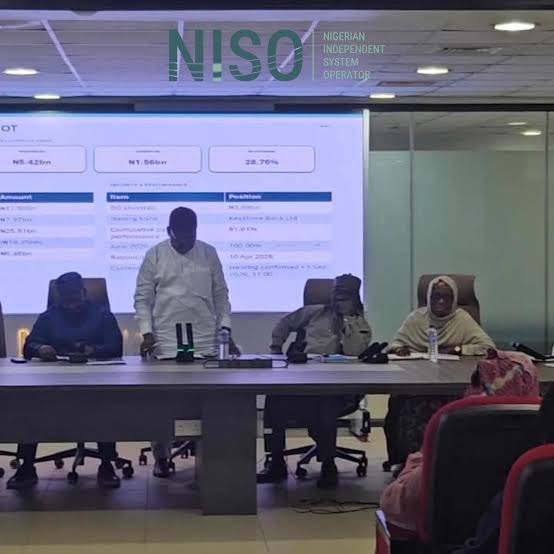
NISO was direct about what happens next. Following the rejection of the proposals, NISO said it would move to the next stage of the process, including the application of sanctions provided under the Market Rules, while also saying it nevertheless would continue to engage with market participants while maintaining transparency and due process. NISO also stressed the need for the affected distribution companies to take immediate steps to clear their remaining balances, noting that the continued accumulation of market debts threatens the effective functioning and development of the electricity market.
The Debt Picture Is Larger Than It First Appears
The N1.5 trillion figure driving current sanctions talk sits inside a much larger, longer-running liability problem that the federal government has already had to intervene on. According to NISO, the Federal Government had already netted off about 97 per cent of the DisCos' outstanding obligations incurred between 2015 and 2020, a write-off that involved a debt figure far larger than the current dispute, since the DisCos are facing a massive financial crisis, with an outstanding debt of ₦2.6 trillion owed to the federation account and deep-seated sector-wide liabilities.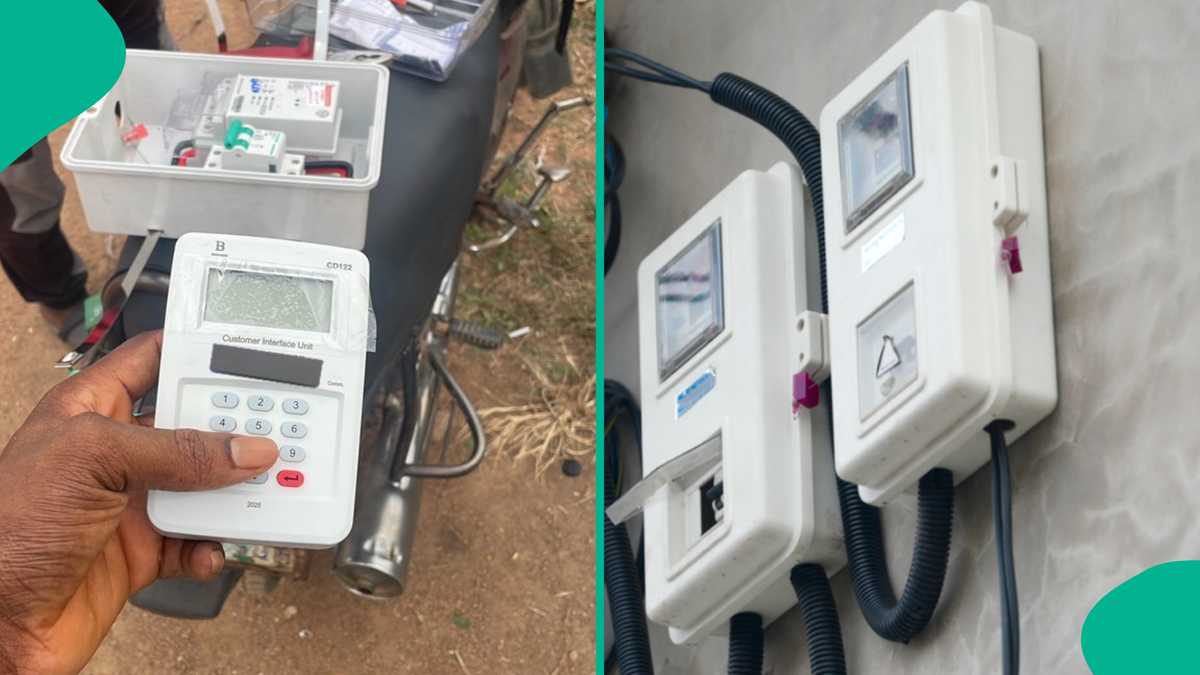
Even after that historic forgiveness, the remaining balances have kept climbing. Data cited in an April report by The PUNCH showed that the combined liabilities of the country's 11 DisCos had increased to about N1.3 trillion as of September 25, 2025, compared with roughly N1 trillion recorded at the end of 2024, an increase attributed largely to accumulated interest and continued defaults in payments. The debt is not evenly distributed across the sector, with Kaduna DisCo recording the highest liability at N303.81 billion, followed by Abuja DisCo with N275.17 billion, while Jos DisCo owed N104.38 billion, Ibadan had outstanding obligations of N103.41 billion, Kano owed N96.62 billion, Port Harcourt N88.40 billion and Benin N82.11 billion.
A Preview of What Sanctions Can Look Like
This is not a hypothetical scenario for Nigeria's power sector. One DisCo has already experienced the sharpest version of regulatory intervention over unpaid obligations. The Nigerian Electricity Regulatory Commission recently took control of Kaduna Electricity Distribution Company and dissolved its board over a debt crisis involving about N456.5 billion in cumulative market obligations, a precedent that gives weight to NISO's current warnings rather than leaving them as an abstract threat.
Why Collections, Not Just Debt, Are the Real Problem
The debt figures reflect a deeper structural issue in how DisCos generate revenue in the first place. Nairametrics previously reported that electricity distribution companies recorded an aggregate billing efficiency of 82.03% in the fourth quarter of 2025, despite posting N174.12 billion in billing shortfalls, with collection efficiency measuring the proportion of electricity bills successfully recovered by DisCos from customers. That shortfall carries consequences well beyond the DisCos' own balance sheets, since lower collection efficiency affects cash flows across the electricity value chain, reducing payments to generation companies, the Transmission Company of Nigeria and gas suppliers.
The federal government has already had to step in with fresh financing to keep that chain from breaking further upstream. The government is set to deploy more than 1.123 trillion naira raised through two bond issuances to address legacy obligations owed to electricity generation companies, a separate but related intervention aimed at ensuring GenCos are not left unpaid while DisCo collection problems work themselves out.
Why It Matters
This dispute sits at the center of Nigeria's electricity value chain in a way that makes it consequential for everyone downstream and upstream of the DisCos. DisCos sit at a critical point in the electricity value chain because they collect revenue from customers and are expected to meet their financial obligations to other market participants, and weak collections or delayed payments can therefore affect payments to generation companies, the transmission system, and other service providers essential to keeping power flowing. NISO itself has framed the stakes in exactly these terms, emphasizing that market discipline, compliance and accountability among market participants remain critical to strengthening market confidence and ensuring the sustainability and effective functioning of the Nigerian electricity market.
What Flipbz Thinks
Flipbz sees NISO's rejection of these repayment proposals as a signal that Nigeria's tolerance for open-ended forbearance in the power sector may genuinely be narrowing, particularly given that this dispute follows so closely on the heels of a 97 percent government debt write-off that was meant to give DisCos a clean slate. The Kaduna DisCo precedent, where NERC dissolved the company's board over unresolved obligations, suggests that sanctions threatened this time may carry more teeth than similar warnings have in the past. The more fundamental issue, however, remains billing and collection efficiency rather than the debt itself, since a sector recovering only about 82 percent of what it bills consumers will keep generating fresh obligations even if today's ₦1.5 trillion is somehow cleared, meaning any sanctions regime that does not also address collection performance risks becoming another temporary fix rather than a lasting one.
What to Watch
Industry observers should watch which specific DisCos face sanctions under the Market Rules in the coming weeks, and whether NERC intervenes directly in any additional distribution companies the way it did with Kaduna. It will also be worth tracking whether billing and collection efficiency across the 11 DisCos improves in the coming quarters, since that metric will determine whether today's obligations get resolved sustainably or simply repeat the same debt accumulation cycle that produced this crisis in the first place.
The Bottom Line
NISO's rejection of DisCos' repayment proposals and its warning of impending sanctions mark a firmer regulatory stance in a power sector that has repeatedly relied on government debt forgiveness to manage its distribution companies' unpaid obligations. Whether this dispute produces genuine enforcement action or another negotiated settlement will offer an early signal of how seriously Nigeria's power sector regulators intend to enforce market discipline going forward, with real consequences for electricity reliability and the financial health of generation companies and other participants who depend on DisCos to pay what they owe.

Please register to comment.
With these components in place, your business...
SolidBase Builders Limited is a professionall...
PrimeStone Construction Nigeria Ltd is a well...
CrestRock Engineering Services Ltd is a scala...
Here is an oppotunity to buy a money machine,...
Discover promising partnership opportunities in various industries.
Pitch Your Startup | Find Partners
.jpg)
.jpg)
.jpg)

.jpg)

Comments