
Written By: Flipbz.org
Intron Health has pushed its voice AI technology into genuinely uncharted territory with the launch of Sahara v2.5, a model built to handle one of the most distinctly African linguistic realities that most speech recognition systems have never properly solved: the way people naturally switch between languages mid conversation. Anyone who has sat in a Lagos market, a Nairobi office, or a Accra clinic knows the pattern well, a sentence that starts in English, slides into Yoruba or Swahili, and finishes somewhere in between, often without the speaker even noticing the switch. Most voice AI systems, built primarily around monolingual Western speech patterns, break down entirely when confronted with that kind of natural code-switching.
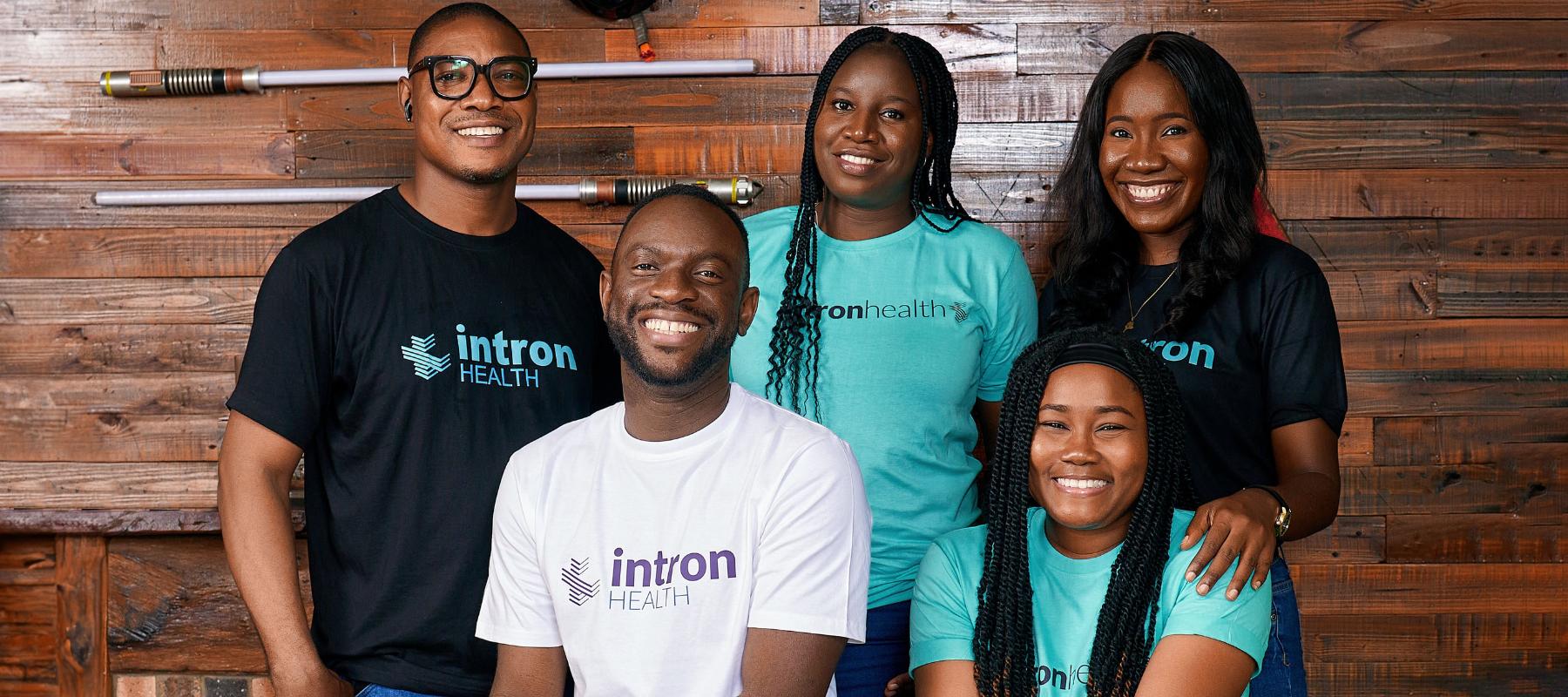
Founded in 2020, Intron Health has spent years building speech recognition and text to speech technology specifically trained on African accents and languages, initially focused on healthcare use cases where accurate transcription of doctor patient conversations carries life or death stakes. With Sahara v2.5, the company has extended that foundation to explicitly support natural code-switching between African languages within the same conversation, with the technology now supporting 12 African language pairs, a meaningful expansion for a company built around the premise that African linguistic diversity requires fundamentally different AI training approaches than models built for single language markets.
To accelerate adoption of the new model beyond its own use cases, Intron launched the Sahara CodeSwitch Africa Challenge, a 10,000 dollar developer competition inviting engineers and builders across the continent to create applications using the code-switching technology. That kind of open challenge serves a dual purpose common among infrastructure focused AI companies: it surfaces creative applications the core team might not have considered internally, while simultaneously building a community of developers already fluent in working with Intron's tools, developers who could become long term customers or integration partners as the platform expands.
That expansion beyond healthcare reflects a deliberate broadening of ambition. While Intron's technology was originally built and proven inside clinical settings, where accurately capturing what a patient or doctor says in their natural mix of languages can directly affect diagnosis and treatment quality, the company has been extending its speech technology into financial services, telecoms, legal, and government applications, sectors where accurately capturing spoken African languages carries its own high stakes, whether verifying identity over the phone, processing legal testimony, or delivering government services in a caller's preferred language.
The company's funding trajectory reflects the kind of steady, infrastructure focused growth typical of deep tech AI startups building for underserved markets. Intron raised 1.6 million dollars in pre-seed funding to support its work building voice AI trained specifically on African speech patterns, capital that has underwritten years of data collection and model training across languages that global AI labs have historically underinvested in. With Sahara v2.5 now live, code-switching support expanding to a dozen language pairs, and a developer challenge actively recruiting builders to extend the platform's reach, Intron Health looks positioned to keep proving that solving Africa's linguistic complexity, rather than treating it as an afterthought, is exactly the kind of foundational AI work the continent's next generation of voice powered applications will depend on.
Please register to comment.
With these components in place, your business...
SolidBase Builders Limited is a professionall...
PrimeStone Construction Nigeria Ltd is a well...
CrestRock Engineering Services Ltd is a scala...
Open the Listing model file located in the ap...
Discover promising partnership opportunities in various industries.
Pitch Your Startup | Find Partners




Comments