
.jpeg "Food and Beverage Manufacturers Face Renewed Margin Pressure as Input Costs Stay Elevated")
Written By: Flipbz.org
Nigeria's major food and beverage companies are navigating another round of cost pressures driven by raw materials, packaging, energy, and transportation expenses, raising concerns about pricing and consumer demand.
Nigeria's largest food and beverage manufacturers are once again confronting a familiar pressure point: costs that refuse to stay down for long. After a brief reprieve early in the year, energy prices, raw material expenses, and logistics costs have started climbing again, testing whether companies can protect margins without pushing prices so high that already strained consumers pull back further.
What Happened
The story of 2026 so far has been one of temporary relief followed by renewed strain. Manufacturers in Nigeria saw a temporary easing in cost pressures in the first quarter of 2026, offering a modest reprieve after months of elevated production expenses, but the relief may prove short lived as rising energy prices and renewed inflationary pressures begin to squeeze input costs again, raising fresh concerns over pricing, profitability, and consumer demand in the months ahead. An analysis of 19 listed manufacturers, including Nestle Nigeria, Cadbury Nigeria, BUA Foods, Nascon Allied Industries, and Nigerian Breweries, found that the combined cost to revenue ratio declined to 46.68 percent in Q1 2026 from 52.50 percent in Q1 2025, indicating firms briefly spent less of every naira earned on production despite a difficult operating environment.
That easing did not hold evenly across the sector. Nigeria's leading fast moving consumer goods companies spent more on production in the first quarter of 2026, with higher costs of sales eating into earnings and limiting the benefits of revenue growth, as inflationary pressures, energy expenses and raw material costs continued to weigh on operations at firms including Nestle Nigeria, Cadbury Nigeria, Champion Breweries and Unilever Nigeria. Nestle Nigeria recorded one of the highest increases, with cost of sales rising by N18.91 billion, or almost 11 percent, to N194.07 billion in Q1 from N175.16 billion a year earlier, though the company was able to absorb the higher costs through stronger sales and improved efficiency, resulting in a 44 percent increase in pre tax profit.
By the half year mark, similar pressure showed up at Unilever Nigeria. Cost of sales increased 16.4 percent to N65.18 billion from N55.99 billion, largely reflecting higher raw material costs and inventory revaluation losses, even as revenue crossed the N100 billion mark for the first time in a half year period. Unlike the previous year, the company incurred N846.8 million in inventory revaluation losses, compared with a revaluation gain recorded in 2025, a reversal that underscores how volatile input pricing has become even for companies with strong pricing power.
Cadbury Nigeria's experience illustrates how unevenly these pressures are landing across the sector. Cadbury Nigeria's profit margin fell to 9.12 percent from 16.05 percent, while International Breweries saw profitability weaken to 10.97 percent from 16.88 percent, reflecting continued cost pressures and competitive pricing within the beverage segment. Analysts tracking the company's outlook continue to flag persistent inflationary pressures, foreign exchange volatility, rising logistics and distribution costs, and commodity price fluctuations affecting input costs as ongoing risks to watch.
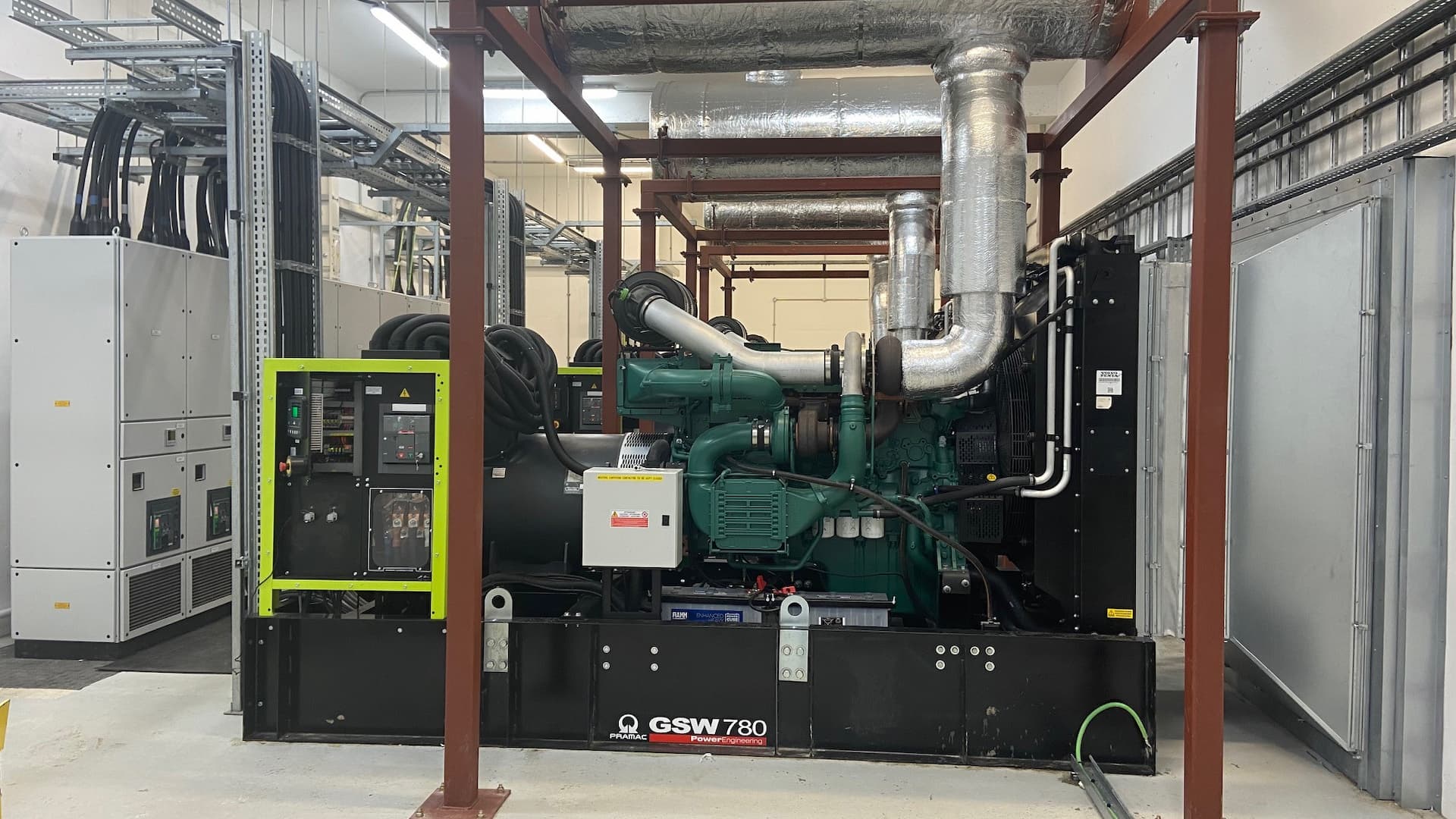
Energy costs sit at the center of the renewed pressure. According to data from the Manufacturers Association of Nigeria, spending on alternative energy rose to an unprecedented N1.34 trillion in 2025 as unreliable grid power continues to disrupt production, with the mounting energy burden emerging as one of the clearest indicators of the pressures confronting manufacturers as they grapple with rising production costs, foreign exchange volatility, high borrowing costs and weakening consumer demand. The situation has grown severe enough in some regions to threaten output entirely. MAN's South East Zone has warned that most manufacturers in the region are operating below 30 per cent of their installed capacity due to the energy crisis, with rising electricity tariffs and limited access to affordable finance forcing some companies to shut down operations altogether.
Borrowing costs compound the problem. Prime lending rates averaged 24.4 percent as of March 2026, while some commercial banks charged maximum lending rates of up to 33.8 percent, making it increasingly difficult for manufacturers to fund expansion, modernize equipment, or invest in local value chains.
Why It Matters
The renewed cost pressure matters because it lands at a moment when manufacturers have limited room to raise prices further without damaging demand. As the sector's own cost discipline data shows, revenue growth across ten leading consumer goods companies remained largely flat, increasing only marginally from N1.76 trillion to N1.78 trillion despite widespread price increases, meaning margin improvement has come from cost discipline rather than genuine top line growth. That dynamic creates a double squeeze: rising import costs driven by naira volatility and the inability to fully pass those costs to consumers whose purchasing power has weakened significantly.
The consumer side of that equation is already visible in production behavior. Faced with households still struggling with high cost of living, listed manufacturers' unsold inventories fell by 16 percent in the first quarter of 2026, signalling that companies are producing more cautiously and buying fewer raw materials as consumer demand remains fragile, with combined inventories declining to N714.6 billion from N848.2 billion a year earlier and raw material holdings plunging by 33.8 percent.
Industry Context
The pattern emerging across food and beverage manufacturing in 2026 reflects a sector that has learned to protect earnings through efficiency rather than volume, but is running low on easy gains. The numbers suggest the sector has entered a new phase where profitability is being driven less by volume growth and more by pricing discipline, efficiency gains, and easing production costs following Nigeria's macroeconomic reforms. Companies that expanded margins the most in early 2026 included BUA Foods, whose profit margin rose to 36.06 percent from 28.32 percent, and Nascon Allied Industries, which improved its margin to 25.14 percent from 18.11 percent, while Dangote Sugar Refinery moved from a negative margin of 11.03 percent in Q1 2025 to a positive 10.18 percent this year after returning to profitability.
Manufacturers themselves are pushing back against the structural drivers of these costs. MAN President Francis Meshioye has said that although recent economic reforms were designed to stabilise the economy, they had also increased production costs for manufacturers, calling for predictable fiscal policies, affordable electricity, improved infrastructure, access to low interest financing and stronger protection against unfair imports. In response, MAN has begun rolling out targeted relief efforts, including an Industrial Energy Adoption Programme designed to help manufacturers reduce energy costs by up to 45 percent, and a Southeast initiative aiming to cut electricity costs for participating manufacturers from N209 per unit to N130 per unit.
What Flipbz Thinks
Flipbz sees this as a sector caught between two forces that are both largely outside its control: an energy and financing environment that keeps raising the floor on production costs, and a consumer base that has little tolerance left for further price increases. The divergence in company performance is the most telling signal here. Firms like Nestle and BUA Foods have shown that scale, pricing power, and operational efficiency can still produce strong margins even as input costs climb, while others like Cadbury and International Breweries illustrate how quickly profitability can erode when a company lacks that same pricing leverage or cost flexibility. The falling inventory and raw material holdings across the sector suggest manufacturers are choosing caution over aggressive expansion right now, a rational response given uncertain demand, but one that could limit growth if consumer purchasing power does not improve meaningfully in the second half of 2026.
What Consumers and Investors Should Watch
Consumers should expect continued price sensitivity from manufacturers on packaging sizes and premium versus mainstream product mixes, as companies balance margin protection against affordability. Investors should watch whether the cost to revenue improvements seen earlier in 2026 hold up through the rest of the year, given early warnings that renewed inflationary pressures and energy costs are already climbing again, and whether MAN's energy relief programmes meaningfully reduce the sector's dependence on expensive self generated power.
The Bottom Line
Nigeria's food and beverage manufacturers head into the second half of 2026 with cost pressures reasserting themselves after a brief early year reprieve. Energy expenses, raw material costs, and borrowing costs remain elevated, and companies without strong pricing power or scale are already showing signs of margin erosion. Whether the sector can sustain its recent profitability gains will depend heavily on whether energy relief programmes take hold and whether consumer demand stabilizes enough to support further price adjustments without triggering deeper demand destruction.
Please register to comment.
With these components in place, your business...
SolidBase Builders Limited is a professionall...
PrimeStone Construction Nigeria Ltd is a well...
CrestRock Engineering Services Ltd is a scala...
Here is an optimized version of your Blade te...
Discover promising partnership opportunities in various industries.
Pitch Your Startup | Find Partners
.jpeg)
.jpeg)
.jpeg)





Comments