
.jpeg "MultiChoice Nigeria’s Local Content Push Could Shape Its Next Growth Chapter")
Written By: Flipbz.org
As CEO Kemi Omotosho doubles down on Nigerian storytelling, talent development and anti piracy enforcement, MultiChoice is betting that authentic local content, not price cuts, can help it hold ground against streaming rivals and subscriber losses that have persisted since 2021.
MultiChoice Nigeria is fighting on two fronts at once: defending its DStv and GOtv subscriber base against cheaper streaming alternatives, while trying to prove that its Nigerian identity and homegrown content pipeline are genuine competitive advantages rather than marketing lines. New CEO Kemi Omotosho has spent her first months in the role making that case publicly, even as the numbers behind her show just how much ground the pay TV giant has already lost.
What Happened
Omotosho, who took over as CEO in January 2026 succeeding John Ugbe after nearly 15 years at the helm, has been explicit about tying her leadership mandate to local content and creative economy investment. Upon her appointment, she said she looked forward to working with teams and partners to deepen customer relationships and champion local storytelling and the creative economy. In recent remarks, she extended that argument to MultiChoice's ownership structure following its 2025 acquisition by French group CANAL+, insisting that being part of a global group and being distinctly Nigerian are not contradictory, arguing that the company's strength comes from combining the two. She pointed specifically to Big Brother Naija as evidence, noting that while the original format may have come from outside Nigeria, what MultiChoice created is unmistakably Nigerian in personalities, language, music, fashion and culture.
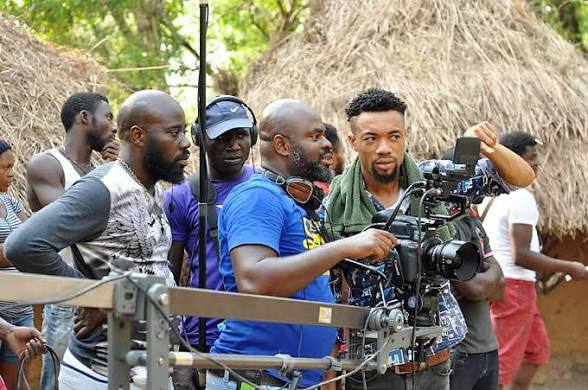
That local content push has a real financial trail behind it. MultiChoice has spent more than $85 million on productions from the West Africa region over the past few years, much of it tied to Nollywood projects distributed through its channels and streaming platforms. Talent development has run alongside content spending, since the MultiChoice Talent Factory has trained over 360 filmmakers since 2018, providing fully funded 12 month programs including stipends and production resources at no cost to students.
The piracy fight has escalated sharply in 2026. MultiChoice petitioned the Economic and Financial Crimes Commission over alleged economic sabotage, tax evasion and unlawful interception of broadcast signals by indigenous pay TV operator Moreplex TV, with the company alleging revenue loss of more than N2 billion arising from the dispute. That followed a separate criminal case in which the EFCC arraigned Metro Digital Limited on charges of unlawfully intercepting and rebroadcasting MultiChoice content over a four year period using decoders and dongles. The company has also run public advocacy campaigns, leading a Walk Against Piracy through Lagos as part of a broader push to protect Nigeria's creative economy from what it describes as an escalating menace.
Why It Matters
The local content strategy is being tested against a genuinely difficult subscriber picture. MultiChoice has lost 2.8 million subscribers since March 2023, with its base falling from 17.3 million to 14.5 million over two years, driven by streaming competition, economic pressure and piracy. The company's most recent full year results showed the continent wide decline continuing, ending the year with 14.4 million subscribers, down from 14.9 million, alongside revenue slipping to €2.4 billion and adjusted operating profit falling 14 percent. Executives have directly linked Nigeria's economic conditions to the pressure, since the sharp depreciation of the naira reduced the value of revenue when translated into euros while also forcing the company to adjust local pricing.
Streaming competition has intensified specifically around local content rather than price alone. Analysts have noted that Showmax captured market share by dominating hyper local storytelling, reality television and live sports broadcasting, while Netflix invested heavily in prestige African originals and Amazon Prime Video subsidized its entry with competitive introductory rates. Yet MultiChoice's own streaming bet has hit turbulence: Showmax subscriptions ended on April 1, 2026 as the company moved its content to sister platform DStv Stream, following sustained financial pressure that saw the platform's trading loss widen to $299 million in the 2025 financial year, up from $158 million the year before.
Industry Context
Nigeria's broadcast regulatory environment adds another layer of pressure toward local content investment. Nigeria's Ministry of Information has reinforced a requirement of 70 percent local content in the broadcast industry, mandating the Nigerian Broadcasting Commission to ensure compliance across platforms. That regulatory push aligns with, and arguably reinforces, the commercial logic MultiChoice executives have described, since local entertainment reflecting African audiences' languages and lived realities has proven to be the industry's most durable competitive moat, even as Netflix and Amazon Prime Video have scaled back direct investment in new Nigerian productions.
What Flipbz Thinks
Flipbz sees MultiChoice Nigeria's local content and anti piracy push as a necessary defensive strategy rather than a discretionary branding exercise, given that subscriber losses have persisted for five consecutive years and Showmax's own shutdown shows even MultiChoice's streaming pivot has struggled financially. The EFCC petition against Moreplex TV signals a company willing to escalate legal pressure against domestic rivals it views as free riding on its content investment, but the more durable answer to piracy and streaming competition alike will likely be whether MultiChoice's Nigerian originals pipeline, now consolidated under DStv Stream, can generate the kind of must watch local content that keeps subscribers paying rather than seeking cheaper or illegal alternatives.
What to Watch
Industry watchers should track whether folding Showmax's Nigerian originals into DStv Stream preserves the local content momentum MultiChoice built over the past several years, or whether the platform consolidation signals a broader retreat from standalone streaming investment. It's also worth watching how the EFCC proceeds with the Moreplex TV petition, since the outcome could set an important precedent for how aggressively established pay TV operators can use anti piracy and economic sabotage claims against smaller indigenous competitors.
The Bottom Line

MultiChoice Nigeria's leadership is making a clear bet that authentic local storytelling, backed by real production spending and aggressive piracy enforcement, can slow a subscriber decline that market wide streaming competition and economic pressure have driven for half a decade. Whether that bet succeeds will depend less on rhetoric about Nigerian identity and more on whether the company's content pipeline, now consolidated under DStv Stream following Showmax's shutdown, can deliver the kind of programming Nigerian audiences will pay for rather than pirate.
Please register to comment.
With these components in place, your business...
SolidBase Builders Limited is a professionall...
PrimeStone Construction Nigeria Ltd is a well...
CrestRock Engineering Services Ltd is a scala...
Here is an opportunity to buy an established...
Discover promising partnership opportunities in various industries.
Pitch Your Startup | Find Partners

.jpeg)
.jpeg)




Comments