
.jpg "Watching While NEPA Sleeps: Nigeria's Security Camera Market Races Ahead of Its Police Force")
Written By: Flipbz.org
Nigeria's security camera market is growing for the worst possible reason, a national safety crisis that private citizens are increasingly paying to solve themselves. This report, built on publicly available market intelligence, retailer pricing data and independent Flipbz analysis, examines the brands, price tiers and adoption drivers behind one of the fastest expanding consumer electronics categories in the country, a market where the real competitor every brand must beat is not a rival camera, it is the quiet fear that nobody is coming when something goes wrong.
A Market Growing Because the State Cannot Keep Up
Nigeria's surveillance camera boom is almost entirely a response to a security vacuum rather than ordinary consumer aspiration. The scale of that vacuum is stark, since the country recorded over 600,000 deaths resulting from insecurity between May 2023 and April 2024, according to the Nigerian Bureau of Statistics, highlighting the severity of safety challenges confronting communities nationwide. Household level crime data reinforces why ordinary families, not just banks and government buildings, are now the ones buying cameras, with recent National Bureau of Statistics figures showing over 51 million crime incidents were recorded across Nigerian households between May 2023 and April 2024. Nigeria's standing on global safety indices has not helped reassure anyone either, since the country holds a crime index of approximately 66.6, ranking second in Africa, a backdrop that has shifted the household conversation from whether surveillance is needed to which system fits the budget.
Public confidence in state provided security has eroded further still, since the nation's police force was assessed as the fourth worst performing worldwide in 2023, pushing citizens and businesses to increasingly invest in private security infrastructure as systemic failures in public provision compel technology driven protection measures instead. Even large scale government camera projects have struggled to reassure the public, since Lagos residents continue raising concerns over rising crime rates in Lagos State despite the multi-billion-naira investment in HD CCTV cameras installed by the government in strategic locations, a gap between public infrastructure and visible results that has pushed more buying decisions into private hands.
The Brands on Nigerian Shelves Today
Two Chinese manufacturers sit at the centre of nearly every serious Nigerian surveillance conversation, having built dominance through scale and distributor reach rather than marketing alone. Industry analysis confirms this clearly, noting that Chinese manufacturers Hikvision and Dahua Technology dominate the market through extensive distributor networks offering competitively priced cameras with advanced features suitable for diverse applications ranging from small retail shops to large scale government installations. Local retailers describe Hikvision in similarly glowing terms for home use specifically, since the brand is notable for its exceptional video quality, with entry-level home cameras delivering sharp footage with strong night vision, making it easier to identify faces, vehicles, and movements. Dahua has carved out its own strong local reputation too, offering consistency in the quality of its CCTV, with cameras that deliver stable performance without frequent disconnections or lag, a common issue with lower-quality brands, and the brand recently strengthened its Nigerian footprint directly, since Servo announced its emergence as the leading distributor of Dahua Security Cameras in Nigeria in a strategic partnership formed in May 2025.
Beyond these two giants, Nigeria's shelf carries a wide second tier of recognisable multinational names and budget specialists. Retail price listings show established brands like Sony, Panasonic, JVC and Samsung all maintaining dedicated product lines in the Nigerian market, spanning everything from basic dome cameras to premium network and PTZ systems. For buyers prioritising convenience over enterprise grade features, wireless specialists have gained real traction too, since TP-Link's Tapo CCTV camera series has quickly gained popularity for home use as a household name in networking extending into surveillance. A distinct budget tier built around solar power and SIM card connectivity has also emerged specifically for Nigerian conditions, with generic 4G solar cameras and panoramic Wi-Fi models branded under names like v380 filling the lowest price points on the shelf.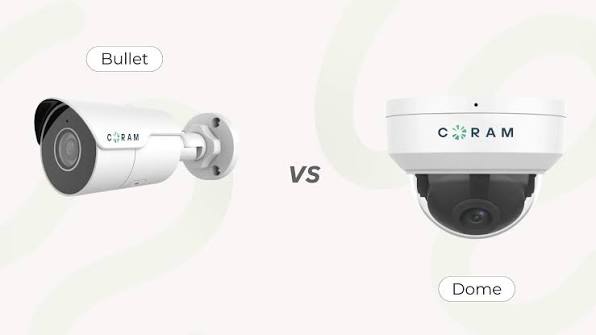
Why Power Independence Now Decides Which Camera Wins
Nigeria's unreliable grid has forced a quiet redesign of the surveillance camera itself, turning solar and battery backup from a luxury feature into a genuine requirement for any system expected to actually work during a break in attempt. The shift has been transformative for who can even afford serious coverage, since the convergence of solar power and wireless technology has, for the first time, placed professional grade surveillance within reach of the average small business operator. Nigerian buyers now expect this independence as standard practice rather than an upgrade, since night vision has become a baseline requirement given that crime spikes at night, meaning any CCTV system without Infrared or Full-Color Night Vision capabilities is increasingly considered incomplete.
Real world deployments are already demonstrating what this power independent model looks like at scale, since one described rollout of 500 integrated solar CCTV units across Nigeria reported that the presence of 24/7 monitored cameras has led to a documented decrease in opportunistic crime, with residents reporting a higher sense of security knowing the streets are monitored even during blackout periods. That blackout resilience is precisely why solar powered, app connected systems have moved so quickly from niche to mainstream, with industry commentary noting they are no longer reserved for banks, embassies, and high-net-worth estates, and instead represent one of the most prudent investments a Nigerian small business owner or homeowner can make.
What Nigerian Consumers Consider Before Choosing a Security Camera Brand
Analogue Versus IP System Cost
Budget conscious buyers weigh system type carefully against total project cost, since a complete entry level CCTV installation in Nigeria, four cameras, DVR, 1TB hard drive, cables, power supply, and labour, starts at approximately ₦180,000 to ₦280,000 for an analogue HD system, or ₦280,000 to ₦420,000 for an equivalent IP network camera system, a meaningful gap that shapes which households choose basic coverage versus higher resolution monitoring.
Camera Format for the Location
Buyers increasingly match camera type to placement rather than buying generically, choosing between dome cameras commonly used indoors and in offices, typically priced from twenty thousand to eighty thousand naira, against bullet cameras built for outdoor entry points and gates.
Power Independence and Solar Readiness
Households in areas with frequent outages now treat solar or battery backup as a near mandatory feature, driven directly by the reality that criminals often operate more confidently in areas without monitoring systems, making continuous uptime during blackouts a genuine purchase deciding factor.
Remote Access and Mobile Monitoring
Buyers expect modern systems to extend beyond the property itself, favouring wireless Wi-Fi IP cameras that connect to home Wi-Fi and allow remote viewing via apps like V380, Yoosee, or Hik-Connect, letting homeowners check their property from anywhere.
Installation and After Sales Support
Because professional setup significantly affects system reliability, buyers increasingly favour brands backed by established local integrators, since local distributors and system integrators differentiate through value added services including customized system design, professional installation, training programs, and responsive technical support.
The Rise of Informed Security Camera Buyers
Nigerian consumers, from homeowners to small business operators, are researching surveillance options with growing technical awareness before committing household or business budgets. Common searches now include:
Hikvision vs Dahua CCTV comparison Nigeria
Solar powered security camera prices Nigeria 2026
Best CCTV camera for home use without electricity
CCTV installation cost 4 camera system Nigeria
Wireless security camera with mobile app Nigeria
Cheapest CCTV kit for small shop Nigeria
This growing research culture, fuelled by installer blogs, estate WhatsApp groups and social media security awareness content, continues to shape which brands earn trust in a market where a failed system can mean a genuine, irreversible loss.
Challenges Facing Nigeria's Security Camera Industry
Effectiveness scepticism remains a real constraint on category growth, since even heavily funded government deployments have faced criticism, with stakeholders questioning the effectiveness of the cameras, calling for enabling laws and improved infrastructure to ensure such projects actually curb crime rather than simply recording it.
Power infrastructure gaps continue to shape which systems can function reliably at all, meaning manufacturers and installers must keep building solar and battery backup into even entry level products rather than treating grid power as a safe default assumption.
Counterfeit and substandard units pose a growing risk in a market this price sensitive, since budget generic cameras sold without reliable brand backing can fail exactly when needed most, a concern that pushes safety conscious buyers toward established names like Hikvision and Dahua despite the price premium.
Market Outlook for 2026 and Beyond
Nigeria's CCTV camera market is positioned for genuinely rapid expansion over the coming decade. Current estimates place the market at USD 345.84 million in 2025, projected to reach USD 991.32 million by 2034, growing at a CAGR of 12.41% during 2026 to 2034, growth explicitly driven by escalating insecurity concerns that are propelling widespread adoption across residential and commercial sectors, government smart city initiatives deploying surveillance infrastructure for public safety, and rapid integration of AI powered technologies.
Smart, connected security is expected to be the fastest growing segment within that broader expansion, since 8.8 million Nigerian households are expected to be outfitted with smart security by 2029, reaching a penetration of 17.5% from 15.5% in 2025. AI integration specifically looks set to accelerate even faster than the base camera market, with the Africa AI CCTV market, valued at USD 190 million in 2024, projected to grow at 22.75% CAGR through 2033, reflecting rapid adoption of intelligent technologies as Nigerian organizations seek advanced solutions for crime prevention and operational efficiency. Within the wider Middle East and Africa region, Nigeria sits inside a surveillance camera market expected to reach a projected revenue of 6,506.3 million dollars by 2033, growing at 11.3% annually, a regional growth story Nigeria's own insecurity driven demand is helping to power.
Conclusion
Nigeria's security camera market in 2026 is not expanding because citizens suddenly discovered a new gadget to want, it is expanding because hundreds of thousands of families have decided they cannot wait for the state to make their streets safer. Hikvision and Dahua's distributor led dominance, Sony and Panasonic's premium presence, and a fast growing field of solar powered, app connected budget systems all compete for a buyer whose real motivation is fear rather than fashion. The brands that grow fastest from here will be the ones that can prove their cameras keep working when the power fails and the footage actually matters, because in Nigeria, a camera that cannot do both is not really security at all.
About this Report
The Flipbz Security Camera Brands in Nigeria (2026) Market Report is an independent editorial publication prepared using publicly available information from industry research platforms, retailer pricing data and market intelligence sources, together with independent market analysis by Flipbz. It is intended to provide market insight and does not constitute purchasing or security advice.

Please register to comment.
With these components in place, your business...
SolidBase Builders Limited is a professionall...
PrimeStone Construction Nigeria Ltd is a well...
CrestRock Engineering Services Ltd is a scala...
Open the Listing model file located in the ap...
Discover promising partnership opportunities in various industries.
Pitch Your Startup | Find Partners



.jpg)


Comments