
.jpg "UfarmX Wants to Be the Equifax of African Agriculture, and It's Already Facilitated $6.8M Betting on It")
Written By: Flipbz.org
UfarmX has quietly built one of the more structurally interesting agritech businesses on the continent, and its own origin story explains why the company ended up here almost by accident. When founder Alexander Zanders stood on a patch of land in Oyo State in 2015, he planned to build a simple processing plant. But as the naira plunged, importing machinery became impossible, forcing Zanders to pivot, buy 100 acres, start farming himself, and run a small experiment supplying 15 local maize growers with inputs on credit. The results were striking. Crop yields tripled, farmer revenues doubled, and Zanders extracted the financial signals hidden in the soil, a discovery that reframed his entire business idea around data rather than direct farming.
That pivot has since scaled into genuine regional infrastructure. Operating across Nigeria, Senegal, and Liberia, UfarmX has credit-scored over 17,000 farmers and facilitated $6.8 million in commerce while maintaining a remarkably low 1.17 percent net default rate. Crucially, the company has structured itself to avoid the balance sheet risk that sinks many direct lending startups. UfarmX finances farm inputs through local agro dealers and is preparing to launch a credit-scoring API that will enable banks, microfinance institutions and development finance organisations to assess farm loan applications more efficiently, meaning UfarmX itself does not lend directly but instead provides a B2B credit infrastructure, essentially an API, that lets banks and retailers extend financing to farmers safely.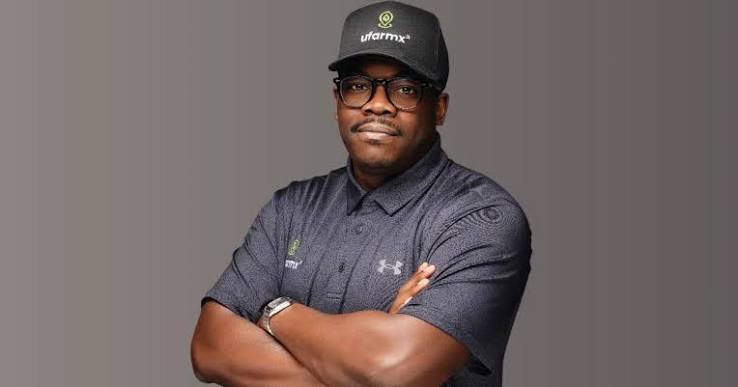
The technology underpinning that scoring system leans on data sources most traditional lenders have never used. The credit scoring API delivers instant, AI powered decisions on smallholder farmer creditworthiness, trained on data including GPS coordinates, crop type, yield projections, commodity prices and socioeconomic factors, with credit scores returned in under 50 milliseconds, drawing on more than five years of farmer credit data gathered directly from Nigeria, Senegal and Liberia rather than Western financial proxies poorly suited to African farming realities.
The opportunity UfarmX is chasing is enormous by any measure. The financing gap for African smallholder farmers is staggering, with estimates suggesting the financial sector meets less than 3 percent of total demand, a shortfall running to roughly 450 billion dollars. Against that backdrop, UfarmX's ambition has been described plainly as building a horizontal credit infrastructure for the entire continent, with the company explicitly aiming to become the equivalent of Equifax for African agricultural lending. That ambition is now entering its next phase geographically too, with the company preparing to expand into Kenya, its first East African market, by the end of 2026, a move it says will test whether its underwriting model holds up in a new agricultural and financial environment beyond its original West African footprint.
Real challenges remain part of the story. Scaling across multiple countries with different regulatory environments, agricultural practices and economic conditions is no small feat, and UfarmX's entire B2B model depends on convincing traditionally slow moving banks to integrate its API rather than continuing to avoid the smallholder segment altogether. Even so, with a low default rate already validated across three markets and Kenya's expansion now on the horizon, UfarmX's bet that farm data, gathered patiently over years on the ground, can unlock institutional capital at scale looks like one of the more credible attempts yet to close Africa's agricultural financing gap from the inside out.

Please register to comment.
With these components in place, your business...
SolidBase Builders Limited is a professionall...
PrimeStone Construction Nigeria Ltd is a well...
CrestRock Engineering Services Ltd is a scala...
AGRO COMPANY
Discover promising partnership opportunities in various industries.
Pitch Your Startup | Find Partners






Comments