
.jpg "Tomato Jos Secures $2.5m To Expand Nigeria’s Local Tomato Processing")
Written By: Flipbz.org
Tomato Jos has secured a $2.5 million convertible-note investment through the EU-funded AgriFI programme, capital that will fund factory upgrades, packaging equipment, and expanded drip irrigation as the company targets nearly quadrupling fresh-tomato production and tripling its smallholder-farmer network by 2029.
Nigeria imports the vast majority of the tomato paste its households and food businesses consume every year, despite the country growing enough fresh tomatoes to theoretically supply much of that demand itself. A northern Nigerian agribusiness has just secured fresh European backing to help close that gap, betting that better irrigation, packaging, and factory capacity can convert more of the raw crop into shelf-stable, locally made paste before it ever reaches an import dock.
What Happened
EDFI Management Company, through the European Union-funded Agriculture Financing Initiative, has signed a $2.5 million convertible-note investment in Tomato Jos Inc., a vertically integrated tomato farming and processing business in northern Nigeria. The financing was made through AgriFI's ACP Regional Window and is expected to support the company's product expansion, lower its production costs and deepen its engagement with smallholder farmers.
The capital is earmarked for specific, tangible upgrades rather than general working capital. The investment will finance packaging equipment, factory upgrades and the expansion of drip irrigation, while supporting the company's plans to expand product formats and serve new customer segments, including B2B and horeca customers. EDFI MC's own project documentation frames the cost-saving angle explicitly, noting that the financing aims to support Tomato Jos in further scaling up operations through the acquisition of packaging equipment, as well as reducing costs by financing the installation of solar generating capacity and the expansion of drip irrigation on the tomato farm.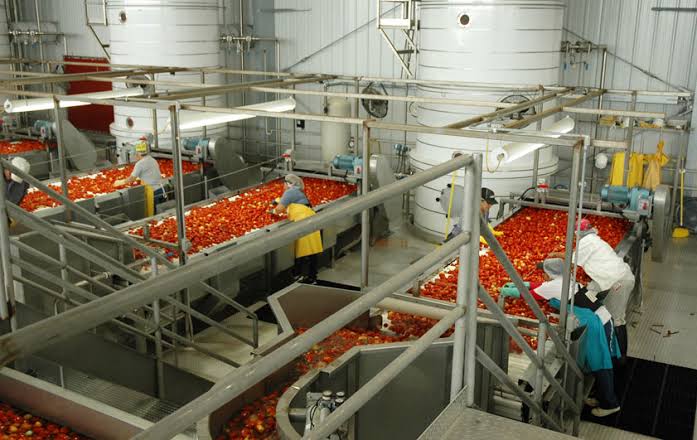
The Growth Targets Behind the Investment
Tomato Jos has attached specific, measurable growth targets to this round of financing rather than leaving the expansion vague. Tomato Jos said it plans to increase annual fresh-tomato production from just over 4,500 tonnes currently to about 16,000 tonnes by 2029, a more than threefold increase in raw output over roughly a three-year window. That production target is paired with an equally ambitious farmer-network goal, since the company also aims to expand its smallholder outgrower network from 500 to 1,500 farmers, while increasing average farmer incomes by more than 150 per cent between 2024 and 2029.
Tomato Jos Founder and CEO Mira Mehta framed the investment's purpose around both market reach and operational efficiency, stating the funding will support expansion of output and market reach, reduce energy costs and carbon footprint, and increase engagement with smallholder farmers. She tied that operational goal directly to a consumer-facing mission, explaining that the company's objective is to make locally produced, high-quality tomato paste more accessible to Nigerian consumers while creating better and more reliable economic opportunities for the farming communities it works with.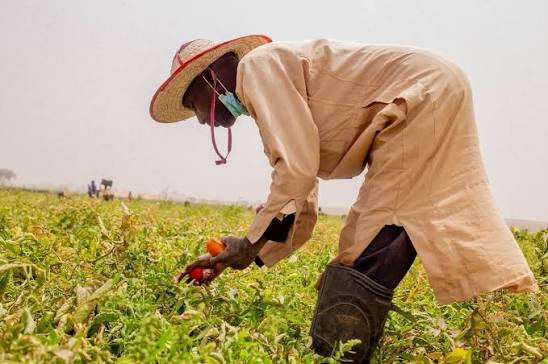
Why the Business Model Matters
Tomato Jos's structure is built around a specific vertical integration model that blends company-owned farming with a broader outgrower network, an approach the company's backers say gives it unusual resilience across the value chain. Tomato Jos produces and sells consumer-packaged tomato paste across Nigeria, integrating farm operations, smallholder sourcing, and local processing, with more than half of its raw materials sourced from smallholder farmers in Kaduna State.
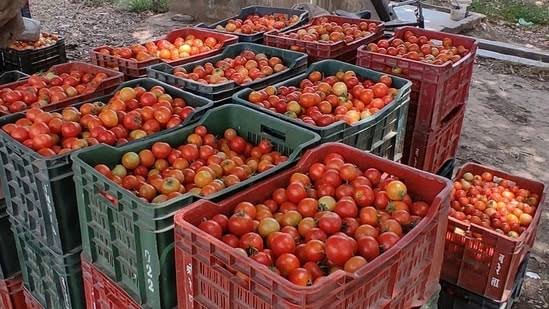
EDFI MC's Chief Executive Officer Rodrigo Madrazo pointed to that structure as the reason the investment could meaningfully lift farmer productivity, explaining that Tomato Jos's integrated approach links farmers to reliable offtake while providing access to land, irrigation, inputs and technical support that can help raise productivity and incomes. The rationale behind backing this specific model goes beyond farmer income alone, since EDFI's own investment case cites multiple layers of impact, noting that processing activity reduces post-harvest losses in the tomato value chain, substitutes imports of tomato concentrate, provides employment opportunities in a region where such opportunities are scarce, and makes a tangible impact on the livelihoods of smallholder farmers through the provision of quality inputs and increased yields and incomes.
Why Import Substitution Is the Bigger Story
The investment's significance extends beyond one company's balance sheet because of the specific gap it is aimed at closing in Nigeria's food economy. Nigeria remains heavily reliant on imported tomato concentrate and paste despite substantial domestic tomato cultivation, a mismatch driven largely by inadequate local processing capacity and high rates of post-harvest loss for fresh tomatoes that never make it to a factory before spoiling. EU Ambassador to Nigeria and ECOWAS Gautier Mignot tied the investment directly to that broader food security goal, stating that through the EU-funded AgriFI ACP Regional Window, this investment in Tomato Jos supports a Nigerian business that is creating local value from farm to shelf, reducing post-harvest losses and expanding market opportunities for smallholder farmers, particularly women.
The investment is also structured to act as a bridge toward larger private capital rather than a standalone grant-like injection. The convertible note is projected to attract an additional $6 million equity investment in 2028, representing a 3.2-fold leverage factor, meaning AgriFI's backers are explicitly betting that this initial capital will de-risk Tomato Jos enough to draw in a substantially larger private equity round within roughly two years.
Why It Matters
Tomato Jos's expansion plan matters because it targets one of the more visible inefficiencies in Nigeria's agricultural economy: a country capable of growing large volumes of fresh tomatoes still spends heavily on imported paste because too little of that fresh crop survives long enough, or gets processed fast enough, to reach consumers as a finished product. Mignot situated this specific investment within that broader national opportunity, noting that Nigeria's agricultural sector has strong potential to create jobs, strengthen food security and build more resilient local value chains. If Tomato Jos hits its 2029 targets, quadrupling fresh-tomato throughput and tripling its farmer network, it would represent a meaningful, if still modest relative to national demand, shift toward Nigeria processing more of its own tomato crop rather than importing the paste that crop could otherwise become.
What Flipbz Thinks
Flipbz sees this AgriFI investment as a useful case study in how blended finance is meant to work in African agribusiness: a relatively modest convertible note used surgically to fund the specific bottlenecks, irrigation, packaging, factory capacity, that have kept a promising vertically integrated model from scaling, with the explicit goal of catalyzing a much larger private equity round further down the line. The 3.2x leverage projection tied to the anticipated 2028 equity round is the detail worth watching most closely, since it will be the clearest signal of whether this model of using development finance to de-risk agribusiness for larger private investors is actually working, or whether the targeted follow-on capital fails to materialize on schedule. The tripling of the smallholder network alongside a 150 percent farmer income target is an ambitious combination to hit simultaneously, and will require Tomato Jos to expand offtake capacity and processing throughput in close lockstep with farmer recruitment rather than growing one faster than the other.
What to Watch
Industry observers should track whether Tomato Jos's fresh-tomato production genuinely scales toward the 16,000-tonne 2029 target on a steady annual trajectory, or whether progress clusters unevenly around specific harvest seasons or funding milestones. It will also be worth watching whether the anticipated $6 million equity round materializes in 2028 as projected, since that would validate the broader blended-finance thesis behind AgriFI's ACP Regional Window and could encourage similar convertible-note structures for other Nigerian agribusinesses further down the value chain.
The Bottom Line
Tomato Jos's $2.5 million AgriFI investment is a targeted bet on closing one of Nigeria's more persistent agricultural gaps, the space between abundant fresh tomato cultivation and a heavy reliance on imported paste, by funding the specific irrigation, packaging, and processing upgrades needed to convert more of that crop domestically. Whether the company hits its ambitious 2029 production and farmer-income targets, and whether the anticipated follow-on equity round materializes as projected, will determine if this becomes a template for scaling Nigerian food processing through blended finance, or simply one company's growth story.
Please register to comment.
With these components in place, your business...
SolidBase Builders Limited is a professionall...
PrimeStone Construction Nigeria Ltd is a well...
CrestRock Engineering Services Ltd is a scala...
Open the Listing model file located in the ap...
Discover promising partnership opportunities in various industries.
Pitch Your Startup | Find Partners


.jpeg)
.jpeg)




Comments