
.jpg "MKH Properties Secures ₦30bn Funding As Nigerian Real Estate Expansion Accelerates")
Written By: Flipbz.org
MKH Properties has formally signed a ₦30 billion Commercial Paper Programme, backed by dual credit ratings, marking one of the more significant capital market moves by a Nigerian real estate developer and reflecting a broader shift toward structured debt instruments over traditional bank financing across the property sector.
Nigerian property developers have spent years defaulting to the same two financing options: bank loans at punishing interest rates, or off-plan sales that tie a project's fate to how quickly buyers can be found. A growing number of developers are now choosing a third path entirely, one that runs through Nigeria's debt capital markets rather than a bank's loan desk.
What Happened
MKH Properties Limited has formally signed a ₦30 billion Commercial Paper Programme, marking one of the most significant capital market moves by a Nigerian real estate developer in recent years. The signing ceremony took place at Four Points Sheraton, bringing together the company's senior leadership and representatives from Pathway Advisors Limited, the advisory firm that structured the transaction.
The programme is designed to fund an active and expanding development pipeline rather than plug a short-term cash gap. The programme positions MKH Properties to accelerate project delivery across its active portfolio while expanding into new development opportunities, with the company's leadership signalling that this represents a new phase of institutional growth. That ambition is grounded in a track record the company has built since its founding, having grown since 2021 to manage a portfolio exceeding $50 million and deliver over 1,000 plots across 12 estates in Lagos and Ibadan.
Why Dual Credit Ratings Are the Real Story
What separates this transaction from a routine short-term borrowing announcement is the credit infrastructure MKH Properties has built to support it. Access to commercial paper markets requires more than ambition, requiring audited financials, a verifiable delivery record, and a credit profile that independent assessors are willing to put their name to, and MKH Properties has satisfied all three. The company holds a Long-Term BBB+ and Short-Term A2 rating from DataPro and has now been assessed by a second independent credit rating agency, placing it in a category of Nigerian developers whose financial discipline has been externally verified rather than self-reported.
A representative from Pathway Advisors underscored just how uncommon that dual verification is in the sector, noting at the signing that achieving dual agency ratings represents a substantial undertaking. This detail matters more than it might initially appear, since Nigerian commercial paper rules explicitly require this level of scrutiny before an instrument can even reach investors on an exchange, as commercial papers listed on the Nigerian Exchange are required to have at least two credit ratings with a minimum rating of BB+.
Why Developers Are Turning to Capital Markets Instead of Banks
MKH Properties' move fits into a much larger pattern reshaping how Nigerian real estate companies fund themselves. The statement carries real weight in the context of Nigeria's current real estate financing environment, since with interest rates above 27% and construction costs rising sharply across the sector, access to structured capital at scale is increasingly what separates developers who can execute from those who cannot.
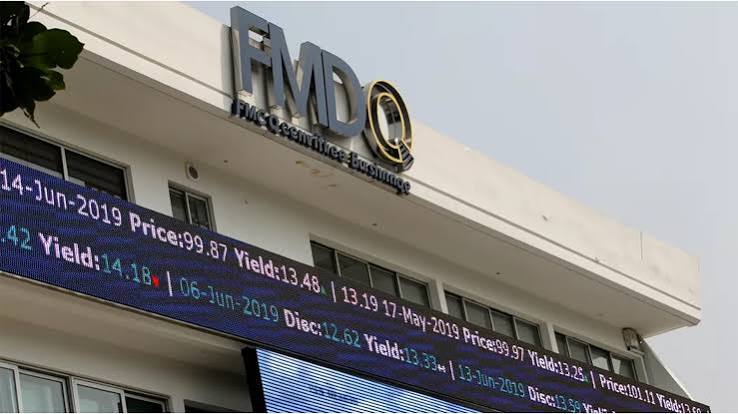
The scale of this shift across the wider corporate market has been substantial. Nigerian companies raised N384.45 billion through commercial papers between January and August 2026, as attractive yields of up to 24 per cent and the need for faster access to short-term funding drove increased market activity, funds raised by 16 companies across the agriculture, manufacturing and financial services sectors. Other reporting puts the cumulative 2026 figure even higher across the full market, with commercial paper issuances in Nigeria reaching approximately N1.3 trillion so far this year, a substantial pool of short-term corporate funding already being mobilised through the instrument.
Real estate developers specifically have been among the more visible adopters of this instrument in recent months. Veritasi Homes & Properties Plc executed a ₦50 billion non-interest Commercial Paper Programme in August 2026 to accelerate real estate growth, following an earlier ₦20 billion programme registered in 2022 under which the issuer successfully raised up to ₦15 billion, with all matured obligations fully redeemed on or before their respective due dates. That earlier track record of timely redemption is precisely the kind of performance history that makes follow-on capital market access easier to secure, mirroring the credibility MKH Properties is now building through its own dual ratings.
Why Commercial Paper Fits Real Estate's Financing Needs
The structural logic behind this shift is straightforward once the mechanics are understood. For many Nigerian companies, short-term funding has traditionally meant bank overdrafts and short-tenor loans, but as businesses grow and their funding needs become more sophisticated, relying on a single channel is no longer enough, with commercial paper increasingly becoming part of that broader mix. As a financing tool, commercial paper is a short-term, unsecured debt instrument issued by creditworthy companies to raise funds directly from investors, typically maturing between 30 and 270 days and mainly used to finance working capital, inventory, and other immediate business obligations.
For real estate specifically, this structure offers a genuine alternative to a financing model that has grown increasingly expensive. Rising prices for building materials, land, labour and infrastructure continue to increase the amount of capital required to deliver housing projects, and access to alternative sources of funding can therefore help reduce dependence on bank lending and provide additional flexibility for managing project-related expenses. The trade-off, however, is real and worth flagging for anyone assessing these programmes, since commercial paper is a short-term financing instrument, meaning companies must carefully manage their cash flows and repayment obligations when individual issuances mature.
Regulatory infrastructure has also matured quickly enough to support this trend at scale. The Nigerian Exchange Limited introduced its Commercial Paper Listing Framework on December 3, 2025 following approval by the Securities and Exchange Commission, extending NGX's multi-asset offering beyond equities and longer-term debt into short-term corporate debt, a framework that reached an important milestone in February 2026 when Dangote Cement Plc listed its Series 1 and Series 2 commercial papers under its N500 billion programme.
Why It Matters
MKH Properties' ₦30 billion programme signals more than one company's financing preference, it reflects real estate developers increasingly treating capital market access as a competitive differentiator rather than a financing option of last resort. In that environment, a ₦30 billion Commercial Paper Programme is not just a financing event but a competitive differentiator that expands the gap between MKH Properties and developers who cannot access structured capital at this scale.
This shift also carries implications for how investors evaluate risk across the sector. Because commercial paper listed on formal exchanges requires verified credit ratings and audited financials, developers pursuing this route are effectively submitting themselves to a level of external scrutiny that traditional bank lending, negotiated privately and rarely disclosed publicly, does not require. That transparency could gradually raise the bar for credibility across Nigeria's broader property development industry, particularly as more developers compete for the same pool of capital market investors.
What Flipbz Thinks
Flipbz sees MKH Properties' commercial paper programme as a meaningful signal that Nigerian real estate developers are beginning to compete on financial infrastructure, not just project delivery and location. The emphasis on dual credit ratings, still described as rare among Nigerian developers, suggests that the real gatekeeping mechanism in this market is no longer simply whether a developer can attract retail buyers or off-plan subscribers, but whether their financials can withstand the scrutiny of independent rating agencies and capital market investors. As more developers follow Veritasi Homes and MKH Properties into this financing channel, Flipbz expects credit ratings to become a genuine differentiator in how Nigerian buyers, investors and even prospective employees assess which property companies are built to last through Nigeria's current high interest rate environment, and which are simply chasing the same off-plan sales model that has left many projects stalled for years.
What to Watch
Investors and industry observers should watch whether MKH Properties successfully issues and redeems its first series of commercial paper under this new programme on schedule, since a track record of timely repayment, as Veritasi Homes has demonstrated, is what ultimately determines whether a developer can return to capital markets for larger future raises. It is also worth tracking whether more mid-sized Nigerian real estate developers pursue similar dual-rated commercial paper programmes in the coming months, which would confirm that capital markets financing is becoming a standard tool across the sector rather than a strategy reserved for only its largest players.
The Bottom Line
MKH Properties' ₦30 billion Commercial Paper Programme reflects a broader recalibration in how Nigerian real estate developers fund growth, moving from near-total reliance on bank lending and off-plan sales toward structured, credit-rated capital market instruments that demand greater financial transparency. Whether this shift becomes the new standard for credible developers, or remains accessible only to a handful of companies with the financial discipline to secure dual ratings, will shape how investors and buyers alike judge which Nigerian property companies are genuinely built to scale.

Please register to comment.
With these components in place, your business...
SolidBase Builders Limited is a professionall...
PrimeStone Construction Nigeria Ltd is a well...
CrestRock Engineering Services Ltd is a scala...
AGRO COMPANY
Discover promising partnership opportunities in various industries.
Pitch Your Startup | Find Partners


.jpeg)
.jpeg)


Comments