
.jpeg "Nigeria, South Africa Move To Calm Tensions")
Written By: Flipbz.org
Diplomatic Talks Intensify As Both Nations Seek Stability And Stronger Cooperation
Nigeria and South Africa pledged to de escalate a diplomatic rift over renewed xenophobic violence, with Pretoria agreeing to prosecute attackers and Abuja compiling compensation claims for Nigerians who lost property, following high level talks in the Nigerian capital this week.
The talks brought together Nigeria's Minister of State for Foreign Affairs, Sola Enikanolaiye, and South Africa's Minister of International Relations and Cooperation, Ronald Lamola, who travelled to Abuja as a special envoy of President Cyril Ramaphosa. The commitments followed talks in Abuja between Nigeria's Minister of State for Foreign Affairs, Sola Enikanolaiye, and South African International Relations Minister Ronald Lamola on Monday, aimed at easing tensions sparked by attacks on Nigerian nationals in South Africa. Enikanolaiye said after the talks that both sides agreed they should de escalate the tension that had erupted between the two countries and their people, adding that both would lower the temperature of public discourse and preserve ties built through decades of cooperation.
Despite the conciliatory tone, the closed door session exposed real friction beneath the diplomatic language. Nigerian and South African diplomats sat down as brothers to address the attacks, though tensions were evident, with the Nigerian side denouncing Pretoria's complicity in the protests. Enikanolaiye said Nigeria has records of Nigerians with legitimate papers to remain in South Africa who have nonetheless been attacked, adding that in some mob actions police were seen watching as if helpless to intervene, while South African police say at least four foreign nationals have been killed in attacks linked to the anti migrant protests.
Concrete commitments emerged from the meeting despite the tense undertones. South Africa assured Nigeria that perpetrators of the attacks would be prosecuted, while Abuja was compiling claims for property losses suffered by Nigerians that could form the basis of future compensation discussions, and Nigeria also sought stronger safeguards for its citizens, including an early warning system, increased police protection in violence prone areas and accountability for those behind the attacks. For his part, Lamola said the South African government condemned all forms of xenophobia and stressed that no individual had the right to take the law into their own hands.
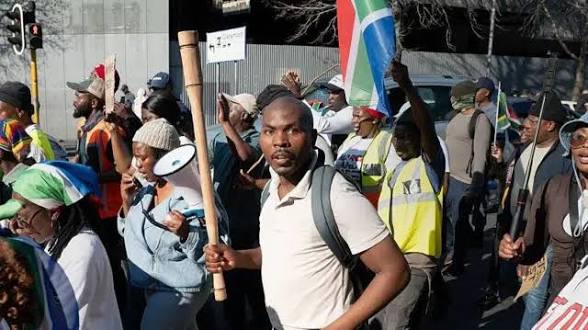
The scale of the fallout has been significant even before this week's meeting. The Federal Government of Nigeria has evacuated a total of 1,490 of its citizens from South Africa following the renewed xenophobic attacks. Nigerian officials have also put a human cost on years of unrest, with the foreign ministry stating that 98 Nigerians had been killed in mob attacks and hate related violence in South Africa since 2022. The dispute grew tense enough that Nigeria's President Bola Tinubu recently declined to receive a special envoy dispatched by South African President Cyril Ramaphosa before this week's talks eventually went ahead.
This is far from the first time Africa's two largest economies have clashed over the treatment of migrants. Enikanolaiye told his South African counterparts that the violence follows a recurring pattern of xenophobic violence dating back to 1995, with subsequent outbreaks recorded in 1998, 2006, 2015, 2016, 2019, 2021, 2024 and 2026. The current cycle intensified earlier this year when diplomatic tensions between the two countries spiked amid a wave of violent anti immigration protests by thousands of South Africans calling for strict, mass deportation measures. South Africa has long been a magnet for economic migrants across the continent, and Statistics South Africa put the number of foreign nationals at 2.4 million in 2022, about 3.7 percent of the total population of 65 million. Many demonstrators, however, have attacked foreign nationals and looted foreign owned shops on numerous occasions in the past few months, as many South Africans blame immigrants for problems such as crime and unemployment.
Public reaction across both countries has been swift and sharply divided, playing out largely on social media and in street level protests rather than financial markets. In South Africa, vigilante groups have repeatedly targeted foreign African nationals and looted migrant owned businesses in recent months, with anti immigrant protesters marching in several cities in June calling for undocumented migrants to leave the country. On the Nigerian side, officials have pushed back against the government's own restraint, with Enikanolaiye noting that some demonstrations appear to disproportionately affect black Africans, prompting Nigerian officials to question whether the situation should be described as Afrophobia rather than xenophobia.
The stakes extend well beyond the immediate safety of migrants. The dispute presents another challenge for relations between Nigeria and South Africa, two influential members of the African Union whose cooperation is often viewed as essential to the continent's political and economic progress. Both nations have historically leaned on a relationship forged well before either became an economic powerhouse, with Enikanolaiye recalling Nigeria's support for South Africa's liberation from apartheid and the close collaboration between both countries in transforming the Organisation of African Unity into the African Union, as well as advancing the New Partnership for Africa's Development. Analysts and diplomats alike worry that repeated flare ups could undercut the continent's broader push for integration, especially since the treatment of migrants within member states is expected to remain a key issue for governments, policymakers and civil society under the African Union's Agenda 2063.
Attention now turns to whether this week's pledges translate into lasting change on the ground. Beyond prosecutions and compensation talks, President Tinubu has directed Nigerian missions in South Africa to immediately establish a crisis notification unit to support citizens in distress, while Nigerians have been urged to alert South African security services directly if threatened. South Africa, meanwhile, has pushed back against allegations that state actors are complicit, with Pretoria maintaining that the attacks are not state sponsored, reiterating its opposition to xenophobia, racism and discrimination, while acknowledging concerns about crimes allegedly involving some Nigerian nationals but insisting suspects must be arrested and prosecuted through the justice system rather than targeted by mobs. Whether the newly promised early warning systems and stepped up police protection materialize before the next flare up will determine if this round of diplomacy marks a genuine turning point, or simply another chapter in a three decade cycle of unrest and reconciliation between Africa's two largest economies.

Please register to comment.
With these components in place, your business...
SolidBase Builders Limited is a professionall...
PrimeStone Construction Nigeria Ltd is a well...
CrestRock Engineering Services Ltd is a scala...
Here is an optimized version of your Blade te...
Discover promising partnership opportunities in various industries.
Pitch Your Startup | Find Partners
.jpg)



.jpg)





Comments