
.jpg "Lagos Deepens Push For Cashless Public Transport")
Written By: Flipbz.org
State Authorities Expand Digital Payment Adoption Across Buses, Ferries And Urban Transit
The Lagos Metropolitan Area Transport Authority has announced that commuters who pay cash for rides on regulated bus, BRT and rail services will face arrest and prosecution starting August 1, extending a crackdown that previously targeted only drivers and ticketing staff to ordinary passengers for the first time.
LAMATA disclosed the expanded enforcement during an X Space discussion with transport stakeholders titled "Lagos Cashless Transit: What Aug." ahead of the policy taking effect. The authority said the enforcement is designed to strengthen accountability, improve transparency and ensure compliance with electronic payment systems across Lagos' regulated transport network. Under the new directive, passengers who knowingly pay cash on BRT, Bus Reform Initiative and Lagos Rail services will also be liable, extending enforcement that previously focused primarily on bus operators and ticketing personnel who collected cash outside the approved Cowry Card system.
LAMATA's Head of Legal, Idris Akinola, told stakeholders during the discussion that existing Lagos transport regulations already require commuters to use approved electronic payment methods, adding that both passengers offering cash and transport workers accepting it could face liability under applicable state laws. The agency has framed the practice in stark terms, stating that cash collection within the regulated bus system constitutes an economic crime against the State, as it undermines the integrity of the fare collection system, deprives operators of legitimate revenue, and weakens the sustainability of public transport services.
The policy builds on years of infrastructure LAMATA has already put in place rather than introducing something entirely new. Cowry Card has processed over 19 million trips within Lagos State's regulated transport ecosystem since January 2026, according to Olamide Afolabi, Managing Director of Touch and Pay Technologies, which operates the card infrastructure. That volume reflects a system built up gradually since Lagos began transitioning individual bus corridors to cashless payment years earlier, and the August 1 directive does not introduce a new technology, it makes an existing one mandatory and removes the option of paying cash entirely. The same contactless card now works across the BRT network, the Blue and Red Line trains, and LAGFERRY water transport services, giving commuters a single payment method across multiple modes of transit.
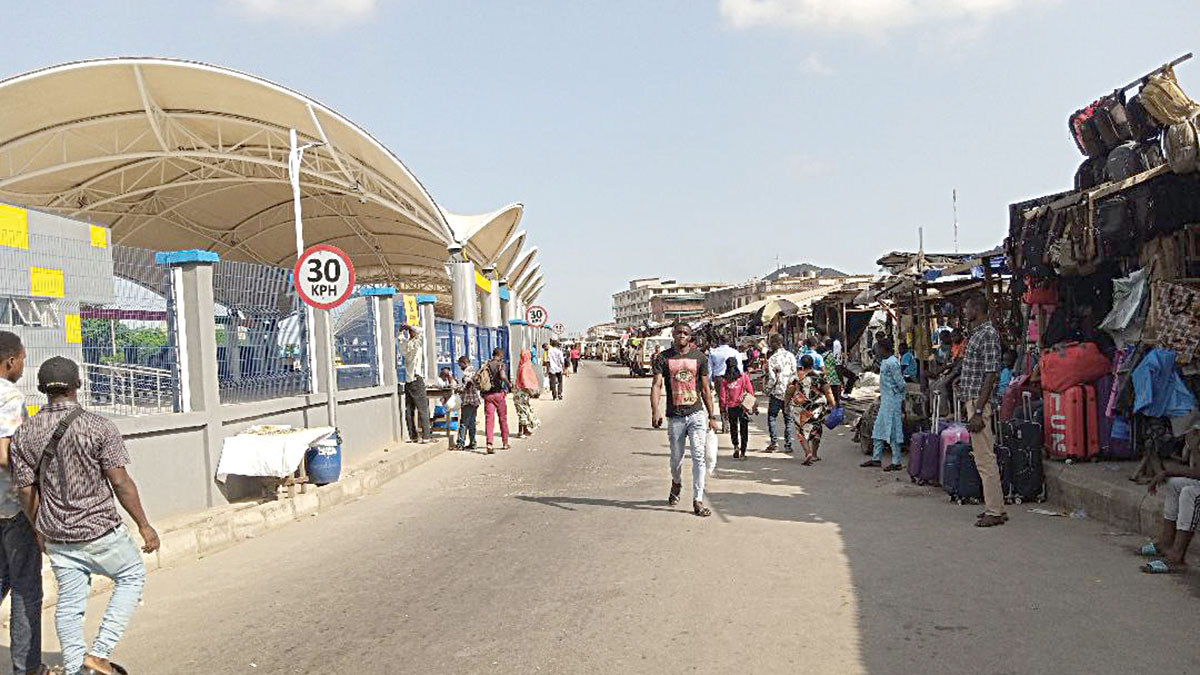
The crackdown on passengers follows closely behind a separate operational reform targeting cargo. Since June 1, 2026, the authority has strictly prohibited the movement of commercial goods and heavy luggage on all regulated public transport buses across the state, a ban introduced after a surge in commuter complaints about passenger safety and comfort being compromised by freight sharing space with riders. Regulated bus operating companies have continuously lobbied LAMATA, reporting that unchecked cash pilferage by transit crews has made it nearly impossible to procure necessary spare parts, execute scheduled fleet maintenance, or meet basic payroll obligations, giving operators a direct financial stake in the crackdown succeeding.
Enforcement against staff has already produced visible consequences that officials are using to justify extending the rules to passengers. Adekunle Tajudeen, Managing Director of Teejay Motors, one of the BRT operators, described it as a criminal offence for a driver to allow cash payments or pocket fares, citing a recent incident in which a driver in Oshodi collected a full busload of fares into his personal bank account instead of routing payments through the approved system, and that driver is currently on the run. LAMATA has urged commuters to report any driver or conductor requesting cash through its official email and customer service phone numbers, reinforcing that enforcement will run in both directions.
Public reaction has been decidedly mixed, exposing tensions that go beyond the mechanics of ticketing. The controversy surrounding the policy has quickly evolved into something much broader than electronic ticketing, becoming a debate about whether Lagos is asking commuters to trust a transport system that many still regard as incomplete. Critics argue that passengers paying the full fare are not attempting to defraud the transport system; they are responding to operational realities that authorities have yet to eliminate, such as malfunctioning card readers or terminals that run out of cards during peak hours. LAMATA has not announced a grace period after August 1, leaving commuters with only a narrow window to obtain or top up a Cowry Card before the rule takes hold, though cards can be obtained and topped up at BRT terminals, select agent locations, self-service kiosks, or directly through the app.
Why this matters extends well beyond fare collection mechanics. LAMATA maintains that its broader objective, returning more buses to service and delivering safe, reliable transportation, can only be achieved when fare revenues are fully protected, enabling operators to recover operating costs and maintain serviceable fleets. Analysts note that cashless transport systems ultimately depend less on penalties than on public confidence, meaning the policy's success may hinge as much on reliability improvements as on enforcement threats. The stakes are significant for a network that has become central to how millions of Lagosians commute daily, given that the Cowry Card's 19 million trip figure tells you that the system is not theoretical, since millions of Lagosians are already using it every day.
Attention now turns to how smoothly the August 1 transition unfolds and whether LAMATA follows through on threatened arrests once the deadline passes. With no formal grace period announced, transport operators, agents and commuters alike are racing to close the remaining cash payment gaps before enforcement begins, while critics continue pressing LAMATA to address the underlying reliability concerns that have made cash a fallback option for some riders in the first place. Whether the policy delivers the cleaner, more transparent fare collection system officials are promising, or triggers a backlash over enforcement against ordinary commuters, will likely become clear within days of the deadline taking effect.

Please register to comment.
With these components in place, your business...
SolidBase Builders Limited is a professionall...
PrimeStone Construction Nigeria Ltd is a well...
CrestRock Engineering Services Ltd is a scala...
Open the Listing model file located in the ap...
Discover promising partnership opportunities in various industries.
Pitch Your Startup | Find Partners

.jpg)

.jpg)
.jpeg)
Comments