
Written By: Flipbz.org
With over $700 million disbursed to small businesses, a Kenyan acquisition, and a new bookkeeping platform, Moniepoint is moving from payments processor to full scale business bank, reshaping what "fintech expansion" means in Africa's largest economy.
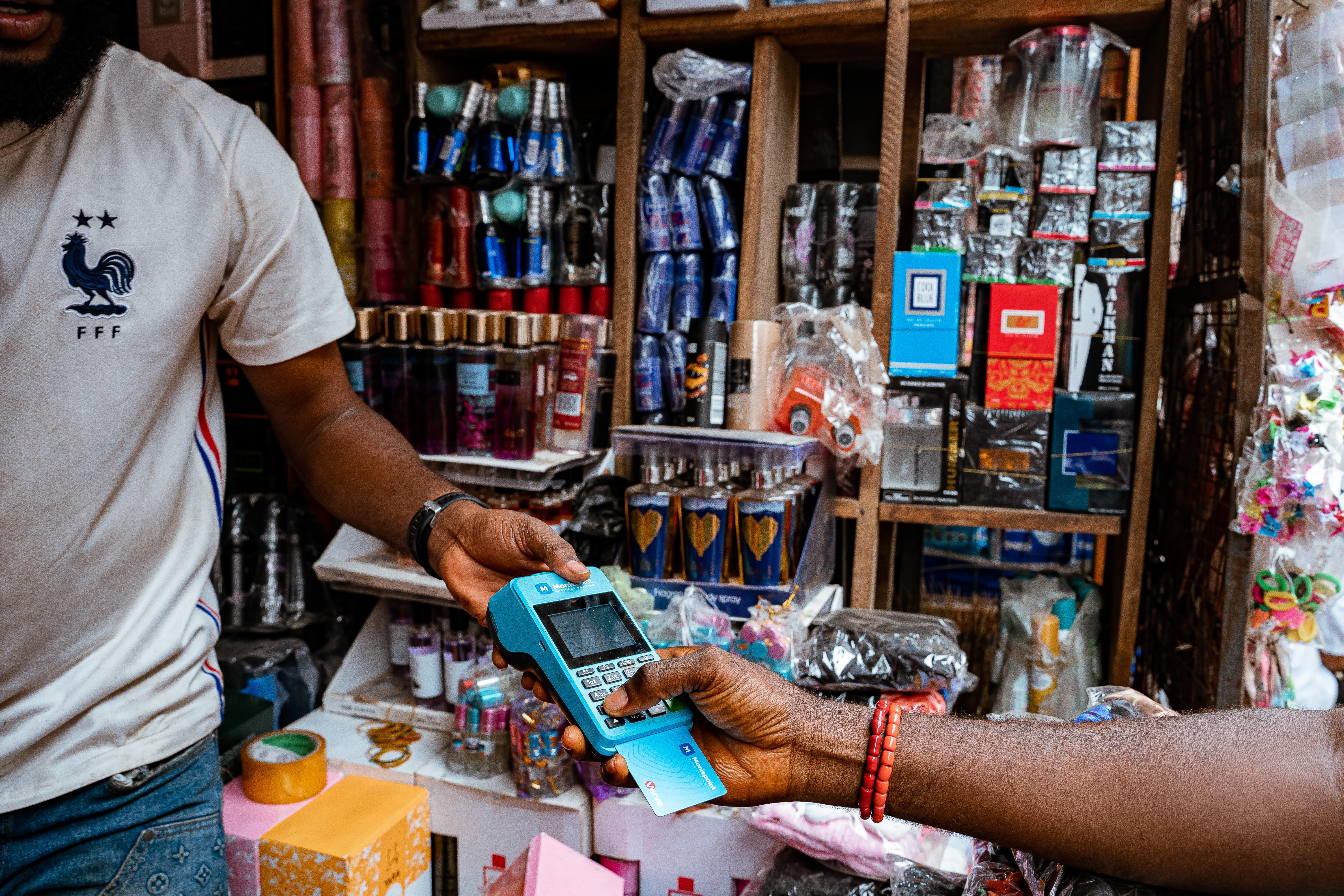
Moniepoint is no longer just the company behind the ubiquitous POS terminal on Nigeria's shop counters. Over the past year, the fintech has pushed deeper into small business banking, disbursing hundreds of millions of dollars in credit, acquiring a microfinance bank in Kenya, and launching a bookkeeping platform designed to keep merchants inside its ecosystem long after a transaction is processed. The moves mark a deliberate shift from payments infrastructure toward comprehensive business banking, and they signal that Nigeria's SME banking race is entering a new, more consequential phase.
What Happened
Moniepoint disbursed more than $700 million in loans to Nigerian Micro, Small and Medium sized Enterprises over the past year, according to the company's inaugural Impact Report. The scale of that lending is notable given Nigeria's chronic credit shortage: the country's estimated $32.2 billion financing gap remains largely untouched, underscoring how far the sector still has to go even as Moniepoint's lending accelerates.
The report also detailed who is benefiting. For three out of four borrowers, a Moniepoint loan was the first formal business credit their enterprise had ever accessed, while businesses that received Moniepoint credit recorded a 36% increase in average transaction value, reinforcing the case for a more data driven approach to lending. Women entrepreneurs saw particularly sharp gains: Moniepoint increased lending to women owned businesses by more than 300% in 2025, with women accounting for 36% of its loan portfolio, well above the industry benchmark of 15 to 25%.
Beyond lending, Moniepoint has expanded its product suite to keep merchants tied to its platform for more than just transactions. In 2025, it launched Moniebook, a platform that combines payments and bookkeeping, positioning itself not only as a payments provider but as a business management partner, according to industry reporting. The tool allows traders and shop owners to track stock, monitor profits, and see real time performance data without needing an accountant.
Internationally, Moniepoint entered Kenya by acquiring a 78% stake in Sumac Microfinance Bank, giving it a deposit taking licence and enabling it to expand SME lending and compete with major players like Safaricom and Equity Group. The Kenya move follows closely on the heels of Moniepoint's acquisition of Orda, a cloud based restaurant management software provider, with plans to integrate Orda's technology with Sumac's banking infrastructure to deliver what it describes as a "business in a box" platform, offering services such as inventory management, payroll and working capital financing.
The scale underpinning all of this expansion is considerable. Moniepoint processed ₦412 trillion and more than 14 billion transactions in 2025, while serving over 6 million businesses and banking more than 16 million individuals. That growth followed a $200 million Series C funding round in 2025 from backers including Development Partners International, Google's Africa Investment Fund, Visa, the International Finance Corporation, and Verod Capital, with the company saying the capital would support expansion across Africa and diaspora markets.
Why It Matters

Nigeria's small business sector is the backbone of the country's employment base, yet it remains starved of formal credit. Traditional commercial banks have historically retreated from SME lending due to rising credit risks, elevated interest rates, and tighter regulatory conditions, leaving a vacuum that fintechs like Moniepoint are now attempting to fill using transaction data rather than conventional collateral requirements.
By relying on alternative data, such as transaction histories, payment behaviour, and business patterns, Moniepoint has helped bridge longstanding gaps left by conventional credit scoring models, widening access to finance for informal and underserved enterprises. That distinction matters enormously in a market where most small business owners have never held a bank loan. It reframes financial inclusion not simply as owning a bank account, but as having access to working capital that can fund inventory, expansion, or survival during lean months.
Industry Context
Moniepoint's expansion reflects a broader shift taking place across Africa's fintech industry, where many companies that initially focused on payments are now seeking regulated banking structures to unlock lending and scale across borders. The Sumac acquisition in Kenya illustrates this pattern clearly: rather than waiting for new banking approvals in a tightly regulated market, Moniepoint acquired a licensed institution outright, a strategy increasingly common among fintechs racing to add regulated lending capacity.
Domestically, Moniepoint has consolidated an extraordinary share of Nigeria's in person payments market. As the country's largest merchant acquirer, handling eight out of every ten in person payments, the company has effectively become financial infrastructure rather than a challenger brand. That dominance gives it a data advantage few competitors can match, since transaction volume feeds directly into how it underwrites SME credit.
At the same time, aggressive lending growth carries risk. Reports have surfaced regarding non performing loans within Moniepoint's microfinance banking arm, with the company's expansion having come at a time when traditional commercial banks were retreating from SME lending due to rising credit risks. Regulatory scrutiny of the broader lending sector has also intensified, with the Central Bank of Nigeria directing all banks in March 2026 to bar large ticket obligors with recorded non performing loans from fresh credit, letters of credit or guarantees, part of a wider push for capital discipline across Nigeria's financial institutions.
What Flipbz Thinks
Flipbz views Moniepoint's pivot from payments to full spectrum business banking as one of the more strategically significant moves in Nigerian fintech. Payments processing alone is a commoditized, thin margin business; embedding credit, bookkeeping, and inventory management into the same platform creates switching costs that pure payment rivals cannot easily replicate. The real test, however, will be credit quality. Aggressive SME lending growth, if not matched by disciplined underwriting, risks the very default cycles that have destabilized legacy Nigerian banks in the past. How Moniepoint manages that balance, between inclusion and prudence, may determine whether this expansion becomes a template for African fintech or a cautionary tale.
What Consumers & Investors Should Watch
Small business owners should monitor how Moniepoint's lending terms evolve as scrutiny around non performing loans increases, since tighter underwriting could affect approval rates for first time borrowers. Investors, meanwhile, should track the integration progress of the Sumac and Orda acquisitions in Kenya, along with loan portfolio performance metrics, as early indicators of whether Moniepoint's "business in a box" model can be replicated profitably outside Nigeria.
The Bottom Line
Moniepoint's expansion illustrates a maturing phase in African fintech, one where survival depends less on transaction volume and more on becoming indispensable to the daily operations of small businesses. Whether that ambition can scale responsibly across borders, without repeating the credit mistakes of the banks it is replacing, will shape not just Moniepoint's future, but the broader trajectory of Nigeria's business banking sector.


Please register to comment.
With these components in place, your business...
SolidBase Builders Limited is a professionall...
PrimeStone Construction Nigeria Ltd is a well...
CrestRock Engineering Services Ltd is a scala...
Open the Listing model file located in the ap...
Discover promising partnership opportunities in various industries.
Pitch Your Startup | Find Partners
.jpg)
.jpeg)
.jpeg)
.jpeg)
.jpeg)
.jpeg)


Comments